Thailand Refrigerator Plant Begins Production and Extends Homa’s Manufacturing Intelligence Across Borders
CHONBURI THAILAND 15 SEPTEMBER 2026
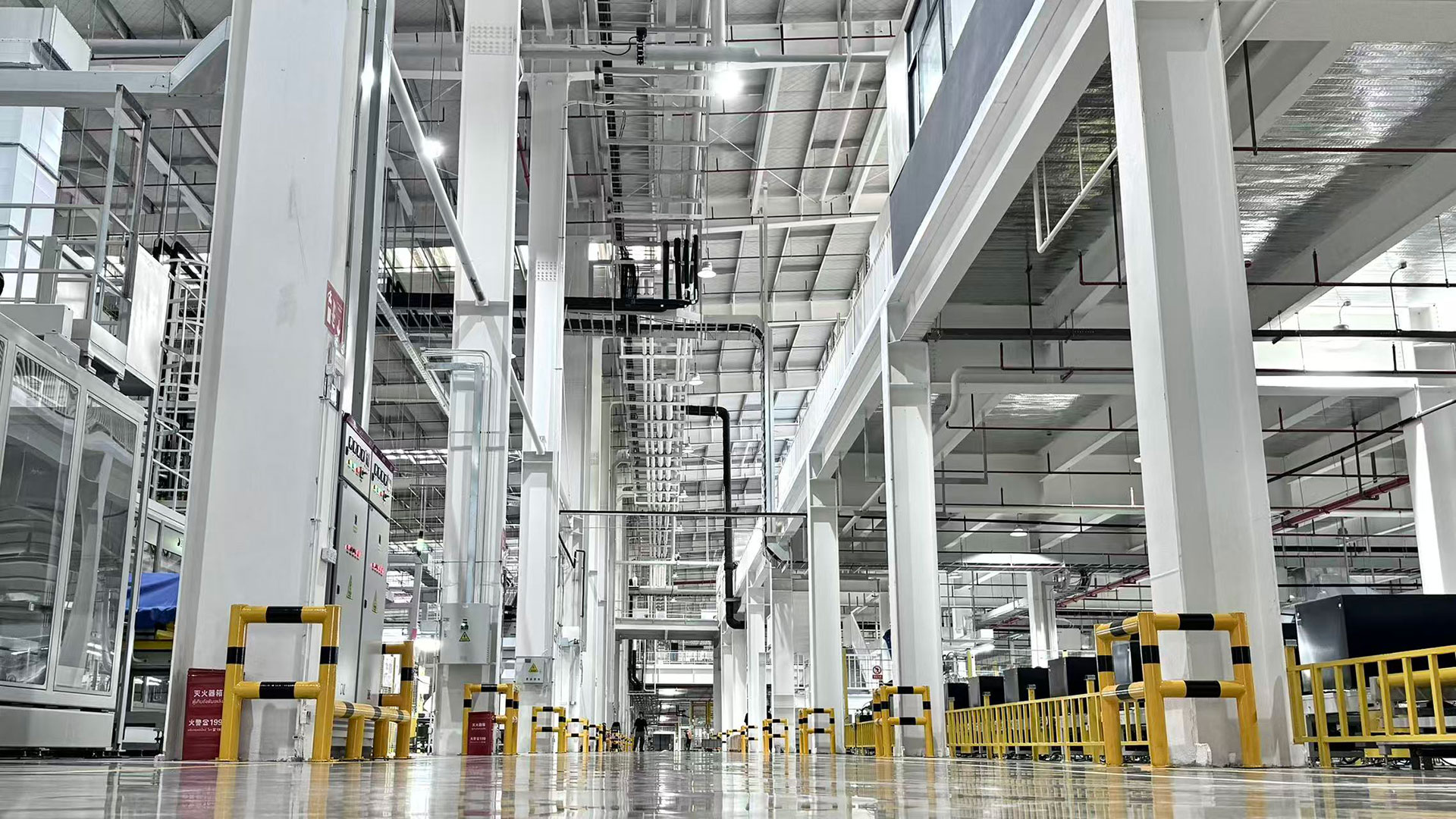
On 15 September, Homa officially commenced production at its new Thailand Refrigerator Plant in Chonburi, marking a significant new chapter in the company’s global manufacturing journey.
The ceremony brought together Homa’s senior management, representatives of local authorities, the landowner and construction partner, as well as customers from around the world. Their presence reflected the wider meaning of this milestone. A factory is never created by machinery alone. It requires an ecosystem of knowledge, infrastructure, cooperation and trust.
The production launch follows the opening of the Thailand Chest Freezer Plant and advances the strategic direction established when Homa broke ground on its first overseas manufacturing base in September 2025.
With a planned total investment of RMB 680 million and a built-up area of nearly 200,000 square metres, the Homa Thailand Production Hub brings together a refrigerator factory, a chest freezer factory, a components manufacturing centre, a showroom and office facilities.
The newly launched refrigerator plant represents the first phase of the refrigerator project. It focuses primarily on high-end products and is expected to reach an annual production capacity of 1.5 million units.
These numbers describe the scale of the project. Its strategic meaning lies in what that scale enables: a more flexible, responsive and resilient manufacturing network connecting China and Thailand and serving partners across international markets.
For more than two decades, Homa has developed its manufacturing expertise in Zhongshan. The opening of the Chonburi refrigerator plant does not replace that industrial foundation. It extends it.
The same direction was already visible when the first chest freezer left the production line in Thailand. As explored in Scaling with Intelligence, international expansion creates lasting value when production capacity is connected to market understanding, supply-chain stability and the ability to respond intelligently to change.
Thailand’s Board of Investment has described the growth of smart appliances and white-goods manufacturing as an important component of the country’s industrial development. Its official announcement concerning Homa’s investment in smart cooling appliances confirms the wider economic relevance of the project and its expected contribution to exports and local employment.
Resilience today does not mean attempting to predict every disruption. It means creating an industrial organisation capable of responding when conditions change.
A manufacturing network operating across China and Thailand provides additional flexibility, but geography alone is not sufficient. True resilience depends on common standards, shared knowledge, compatible systems and the ability to coordinate decisions across different production environments.
This is where smart manufacturing becomes essential.
A smart factory should not be defined by the number of automated machines installed inside it.
Its intelligence is revealed by the quality of the decisions it enables: how quickly information can travel, how consistently standards can be applied, how early deviations can be recognised and how effectively people can respond.
Homa’s broader manufacturing roadmap connects automation, robotics, digitalisation, AI-enabled visual recognition and digital-twin technologies. The development of Factory No. 9 and the company’s investment in full-process digitalisation have already been recognised in the European industry press, as reported in Whitegoods Now Highlights Homa’s Progress in AI-Driven OEM Manufacturing.
This direction is consistent with international developments in advanced production. The US National Institute of Standards and Technology identifies industrial data, sensing, artificial intelligence, robotics, digital twins and supply-chain optimisation as central elements in its 2026 roadmap for AI and machine learning in smart manufacturing.
Technology acquires industrial meaning when it produces recognisable benefits.
This is also the central idea behind Industrial Intelligence: every product is the visible result of thousands of decisions that remain largely invisible. Smart manufacturing creates value when it improves the quality, speed and consistency of those decisions.
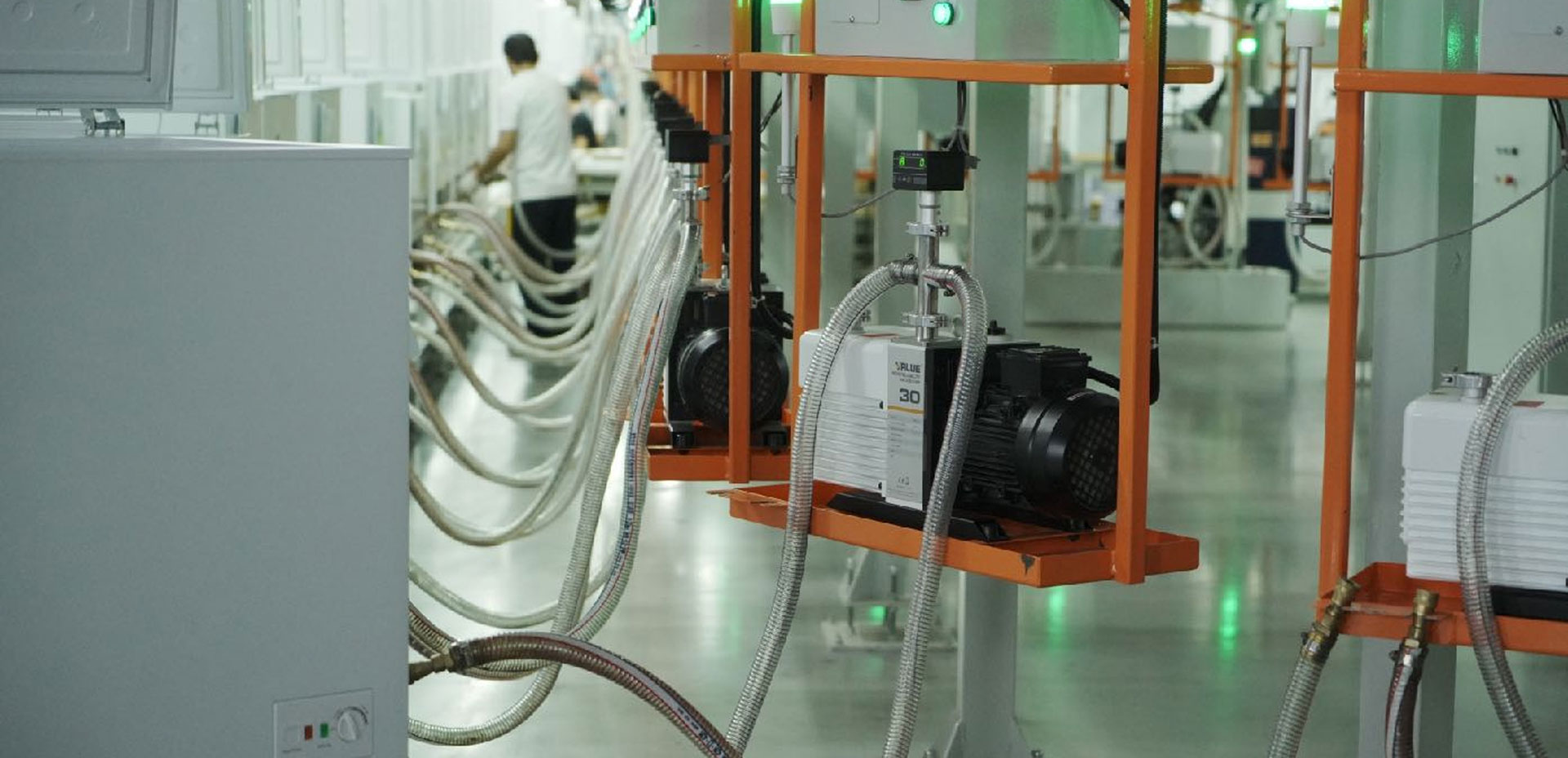
Artificial intelligence has an increasingly important role within advanced manufacturing, but it should not be treated as an autonomous substitute for industrial knowledge.
Manufacturing remains a physical activity. Materials vary. Equipment requires experience. Quality depends on judgement. Unexpected situations demand interpretation. AI can detect patterns, extend visibility and support decisions, but the organisation must still understand the processes, consequences and responsibilities behind those decisions.
Across Homa’s manufacturing network, AI-enabled visual recognition is being introduced in selected areas to identify potentially unsafe situations and support faster intervention. This approach is examined in Safety by Design, where technology, training, preventive maintenance and human responsibility are presented as parts of the same industrial system.
The OECD reaches a similar conclusion in its analysis of AI in manufacturing. Successful adoption depends on algorithms and infrastructure, industrial skills, organisational readiness, trust and the ability of employees to interpret and use AI-supported information.
For Homa, this distinction is fundamental. Artificial intelligence should not make manufacturing appear more sophisticated. It should help people work more safely, recognise issues earlier and make better-informed decisions.
Technology can be installed and processes can be transferred. Culture must be understood, shared and continuously renewed.
The Thailand Production Hub is Homa’s first manufacturing base outside China. This makes its opening much more than a geographical expansion. It represents a defining moment in the development of Homa’s corporate culture.
For more than twenty years, that culture has grown around the experience, discipline and manufacturing knowledge developed in Zhongshan. Establishing a production base in another country creates the opportunity to preserve this foundation while opening it to new people, perspectives and ways of understanding work.
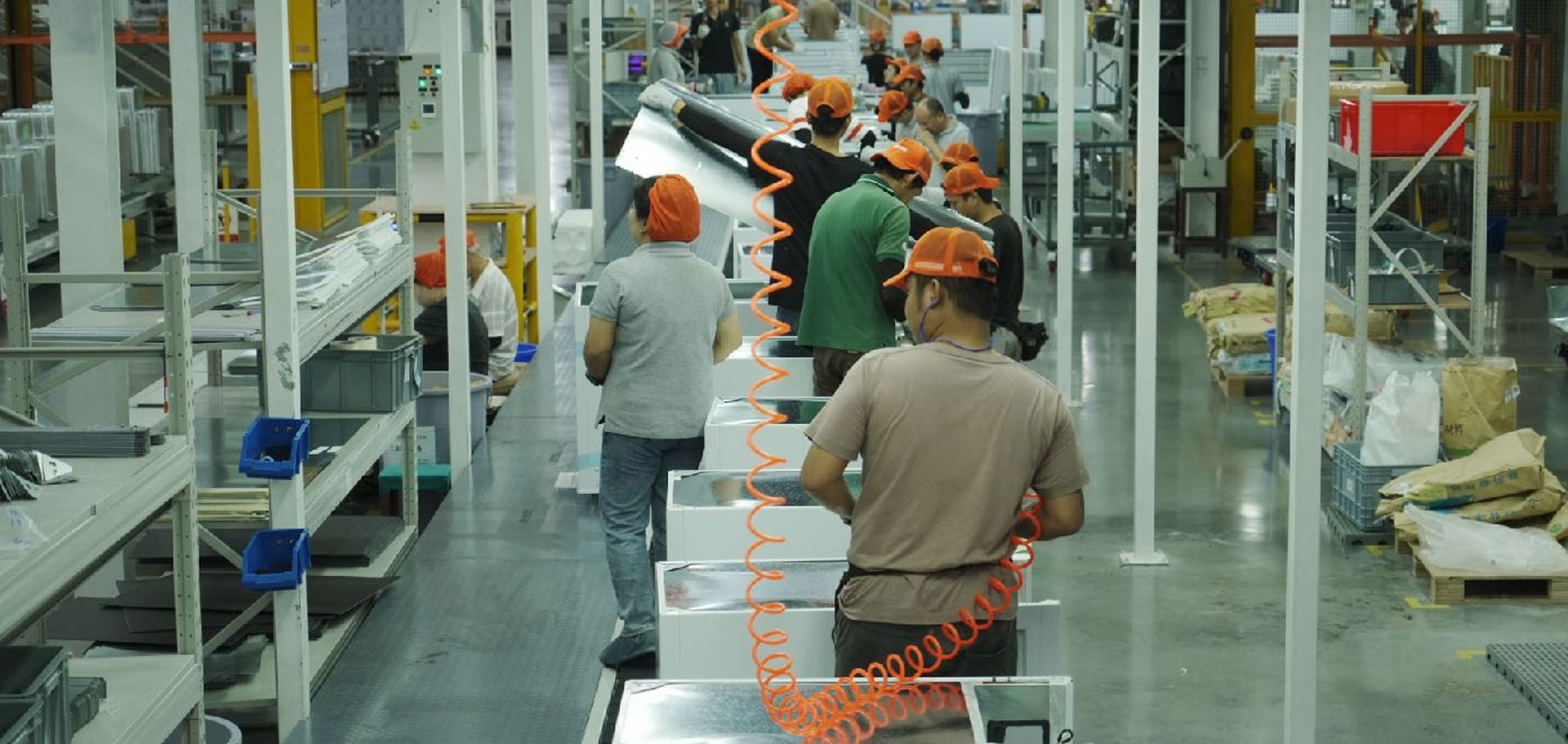
To support the start-up of the Thailand operation, 270 experienced technical experts from Homa’s headquarters in China have worked alongside their Thai colleagues, providing technical guidance, practical training and hands-on support.
Their role is not simply to reproduce an existing factory model. It is to help translate Homa’s manufacturing culture into a new environment, where it can be understood, applied and progressively enriched by local experience.
More than 800 employees have already joined the Thailand operation, while the complete project is expected to create over 3,300 jobs for Thai people and support opportunities for local suppliers and related industries.
Every new colleague entering Homa brings skills, experience, a cultural perspective and a way of interpreting problems. Including colleagues from another country makes the organisation more diverse and gives Homa a broader view of manufacturing, collaboration and the international markets it serves.
This is particularly important for a company operating across more than 150 countries and regions. A genuinely global organisation cannot simply manufacture in different countries. It must learn to think, listen and develop through different cultures.
The first overseas factory therefore becomes a cultural milestone. It asks Homa to identify which principles must remain constant and which practices can evolve through dialogue with a new country and a new generation of colleagues.
Manufacturing efficiency, quality, responsibility and commitment to customers remain essential parts of Homa’s identity. Their expression can become richer when Chinese industrial experience meets Thai knowledge, talent and culture.
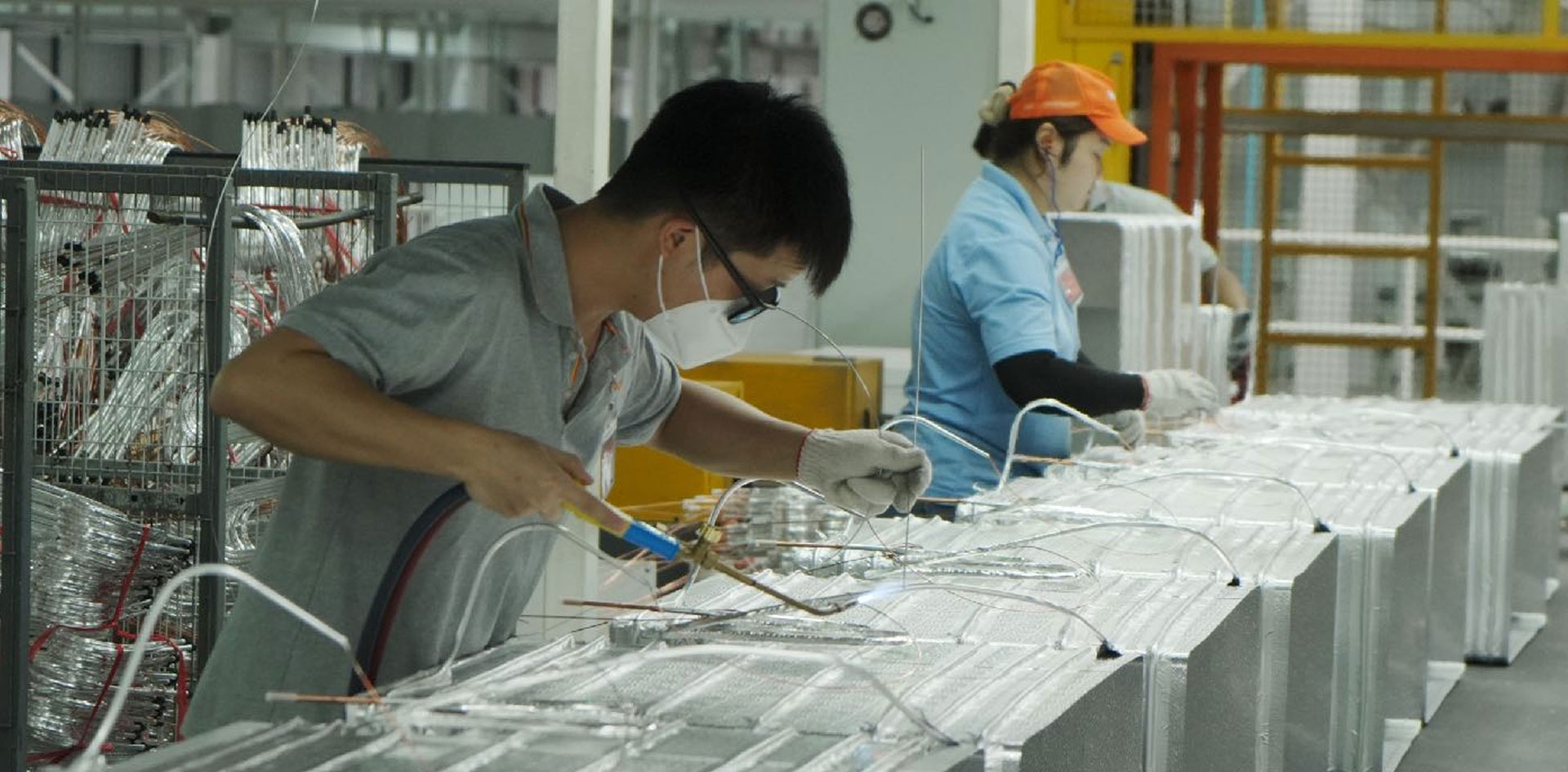
A factory becomes intelligent not when people disappear from it, but when technology helps different people combine their knowledge more effectively.
In this sense, Chonburi is not simply where Homa’s Chinese manufacturing culture is being replicated. It is where that culture begins to become more international, inclusive and capable of learning across borders.
The machines may be produced according to common standards. The culture will grow through the people who work together around them.
As Homa’s international footprint grows, consistency becomes one of the company’s most important responsibilities.
The manufacturing network now includes four major production hubs across China and Thailand, comprising nine refrigerator plants, two freezer plants and supporting components facilities. Homa’s global annual production capacity is expected to reach 21 million units, serving partners in more than 150 countries and regions.
Operating at this scale requires more than common production targets. It requires a shared industrial language.
Quality, safety, efficiency, environmental responsibility and customer commitment must mean the same thing in Zhongshan and Chonburi. Digital systems can support this consistency, but culture gives it continuity.
Homa’s approach to systematic safety management offers one example. Quarterly cross-factory audits, preventive maintenance, employee education and AI-enabled risk detection allow observations made in one production environment to contribute to learning across the wider network. The main developments are summarised in Homa Strengthens AI-Enabled Safety Management Across Its Global Refrigeration Manufacturing Network.
Sustainability must follow the same logic. It becomes credible when environmental responsibility is translated into energy choices, logistics, packaging, product efficiency and daily manufacturing behaviour. Homa Europe’s review, Looking Back to Move Forward, describes this pragmatic approach to more responsible manufacturing.
At the Chonburi ceremony, Homa CEO Michael Yao expressed the evolution clearly:
“From ‘Made in China’ to ‘Made with Homa’, we stay true to our belief: to be your partner of choice.”
“Made in China” identifies a country of origin. “Made with Homa” expresses something broader: a manufacturing culture that can remain recognisable across different countries, facilities and teams.
It represents a promise that wherever production takes place, Homa will bring the capabilities that define its industrial identity:
This evolution does not mean that Homa intends to occupy the market position of the brands and retailers it serves. As a pure cooling ODM specialist, its role is to create the industrial and technological conditions through which partners can build and protect their own differentiation.
This principle is developed in From OEM to Technology Enabler, where Federico Rebaudo, GM of Homa Europe, describes the modern OEM as a partner capable of connecting product, technology, design, market understanding and industrial execution.
Continue exploring
Discover further Homa Europe perspectives on intelligent manufacturing, meaningful technology and the evolution of the modern OEM.
• Factory N°9: Building the Future of Cooling, Today
• From OEM to Technology Enabler
• From Berlin Technology Is Searching for Meaning
Copyright HOMA 2026- Issued By Homa Marketing dept. on September 2026
For further Information and Press Contacts: info@homaeurope.eu