By Federico Rebaudo, Head of Homa Europe.
For many years, the term OEM carried a rather narrow meaning. It suggested manufacturing capacity, technical reliability, cost control and the ability to produce efficiently according to a client's specification. These qualities remain essential. No brand can build trust on weak execution. No retailer can defend its promise with inconsistent private label products. No industrial partnership can survive without quality, timing and competitiveness.
Yet the world around the appliance has changed. The refrigerator is no longer a neutral object placed at the end of a production chain. It has become a strategic interface between food, health, design, energy, logistics, data and daily behaviour. As a result, the role of the industrial partner must also evolve.
The modern OEM cannot remain only a manufacturer. It must become an enabler.
This distinction is important. To enable does not mean to replace the brands. It does not mean to impose a standard solution or dilute the identity of the client. It means building the industrial, technological and design conditions through which a brand can express its own difference with greater strength.
At Homa, this is how we increasingly understand our role. We do not simply build the box. We create the platform on which our partners can build meaning.
In food preservation, this is particularly relevant. Every brand has a different relationship with freshness, health, convenience, sustainability, technology and the kitchen environment. Some brands may want to emphasise advanced preservation systems for fruit and vegetables. Others may focus on energy efficiency, large capacity, premium interiors, flexible compartments or intuitive controls. Retailers may need private label products that do not simply compete on price, but reinforce the promise they make to their customers.
A strategic industrial partner must be able to accommodate these different ambitions without reducing everything to the same product.
This requires a more sophisticated view of platforms. A platform is not only a technical base. It is a strategic structure. It must allow variation, integration and differentiation. It must be robust enough to support scale, but flexible enough to protect identity. It must give brands the possibility to install their own technologies, define their own user experience and tell their own story in the market.
That is why the future of OEM manufacturing is not generic. It is modular, adaptive and brand-sensitive.
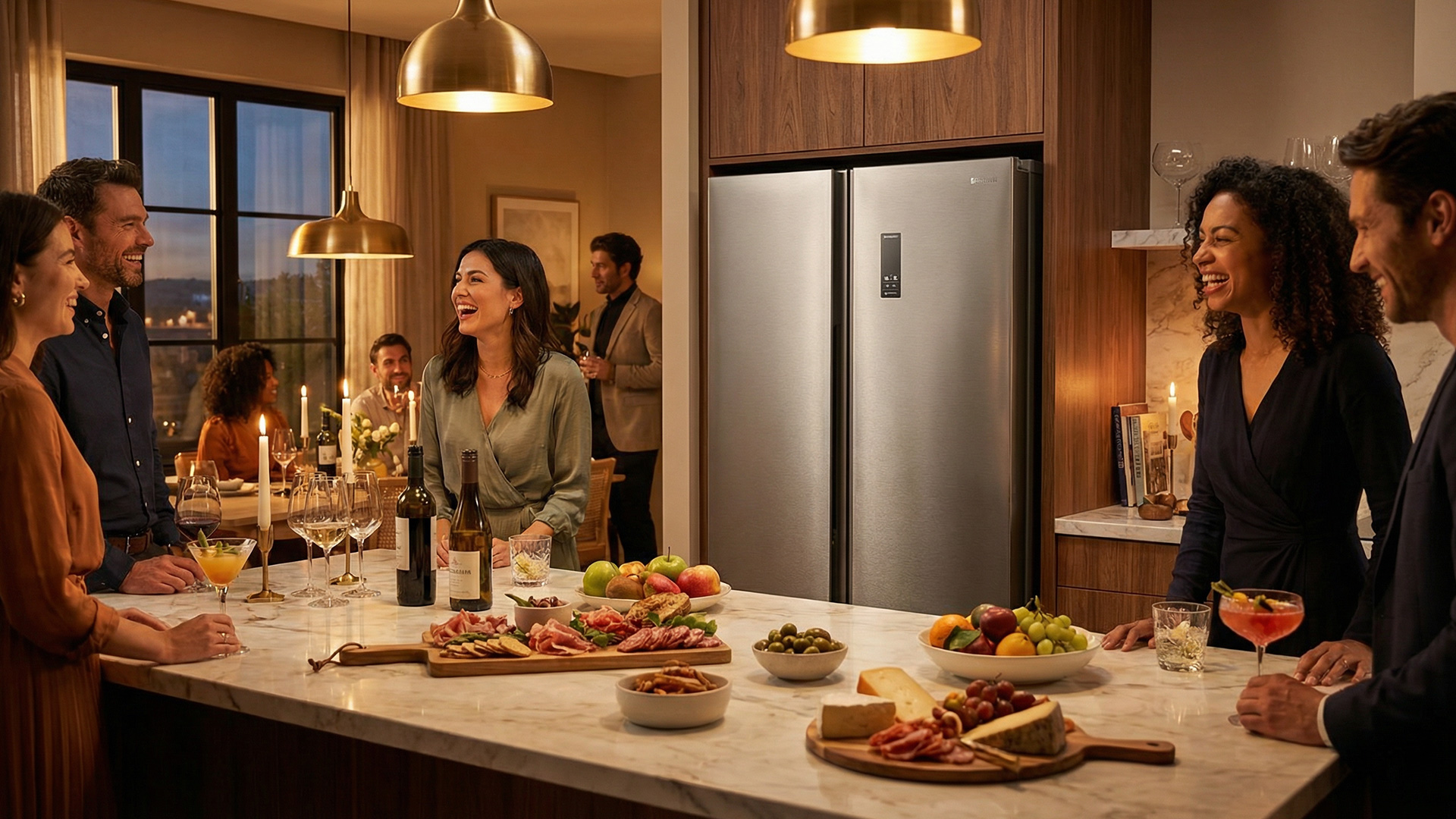
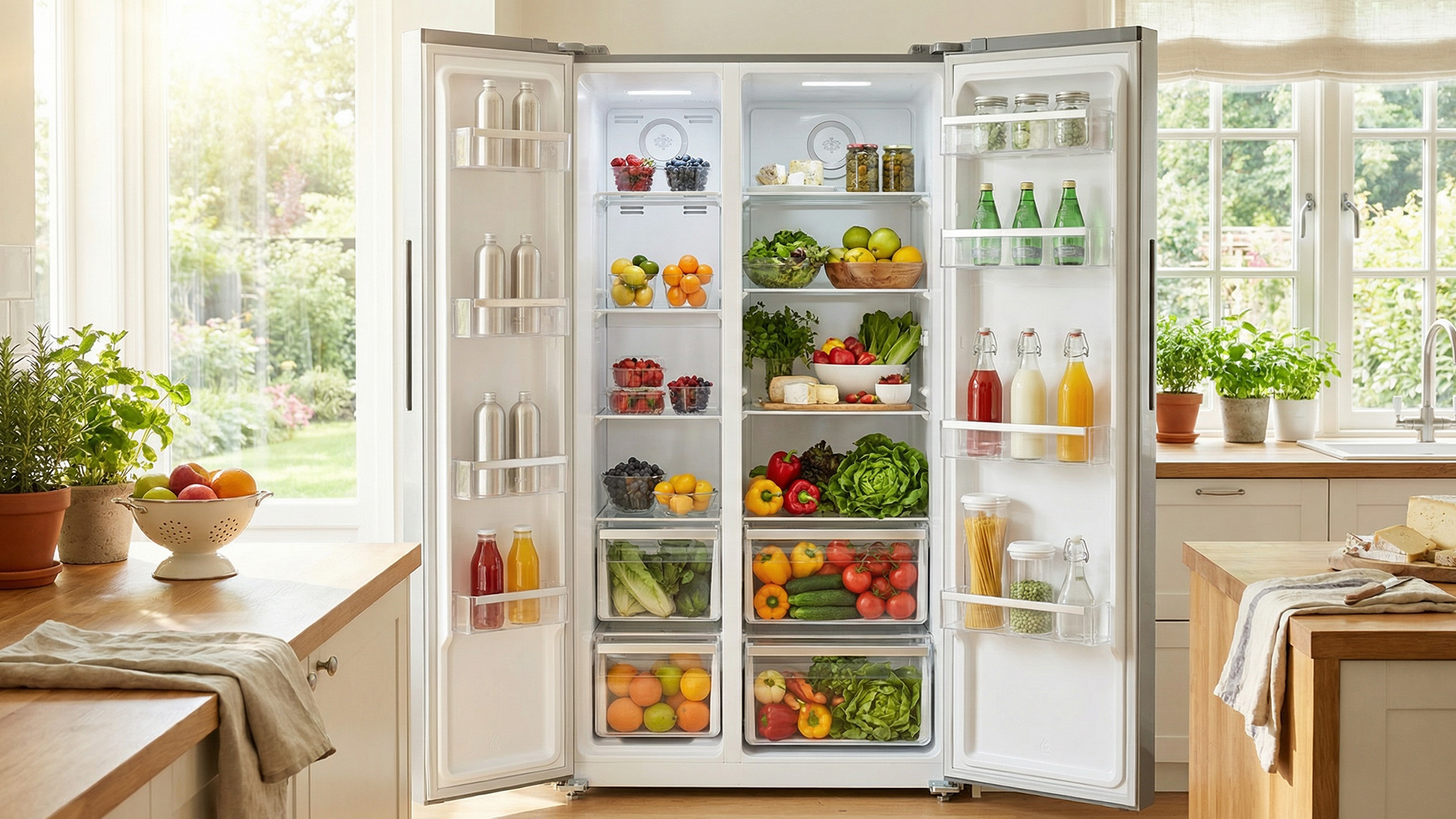
The change is also driven by the growing complexity of food preservation itself. Cooling is no longer the only conversation. Humidity management, airflow, odour control, filtration, compartment logic, sensor-based functions and data-enabled optimisation are becoming part of the value equation. This makes the refrigerator more intelligent, but also more demanding from an industrial point of view.
A brand may have a strong idea. A retailer may see a clear consumer opportunity. But the idea becomes real only when an industrial partner can translate it into a reliable, scalable and market-ready product.
This is where manufacturing knowledge becomes strategic knowledge.
The strongest industrial partners today are those able to connect engineering with market interpretation. They understand that technical capability alone is not enough. A feature must make sense in the life of the consumer. A compartment must correspond to an actual food habit. A digital function must solve a recognisable problem. A design detail must support the brand language, not simply decorate the appliance.
For this reason, Homa Europe's position is particularly important. Europe gives us proximity to brands, retailers, design culture and changing domestic behaviours. China gives us access to one of the most advanced and efficient industrial ecosystems in the world. The value lies in connecting these two dimensions with intelligence.
China is no longer only a place of production. It is a concentration of supply chain density, manufacturing speed, engineering experience and industrial scale. When this capability is guided by European market sensitivity, the result can be far more powerful than traditional outsourcing. It becomes a bridge between industrial performance and strategic meaning.
This is not a recent conviction. As early as 2022, during a press interview in Shanghai — later published under the title “奥马冰箱欧洲办公室总监 Federico Rebaudo 访谈” — I had the opportunity to discuss how Homa’s role was already moving beyond refrigeration as a product category and towards food preservation, customer value and European market interpretation within a global industrial ecosystem.
This is especially relevant for private label. The private label refrigerator of the future cannot be perceived merely as a cheaper alternative. It must carry a clear promise. It must feel coherent with the retailer's world. It must offer the right balance between function, design, reliability and value. For this to happen, the industrial partner must contribute not only production, but also perspective.
This perspective includes product architecture, range strategy, feature prioritisation, design language, consumer insight and storytelling. In other words, the industrial partner becomes part of the value creation process long before the appliance reaches the factory line.
There is also a cultural point here. In the past, the distance between brand and OEM manufacturer was often maintained by silence. The manufacturer executed. The brand communicated. The consumer never saw the industrial intelligence behind the product.
Today, this separation is becoming less useful. Brands do not need manufacturers who seek visibility at their expense, but they do need partners with a point of view. They need companies able to discuss trends, anticipate behaviours, support innovation and help transform industrial complexity into commercial relevance.
A good partner remains discreet. But discreet does not mean passive.
This is a delicate balance. We must be strong enough to bring ideas, platforms and technical capability. We must also be respectful enough to understand that the final relationship with the market belongs to our partners.

Food preservation is one of the clearest territories where this evolution can be seen. The refrigerator is becoming more complex, more intelligent and more central to the home. It requires a new form of industrial partnership: one that can combine product, technology, design, manufacturing, consumer understanding and strategic restraint.
In this new landscape, the question is no longer simply: who can manufacture the appliance?
The better question is: who can help create the conditions for a brand to express a meaningful vision of preservation?
That is the role of the technology enabler.
And that is where the next chapter of industrial partnership begins.
Federico Rebaudo, General Manager at Homa Europe
This article is part of Strategic Perspectives, an editorial series by Federico Rebaudo, General Manager at Homa Europe.
The series explores how OEM manufacturing is evolving beyond industrial execution, connecting food preservation, design thinking, consumer understanding, technology, marketing culture and strategic
partnership.
Continue exploring the series:
. The Invisible Revolution: Food Preservation Beyond Cooling
. When Design Becomes Language
. The Data-Driven Refrigerator
Copyright HOMA 2026 Issued By Homa Marketing dept. on February 2026
For further Information and Press Contacts: info@homaeurope.eu