
How European Market Insight, Chinese Industrial Capability and Design Are Redefining Global OEM Leadership
Beyond Manufacturing
The evolution of global manufacturing is changing the role of OEM companies. Competitive advantage no longer depends solely on production capacity, cost efficiency or technological excellence. Increasingly, it depends on the ability to understand markets, anticipate cultural shifts and translate consumer expectations into industrial decisions.
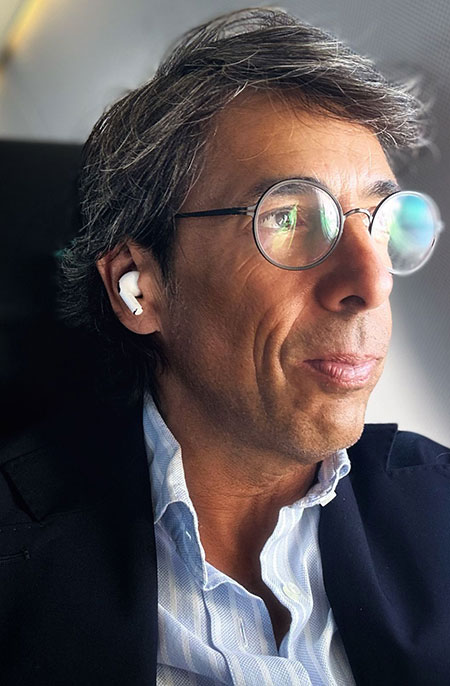
In this conversation, Federico Rebaudo reflects on more than two decades spent connecting European market intelligence with Chinese industrial capability. His experience illustrates how design, strategic sourcing and cultural mediation have become essential drivers of innovation within the OEM industry.
This conversation is therefore not simply the story of one executive’s career. It is an exploration of how European market knowledge, Chinese industrial capability and design thinking can combine to create a new model of OEM leadership.
Rather than discussing a personal career, this interview explores a broader transformation: the emergence of a new generation of manufacturers capable of combining engineering excellence with market understanding, long-term partnerships and customer-centric thinking.
From the early years of Homa to its position as one of the world’s leading refrigerator exporters, the discussion offers insights into how industrial organisations can evolve from manufacturing partners into strategic innovation partners.
Connecting Worlds
Some careers are built by moving between companies. Others are built by connecting worlds.
Federico Rebaudo has built his career at the intersection of European consumer culture, appliance design and Chinese industrial manufacturing. A cultural mediator and an ideal bridge between China’s production-oriented OEM tradition and customer-centric home-appliance multinationals, he has brought global thinking into Homa’s strategy: deciphering Western business and cultural codes on the one hand, and bringing Chinese industrial ingenuity, technology and scale to leading manufacturers and private-label operators on the other.
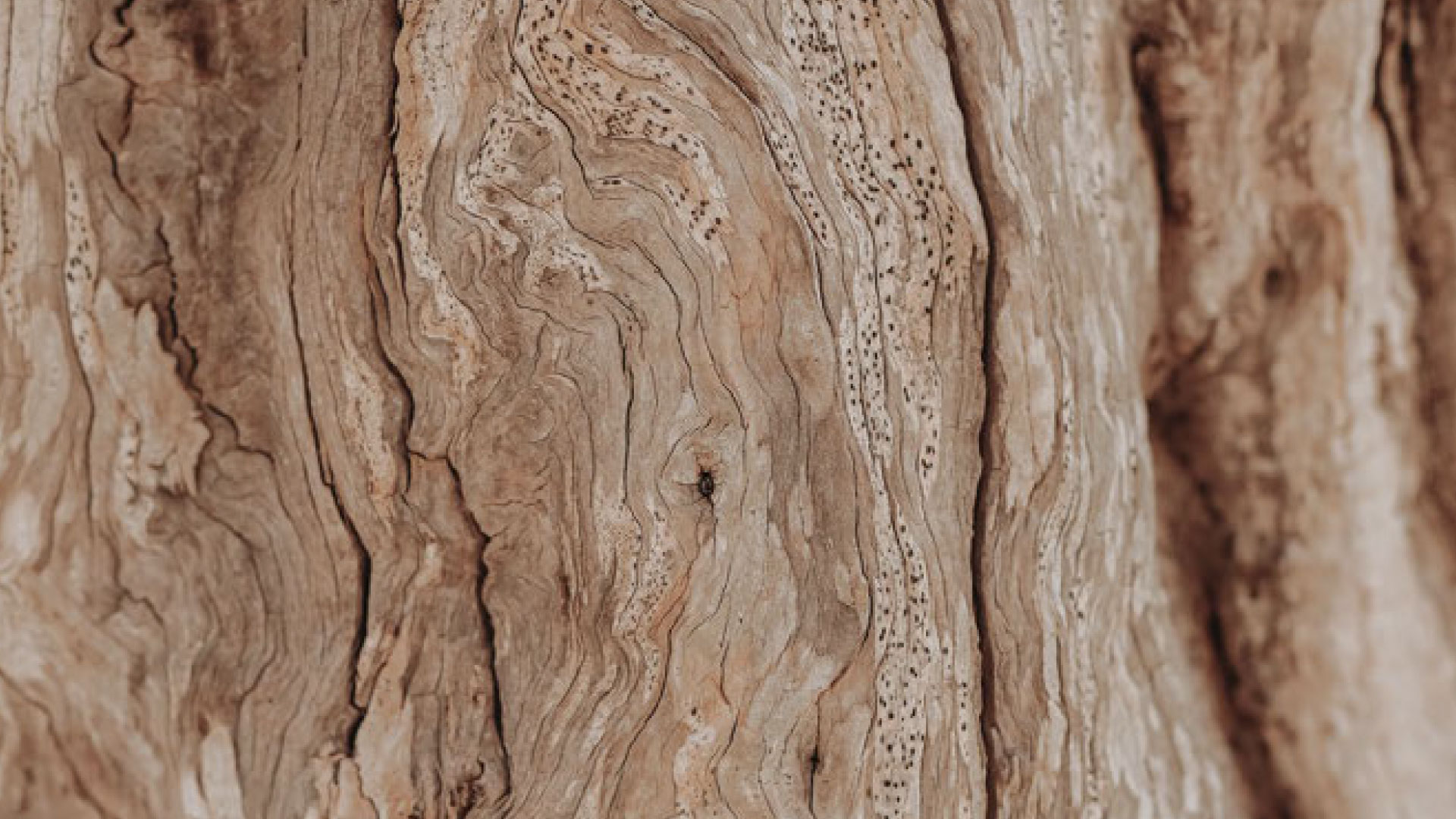
Over the years, Rebaudo has become recognised for connecting European market insight with Chinese industrial capability, helping translate customer expectations into product strategies, design directions and long-term industrial partnerships. Rebaudo likes to compare Homa, and himself, to an olive tree, with branches reaching out to the world but roots firmly planted in one place. A recurring figure in literature across the ages, the olive tree symbolises wisdom and humility, longevity and vitality. Rebaudo’s own roots are in Bordighera, a Mediterranean coastal town near the French-Italian border. It is a demanding territory, where olive trees belong to a different variety from those found in other olive-growing regions and must be stronger to survive the harsh conditions of this frontier land.
That landscape is reflected in the character of its people: they take nothing for granted and are prepared to wrest success from unfavourable circumstances. It is also a land of travellers, navigators and pioneers. Federico Rebaudo followed that tradition when he left the security of a senior role with a leading Italian appliance company and took a leap of faith by joining what was then a small and relatively unknown Chinese OEM. Since April 2013, he has led Homa’s European office. Today, Homa is the world’s leading OEM exporter of refrigerators.

Interview with Federico Rebaudo, General Manager of Homa Europe
Tell us about your first encounter with Homa.
At the time, I was Global Marketing Director for the cooling division of one of Italy’s leading home-appliance manufacturers. The company was among the first to consider sourcing not as a tactical move, but as a strategic opportunity. I set out to find partners capable of moving beyond a cherry-picking, off-the-shelf mentality and working with us to create complete product ranges, or meaningful parts of them.
I was seeking a genuine strategic partnership: not someone who could simply mass-produce inexpensive white boxes, but a partner capable of manufacturing those products to a high standard while remaining highly competitive, and of reinterpreting them for the companies that would ultimately market them under their own brands. Even then, I believed strategic sourcing was not a procurement exercise, but a way of combining industrial capability, design thinking and market understanding to create long-term competitive advantage.
At one point, I came across a small factory in China where I met people with whom I immediately felt at ease. Michael Yao was among them. After only a few meetings, we realised that we understood each other perfectly. I knew I had found the partners I needed. Homa was not yet as technologically advanced as some other OEMs and was mainly producing small, relatively simple appliances. But that limitation was more than offset by its open-mindedness, willingness to listen and ability to recognise an opportunity. The team was also eager to bring disruptive innovation to the conventional client-supplier relationship, something we would later develop into a successful business model. Homa’s strength comes from being different: beyond its industrial firepower, it has given a new interpretation to the concept of OEM. I first recognised that distinction as a customer, and later, from within the organisation, I continued to nurture it.
How did that turn out?
The challenge we faced was not unusual. Our company had to allocate significant investment to product categories where it already held leadership positions while simultaneously defending its presence in the growing built-in market. Refrigeration, despite its strategic importance, could not receive the level of internal investment required to develop an entirely new product family.
Constraints often force organisations to rethink established assumptions. In our case, they led us to reconsider the role of sourcing itself.
Rather than searching for a supplier capable of delivering finished products at the lowest possible cost, I began looking for an industrial partner capable of helping us manufacture an entire strategic category. At the time, this was a relatively unconventional approach. Most sourcing decisions were still driven primarily by procurement functions, understandably focused on negotiations, pricing and operational efficiency.
I believed the discussion should begin much earlier. Competitive advantage is rarely created during negotiation. It is created when industrial capability, product architecture and market positioning are developed together.
Eventually, procurement approved the project, despite understandable reservations about whether such a young Chinese manufacturer could support such an ambitious programme.
The first products were developed together with the young Sicilian designer Umberto Palermo. Our design brief was deliberately unconventional. Rather than designing for one factory, we wanted to create a product capable of being manufactured across different industrial environments, regardless of technological maturity.
Avoiding expensive moulds and relying instead on carefully engineered sheet-metal solutions gave us remarkable manufacturing flexibility while maintaining product quality and visual coherence.
Looking back, that project taught me something that has influenced my professional philosophy ever since.
Innovation rarely begins with technology.
It usually begins with asking a different question.

How did you come to join Homa?
Following several years of successful collaboration, I was promoted in late 2010 to Marketing Director of my company’s rapidly expanding French subsidiary. Moving to Paris represented an important professional opportunity, and for a number of years my path and Homa’s naturally evolved in different directions.
During that period, however, we never completely lost contact.
Homa continued to grow rapidly, while I continued observing the evolution of European markets from the perspective of brands, retailers and consumers. Eventually, Michael Yao invited me to consider joining the company.
His proposal was not simply to develop new refrigerators. It was to help build a different type of OEM.
One capable of anticipating market evolution rather than merely responding to customer specifications.
That distinction made all the difference.
My responsibility would not simply be to contribute to product development. It would be to translate European market expectations into industrial decisions, connecting consumer insight, design culture, engineering capability and manufacturing strategy.
In many organisations these disciplines operate independently.
I have always believed that genuine innovation emerges precisely where they intersect.
It was an opportunity to express new ideas and contribute to Homa’s ability to influence the wider industry. I also found a corporate culture that strongly supported genuine innovation. Innovation is not simply technological; it is above all a cultural approach to a product category. Over the past 10 to 15 years, Homa has played an increasingly active role in driving innovation. Through what I call “pop exclusivity”, it has made advanced products accessible to a much broader group of consumers through the brands of its clients.
Thanks to its industrial scale, with annual production capacity of approximately 12 to 13 million units, Homa has been able to make new product platforms featuring advanced and meaningful food-preservation technologies available to a much wider audience. The key lies in balancing production firepower with the ability to listen to clients and understand what end consumers truly need. What attracted me most was not simply the opportunity to contribute new ideas. It was discovering an organisation genuinely prepared to question its own assumptions.
Innovation is often described as a technological process.
My experience has been very different.
Technology enables innovation.
Culture determines whether innovation actually happens.
Over the past fifteen years, Homa has progressively transformed itself from a highly capable manufacturer into an organisation increasingly able to shape product categories rather than simply supply them.
Through what I describe as “pop exclusivity”, advanced refrigeration technologies have become accessible to millions of consumers through the brands of our partners.
That, to me, represents one of the most meaningful forms of innovation.
Making sophisticated solutions available not to a privileged few, but to the broader market.

Since Homa is not a consumer brand, how can you be so attentive to end consumers’ needs and aspirations?
It is a question I have often been asked throughout my career, and it highlights one of the most common misconceptions about the OEM industry. People naturally assume that only consumer brands can truly understand consumers.
My experience suggests something different.
We may not sell directly to end users, but every day we interact with dozens of brands, retailers and distributors operating across very different markets, consumer segments and price positions.
Each of these relationships provides a different perspective on consumer behaviour.
Our advantage lies in our ability to connect those perspectives. Rather than observing the market through a single commercial lens, we are able to recognise recurring patterns that emerge simultaneously across multiple countries, retail channels and brand strategies.
This broader viewpoint often allows us to detect changes long before they become visible at individual brand level.
Every incoming project tells a story. Every quotation request, every product brief and every retailer discussion contains signals about where the market is moving.
When those signals are analysed collectively rather than individually, they become a remarkably powerful source of market intelligence.
In many industries, companies purchase consumer research periodically. We experience the market continuously. That does not mean replacing traditional research. It means complementing it with a constant flow of real commercial behaviour. Orders become information. Information becomes knowledge. Knowledge becomes industrial decisions.
Design therefore plays a much broader role than aesthetics.
It is the discipline that transforms market intelligence into products capable of serving multiple brand identities without losing coherence, efficiency or commercial relevance.
A successful OEM platform must satisfy engineering requirements, manufacturing efficiency, retailer expectations, brand positioning and ultimately consumer needs.
Good design is what allows all these dimensions to coexist.
In this sense, design becomes an industrial capability rather than a creative exercise.
Another characteristic that distinguishes Homa is what we internally describe as our philosophy of Care. Care is often misunderstood as customer service. In reality, it begins much earlier.
It influences the way projects are discussed, products are conceived, relationships are developed and long-term partnerships are built.
Industrial capability may create products.
Care creates trust. Trust, over time, becomes one of the most valuable competitive advantages an organisation can possess.
Especially in an OEM business, where success is measured less by public visibility than by the confidence customers place in your ability to solve increasingly complex challenges.
In your position, you need to reconcile global consumer culture with Chinese industrial practices. How do you do it?
I often say that I was fortunate to be born on a border.
Growing up between Italy and France meant learning very early that different cultures can observe exactly the same reality while interpreting it in completely different ways.
Later, living and working in several European countries reinforced that lesson.
Diversity stopped being something to manage. It became something to leverage.
Looking back, I now realise that this experience prepared me perfectly for the role I would eventually play inside Homa.
My responsibility has never been simply to explain Europe to China or China to Europe.
It has been to help both sides understand each other well enough to make better decisions together.
Cultural mediation is frequently mistaken for translation.
Translation transfers words. Cultural mediation transfers meaning.
It means recognising the assumptions hidden behind market expectations, consumer behaviour, design preferences and business decisions, then translating them into industrial actions that people with completely different cultural backgrounds can immediately understand.
That is where I believe real competitive advantage increasingly lies.
Products can be copied. Technologies eventually become available to everyone.
The ability to understand people before competitors do is far more difficult to replicate.
Recently, I was delighted to hear Chinese R&D colleagues, from a department traditionally focused on technological questions, referring to European cultural perspectives on food and cuisine while discussing multi-climate zones for a range of No Frost products intended for those markets. Multi-climate zones were themselves the result of the cultural-mediation approach we are discussing. This is what truly excites me about being part of Homa: the opportunity to make a real impact and influence the way we do business.
The narrative we built around multi-climate worked in two directions, externally and internally. In this case, my colleagues demonstrated that they had fully understood and absorbed it. When our scientists begin reasoning like the chefs of a French Michelin-starred restaurant, going out of their way to preserve the nature and integrity of fresh ingredients, I know we can make a real difference and establish a clear advantage over traditional OEMs.
As a link between cultures, I have also learned how to express ideas that need to be heard, even when discussions become lively. On one side, we must be able to understand what is happening in the world; on the other, we must translate that understanding into something useful for the organisation.
The “sensing” part is where I believe I can make my strongest contribution, also thanks to partners such as Studio Volpi, who provide me with a constant flow of ideas and perspectives. Nobody achieves anything alone. Successful projects are always the result of different people bringing their minds together. The other side must also be prepared to listen, and Homa has a genuine culture of openness and a desire to understand and make the most of this kind of cultural intelligence.
To me, cultural mediation is not simply about translating languages. It is about translating behaviours, expectations and cultural meaning into decisions that an industrial organisation can turn into products, services and meaningful customer value.
How can you personalise a mass-manufactured product, and how does Homa stand out when, by definition, it must adapt to many different identities?
It begins with the initial design. In addition to cost optimisation and smart industrialisation, the design must be flexible enough to allow different levels of personalisation and fit a wide variety of brand identities. For me, design is not decoration added at the end of the development process. It is the discipline that connects industrial constraints, brand identity and consumer relevance from the very beginning.
Storytelling also plays an important role, and clients are becoming increasingly receptive to this aspect of our offer. We need to be distinctive and sophisticated in our corporate narrative, but stylishly inclusive at the point of sale, because the same platform will be marketed under different labels.
Being a major global player requires sensitivity: the ability to understand that a product is far more than a simple appliance. Although Homa is now a corporation in every sense, it has retained a degree of entrepreneurial craftsmanship and freshness in the way it conceives product ranges, qualities once associated with the founders of the great Western brands. Much of this depends on intuition, human skills and open-mindedness. Products evolve in the same way that people and consumers evolve. Ultimately, that is what innovation is about. Technology is a means of responding to that evolution, not an end in itself.
How do you conceive your role within Homa today? What about the future?
When I first discovered Guangdong, I found many similarities with the land I come from, Italy : the entrepreneurial spirit, the “we can do it” mentality and the positive attitude towards change. I immediately felt at home. As a non-Chinese professional, being able to work with people who have been part of Homa’s journey from the beginning is a great privilege.
Today, I see my role as connecting market intelligence, design culture, customer relationships and industrial decision-making between Europe and China. My responsibility is not only to manage Homa Europe, but also to help the organisation understand where the market is moving and translate those signals into meaningful action. This also means investing in people: creating opportunities for our teams to learn, gain exposure to different perspectives and develop the confidence to think beyond their immediate roles.
My ambition remains to be an agent of change, particularly at a time when the organisation is more open than ever to new ideas, just as it was in its early years. In fact, Homa thrives on them. The opportunity to contribute in this way is both exciting and rewarding, and it is something I might not have found elsewhere.
Now that Homa has become one of the biggest cooling manufacturers, we need to evolve from a purely entrepreneurial mindset towards a more structured managerial approach. But we must not lose the original spirit. We need to preserve the same humility and open-mindedness in the way we view our business, embed those values in our processes and culture, and continue to embrace change.
Our products are deliberately designed to be accessible to the broadest possible audience. Yet I can see Homa taking its evolution from Original Equipment Manufacturer to Original Design Manufacturer to the next level: becoming truly authentic, anticipating and influencing global trends across the industry.
In the global olive grove of home appliances, our tree will stand strong and tall. It has come a long way, tempered by its environment and cultivated through the goodwill, intelligence and talent of many individuals. Most importantly, we will continue to grow steadily and ambitiously as the world’s supplier of choice.
About this interview
This executive interview is an editorial adaptation of one of the central conversations originally featured in Our Extraordinary First 20 Years, the commemorative book celebrating the first two decades of Homa’s journey.
Drawing on the full body of journalistic material originally gathered for the interview, this edition develops and expands the ideas contained in the published conversation, creating a richer standalone thought leadership article for a broader international audience.
Discover the introduction to Our Extraordinary First 20 Years
Also part of the same editorial series:
Homa’s Mediterranean Flair, with Umberto Palermo
Homa’s Journey Through Its Name, Iconic Orange Logo and Innovation
Two decades of cool, with Paola Guidi
A question of energy, with Gianmario Jimmi Volpi
Copyright HOMA 2026- Issued By Homa Marketing dept. on May 2026
For further Information and Press Contacts: info@homaeurope.eu