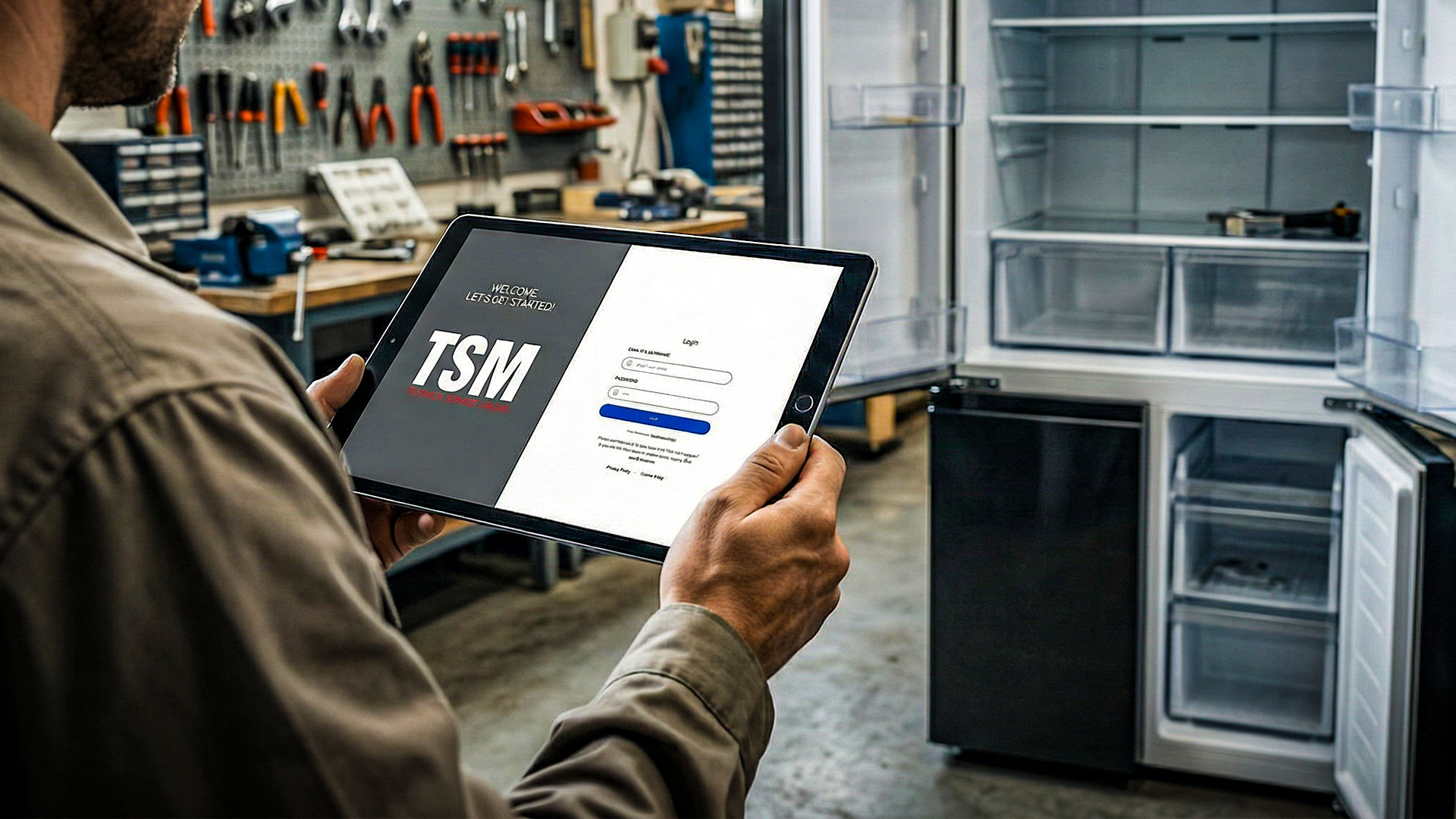
There is a moment—often so subtle it goes almost unnoticed—when a product stops being useful. A refrigerator that no longer cools as it should, a door that loses its precision, a system that quietly reaches its limit after years of reliable service.
We tend to think of that moment as an end. In reality, it is something very different.
It is the point at which the consequences of earlier decisions begin to surface.
Every product carries within it a timeline that extends far beyond its use. What we commonly define as “end-of-life” is not a conclusion, but a transition—a passage into a new phase that is often complex, sometimes inefficient, and always revealing.
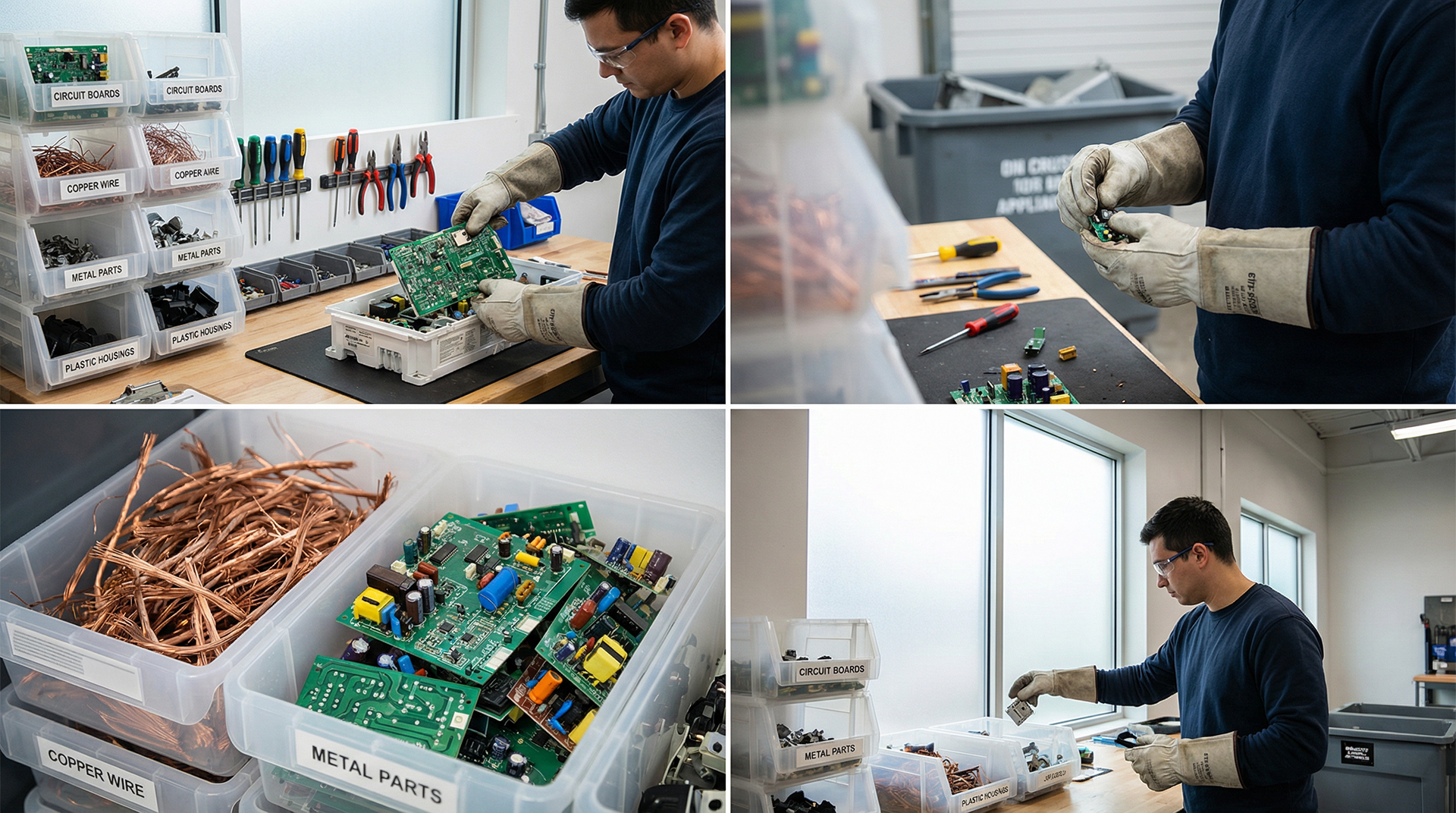
A perspective we have explored in greater depth in “The Multiple Reincarnations of the Domestic Refrigerator” where once an appliance leaves the home it enters a fragmented and demanding process made of dismantling, separation, and recovery. Materials are extracted, components are sorted, and value is, at least partially, recovered.
Yet not everything can be reclaimed with the same ease. And not everything, crucially, was designed to be.
This is where the real question emerges. Not at the end, but at the beginning.
In industrial systems, the most decisive moments happen long before they become visible.
This is something we have discussed extensively in Crafting Tomorrow: The Art of Designing the Future a firechat conversation between Federico Rebaudo(Homa Europe General Manager) and Umberto Palermo( founder and Ceo of UP Design the proudly design house that design all Homa products) where up to 80% of a product’s environmental footprint is determined during the design phase.

These are not neutral technical choices. They define whether a product can be repaired, whether it can be disassembled, and whether it can realistically re-enter the cycle of materials in a meaningful way.
As Michael Yao, President of Homa Appliances Co., Ltd, observes:
“In a world that increasingly needs sustainable attitudes, making products easily repairable is a demonstration of maturity.”
Turning this principle into reality requires more than intention. It requires infrastructure.
At Homa, this transition takes shape through an ecosystem that extends beyond manufacturing itself.
As Simon Wu, Homa senior VP for R&D , often insists—and reminds us :
“Today, design, engineering, and manufacturing are no longer just about form, function, or quality—they are where sustainability takes shape. When marketing insights and design thinking converge, they illuminate a path where materials, structures, and product architecture are conceived not only for performance, but for repairability, longevity, and a more responsible lifecycle.”
As we outline in H+, the Anatomy of Care the concept of Care is embedded into a service architecture designed to support products throughout their entire lifecycle.

Within this framework, tools such as the TSM (Technical Service Manual) platform play a defining role.
(You cand take a closer look at how this system works can be found here: TSM overview) .
Designed as a dedicated system for the service centres of our partners worldwide ( brands and private labels) , TSM platform enables technicians to repair the appliances we manufacture for them in a faster, more intuitive, and more reliable way. By providing structured access to technical documentation, diagnostics, and guided procedures, it simplifies complexity and reduces intervention time, turning repair into a seamless and repeatable process.
This is not a marginal improvement, but the result of a deliberate investment. One that reflects a clear intention: to make repairability not just possible, but practical at scale.
In doing so, repair is no longer treated as a reactive intervention, but as a designed capability—one that extends product lifespan, preserves value, and reinforces a more responsible approach to the entire lifecycle.
Within this framework, tools such as the TSM (Technical Service Manual) platform play a defining role.
Designed as a dedicated system for the service centres of our partners worldwide, TSM enables technicians to repair the appliances we manufacture for them in a faster, more intuitive, and more reliable way. By providing structured access to technical documentation, diagnostics, and guided procedures, it simplifies complexity and reduces intervention time, turning repair into a seamless and repeatable process.
This is not a marginal improvement, but the result of a deliberate investment. One that reflects a clear intention: to make repairability not just possible, but practical at scale.
Alongside this, we have developed our proprietary SPM platform—a web-based system that allows service centres to quickly and securely identify and order original spare parts. Because if repair matters, access to the right components must be just as seamless.
Together, these systems remove friction from the repair process, ensuring that extending a product’s life is not only the right choice, but also the easiest one to make.
This perspective reflects a broader understanding of responsibility.
As Anthea Wang, VP Head of the International Business Centre, notes:
“Today, our customers are not only asking for high-performing products, but for systems that can support them throughout the entire lifecycle. Platforms like TSM and SPM have become a natural extension of this expectation—turning repairability into a concrete, accessible value that strengthens both operational efficiency and long-term trust.”
It is part of a journey we have been shaping over time, as shared in Our Responsible Journey and further expanded through our reflections collected in our Green Paper where sustainability is approached as a
long-term, systemic commitment.
Nothing truly ends. It transforms. Because nothing ends where we think it does.
Copyright HOMA 2026- Issued By Homa Marketing dept. on March 2026
For further Information and Press Contacts: info@homaeurope.eu