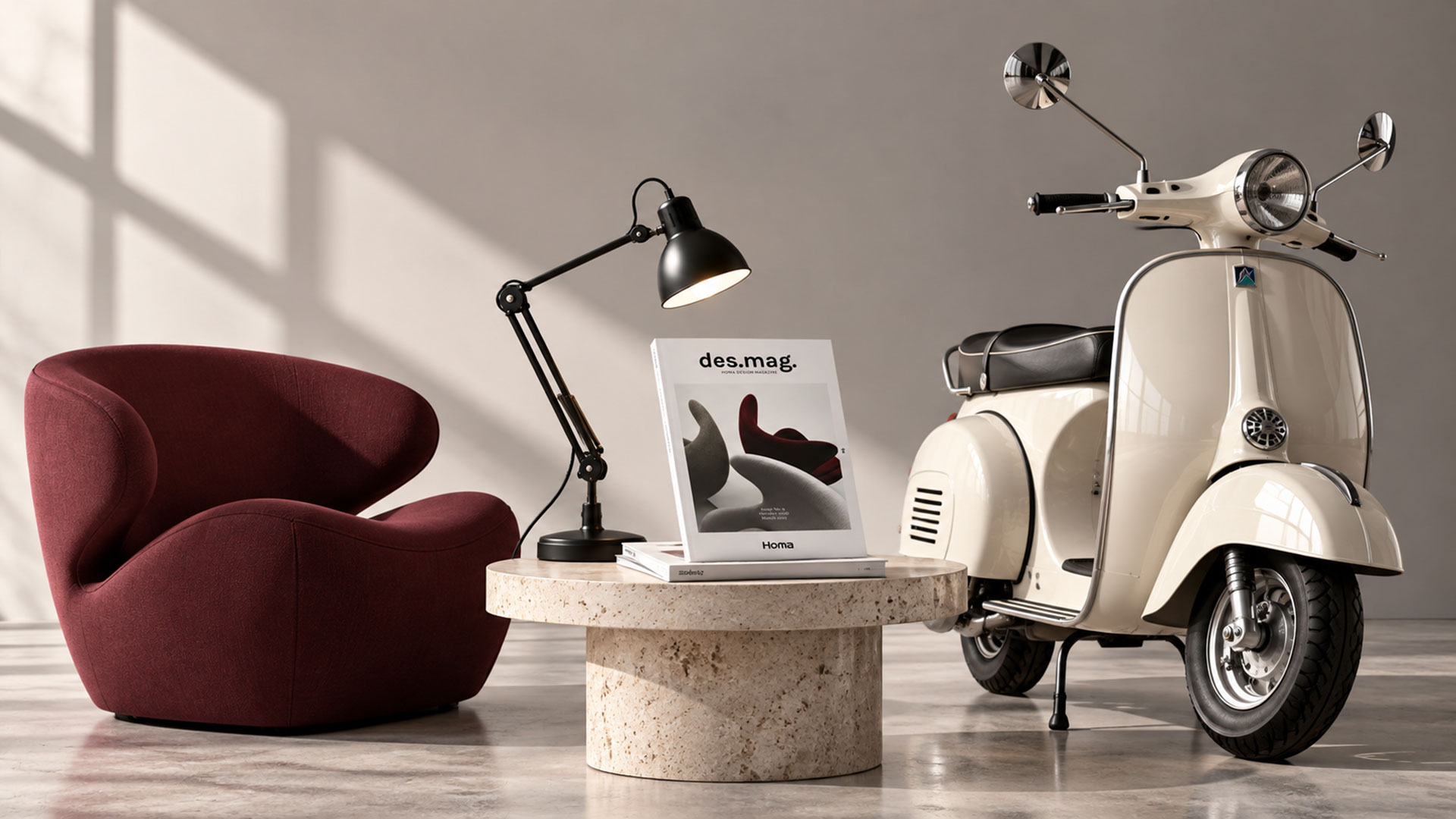
On 15 October 2026, Homa launches the ninth issue of its award-winning Design Magazine. After nine editions, the project has become something larger than a publication: a way to observe, learn, connect and bring design culture back into the organisation.
By Federico Rebaudo
Homa Design Magazine No. 9 | October 2026 – March 2027 | Editor-in-Chief: Federico Rebaudo
A magazine can communicate what a company already knows. It can also help a company discover what it still needs to understand.
For me, that distinction has always been at the heart of Homa Design Magazine.
When we started this project, the ambition was never simply to produce another corporate publication. Homa already knew how to manufacture refrigerators at scale. The more interesting question was how an industrial company could continuously expose itself to ideas, people and disciplines capable of challenging the way it thinks.
Nine editions later, that question matters even more.
On 15 October 2026, during the 140th Canton Fair in Guangzhou, we release Homa Design Magazine Issue No. 9, covering October 2026 to March 2027. It is also the first issue published after Homa Design Magazine received the iF DESIGN AWARD 2026 for Branding & Communication Design, an important recognition for a project that began within Homa Europe and has gradually become part of Homa's cultural language. Read Homa's iF DESIGN AWARD 2026 article.
But an award is a milestone. The real value of the magazine lies in what the project has progressively allowed us to build around it.
I increasingly believe that companies do not develop a stronger design culture simply by saying that design is important. They develop it by creating repeated exposure to good questions, different perspectives and people who see the world differently.
That is one of the less visible, but most important, functions of Homa Design Magazine.
Each edition gives us a reason to enter into conversation with designers, architects, critics, chefs, entrepreneurs and cultural figures who would not normally sit within the daily perimeter of refrigerator manufacturing. We listen to them, follow their work and try to understand how their thinking evolves. Part of that knowledge then comes back into Homa, where it can enrich our own culture and be shared with colleagues, customers and the wider community around us.
This continuous exchange matters because innovation begins with understanding rather than technology. Technology gives us possibilities and industrial capability allows us to scale them, but understanding people, culture, behaviour and the changing meaning of objects helps us decide which possibilities are actually worth pursuing.
This is why I no longer see the magazine simply as a communication project connected to our industrial activity. It has become one of the tools through which we can enrich that activity.
The theme running through this ninth edition is particularly relevant to that idea. In his editorial, Michael Yao, CEO of Homa Appliances, reminds us that the objects around us are rarely just objects. They carry memories, values, habits and expectations, and their meaning can change dramatically over time.
“If these pages leave us looking a little differently at a chair, a bin, a scooter, a meal or any other apparently ordinary thing, then perhaps they have done exactly what design should do.”
That is also what a design culture should do inside a company: make familiar things slightly unfamiliar again, question assumptions and encourage us to look at an everyday object — including a refrigerator — not simply as an assembly of components, but as something that occupies space, changes behaviour, communicates identity and becomes part of people's lives.
Issue No. 9 explores exactly this territory.
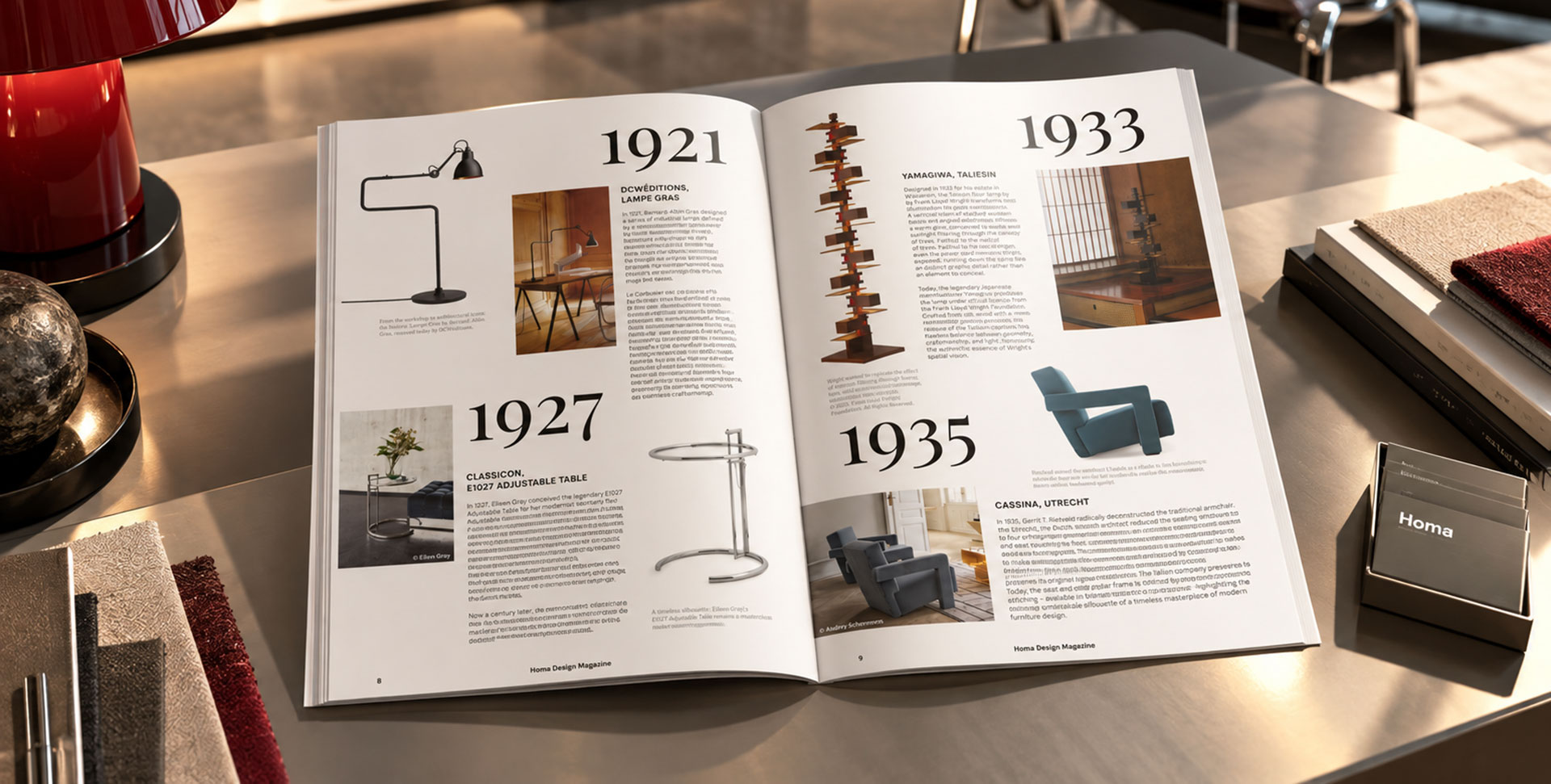
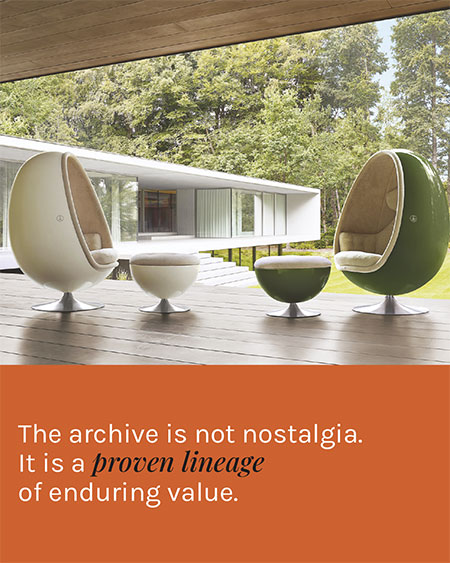
Its opening story, The Future Lies in the Archive, looks at the renewed relevance of historic designs and questions whether innovation must always mean producing something entirely new. Perhaps progress can also come from understanding what deserves to endure and finding better ways of carrying it forward. The article asks a particularly useful question for our time: what value and responsibility can we bring to the forms we have inherited?
From there, the magazine moves deliberately across disciplines, periods and cultures.
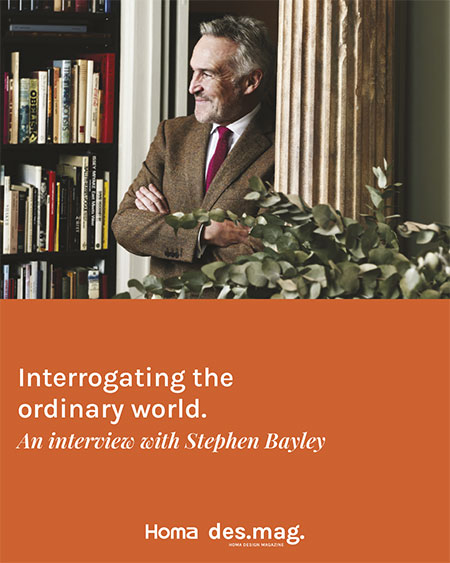
Our cover conversation is with Stephen Bayley, one of Britain's most influential voices on design and one of the figures behind the creation of London's Design Museum.
His interview is provocative by intention. Bayley questions whether the era of “Design with a capital D” may be drawing to a close as our culture becomes increasingly virtual, while at the same time anticipating a renewed appreciation for tangible, analogue things.
What interests me particularly is his insistence on the intellectual value of ordinary industrial objects. This is highly relevant to an industrial company such as ours because, when you manufacture millions of products, familiarity can easily make the object appear ordinary. Design restores curiosity. It makes us ask why a handle feels the way it does, why a proportion appears balanced, why a material communicates quality, why an interface feels intuitive, or why one product develops meaning while another remains merely functional.
Martino Gamper approaches the same territory from a very different direction. His work often begins with experimentation, reuse and transformation, allowing objects and materials to retain the traces of their previous lives. One sentence in our conversation deserves to travel well beyond the pages of a design magazine:
“For me, research is not something separate from practice, it is the practice.”
There is an important lesson here for innovation. Research is not simply a phase that precedes creation. It is a way of remaining curious while creating.
Gamper also speaks about furniture becoming meaningful only when it is occupied, moved and shared, and about being more interested in designing situations than simply designing objects. It is another reminder that the final value of a product rarely exists inside the product alone. It emerges through use.
The story of Vipp adds another dimension.
What began in Denmark in 1939 as a pedal bin made for a hairdressing salon gradually became the foundation of a coherent design universe spanning kitchens, furniture, lighting, architecture and hospitality. The interesting part is not simply the expansion of the range, but the consistency of the idea behind it: function, quality, materials and longevity.
As Jette Egelund puts it in the magazine:
“Good design is not about decoration, but function, quality, and timeless materials.”
There is a valuable reflection here for an OEM manufacturer. Industrial scale does not have to produce cultural anonymity, just as repeatability does not have to remove meaning. The challenge is to combine industrial discipline with enough understanding and flexibility to help different customers remain distinctive.
That is increasingly part of the responsibility of a modern manufacturing partner.
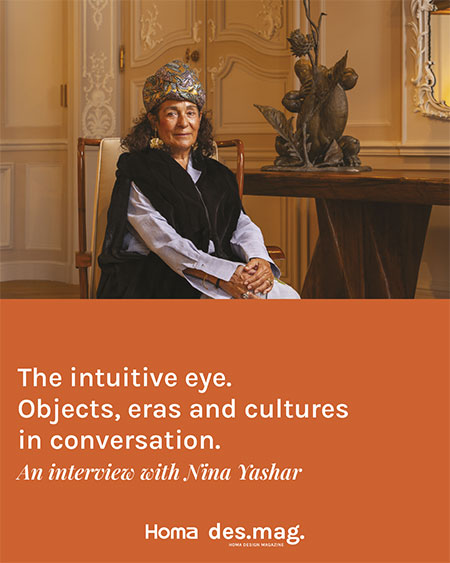
With Nina Yashar, founder of Nilufar Gallery and Nilufar Depot in Milan, the conversation moves from industrial design to the intuitive act of selection.
She speaks about objects carrying stories, craftsmanship and culture, and about learning to trust one's own eye even when it goes against convention. Her motto is wonderfully concise:
“Follow your instincts. Instinct minimises failure.”
Her perspective introduces another dimension of design: value does not always emerge from adding something new. Sometimes it comes from recognising a relationship that others have not yet seen.
That idea also sits behind the Four Dialogues between Design, Form and Nature, which continue a format introduced in the previous issue. Apparently unrelated references — from Arne Jacobsen's Egg Chair and Cristóbal Balenciaga to engineering, architecture, biology and gastronomy — reveal surprisingly similar creative intuitions.
I have always found these connections particularly interesting because innovation rarely develops inside perfectly closed disciplines. Knowledge travels. An idea born in architecture can influence industrial design; an observation in nature can become engineering; a way of presenting food can teach us something about experience. Design gives us a lens through which those connections become visible.
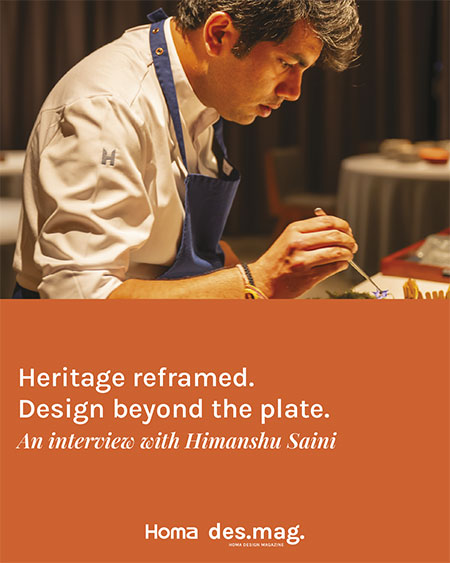
One of the clearest expressions of this philosophy in Issue No. 9 comes from outside conventional industrial design. In our conversation with Himanshu Saini, Executive Chef of Trèsind Studio in Dubai, gastronomy becomes another way of looking at the relationship between research, culture, function and experience.
His creative process begins not with the appearance of a dish but with its context:
“Every dish begins with research, understanding the history, geography, and culture behind it. Design enters much later.”
I find the parallel with industrial innovation striking.
Too often innovation starts with the question: what technology can we add?
A more useful starting point is often: what are we trying to understand?
Saini also explains that design beyond the plate is about creating emotions. Lighting, music, tableware, service and the pace of the meal work together to influence the way a guest feels. When every detail supports the same story, the experience becomes seamless and memorable.
Products work in a similar way. People rarely experience an individual feature in isolation. They experience a whole: technology, materials, ergonomics, aesthetics, interfaces, space, communication and service gradually accumulate into a perception of value.
Design helps those elements speak the same language.
When we presented earlier editions of Homa Design Magazine, I described this project as more than a magazine.
At the time, I wrote about moving from promotion to inspiration, from content to culture. After nine issues, I think we can now take that idea one step further: from content to culture, and from culture to capability.
This way of looking at design did not begin with the magazine. As early as 2019, independent Chinese industry sources were already documenting Homa Europe’s role in design and product planning, and the relationship between Italian design culture and Homa’s industrial capability. Those external references, gathered in a later Homa Europe retrospective, help show that the ideas developed through Homa Design Magazine are part of a longer and documented evolution rather than a recent narrative.
The most valuable outcome of a project like this is not the printed object itself. It is everything that happens around it: the conversations we are able to start, the designers and thinkers we meet, the ideas our teams encounter, the references we accumulate and the questions that gradually enter the organisation.
It is also the knowledge we can then share with customers, partners and colleagues.
In a world where manufacturing capabilities are increasingly visible and technologies increasingly accessible, sustainable differentiation requires more than knowing how to make things. It also requires becoming better at understanding why they should exist, what they should mean and how they can create value for someone else. That is the territory where design, marketing, innovation and industry increasingly meet.
Homa is and strategically remains an OEM manufacturer. We do not need Homa Design Magazine to persuade consumers to choose a Homa-branded refrigerator.
That distinction matters.
Our role is to help the brands and retailers we work with create propositions that their customers will choose. This clearly requires industrial capability, but it increasingly requires culture, interpretation and the ability to recognise change before it becomes obvious as well.
This is why, after nine editions, we continue to believe strongly in this project.
Not because every page needs to generate an immediate product idea. That would reduce its purpose rather than strengthen it. Its role is wider: to keep Homa curious and connected with people who think differently, to strengthen design culture inside the organisation and to share that curiosity with the community around us.
Homa Design Magazine No. 9 is our latest contribution to that conversation.
Perhaps the best measure of its success remains the one Michael Yao proposes in his editorial: that after reading these pages, we look at something ordinary a little differently.
Sometimes that is where innovation starts.

Design, memory and the meaning we give to things.
Homa Design Magazine is a vibrant editorial venture on a mission to ignite the flame of design thinking across the entire Homa community—encompassing Homa people, our partners, and beyond! Yet, its influence extends beyond these boundaries; it serves as a beacon of design culture poised to illuminate our entire industry.
Today, it stands as a remarkable testament to the potency of tangential marketing, presenting a novel approach to captivating audiences. The magazine is the result of a collaborative effort, with the original idea stemming from Homa Europe.
Editor in Chief: Federico Rebaudo
Project Coordination: Federico Gallina
Contributing writers: Elena Scandroglio, Pierre Ley, Patrizio Cionfoli
Coordination, Design & Layout: Studio Volpi
For further information and Press Contact: info@homaeurope.eu
Copyright HOMA 2026- Issued By Homa Marketing dept. on October 2026
For further Information and Press Contacts: info@homaeurope.eu