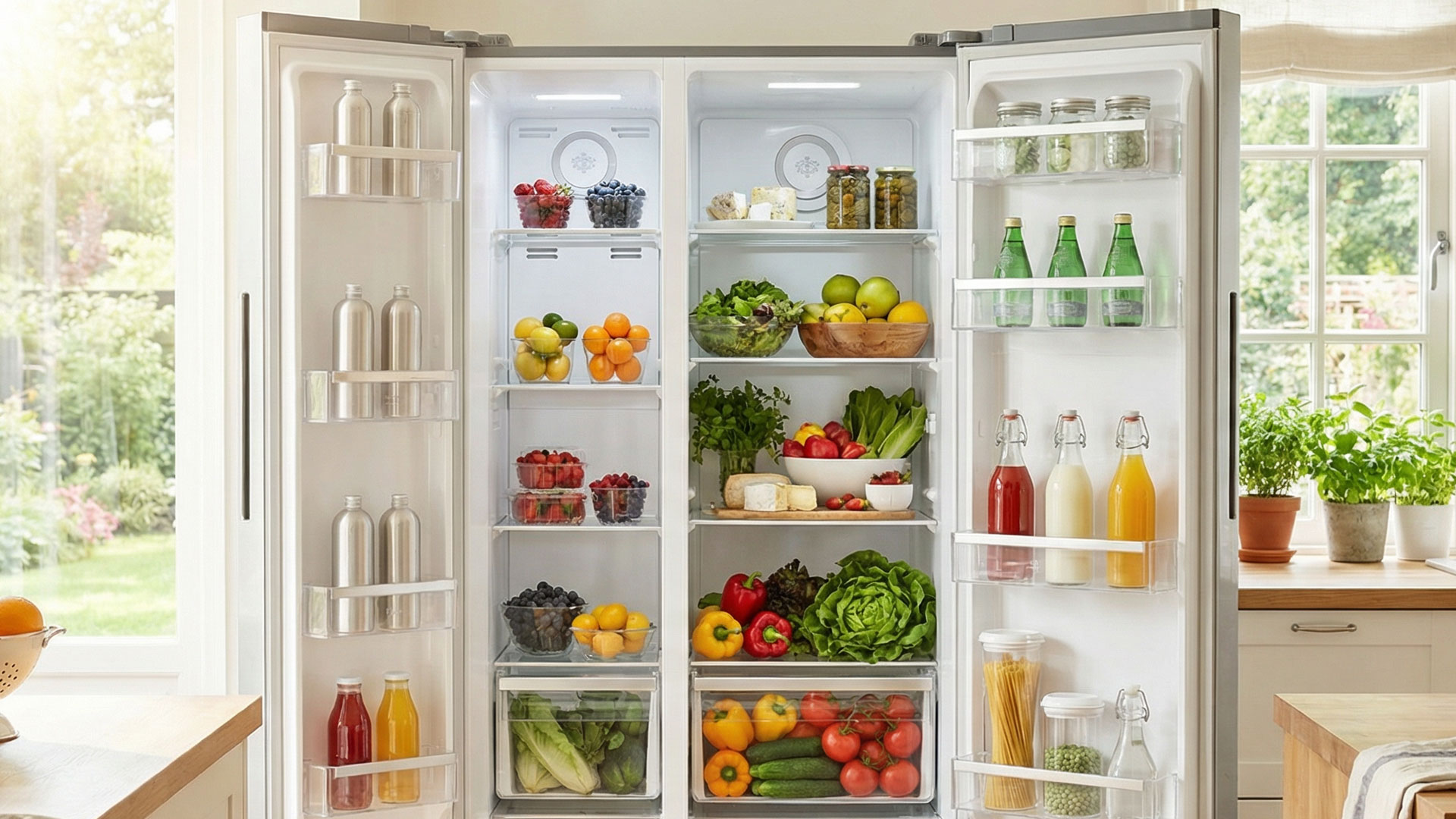
From weekly stock-up to “just-in-time” shopping: what changing consumer behaviour could mean for the next generation of cooling appliances.
By Federico Rebaudo, General Manager, Homa Europe
For decades, the domestic refrigerator was designed around a relatively stable ritual. Families completed a large weekly grocery shop, brought home a substantial quantity of food and expected the refrigerator to accommodate it until the next visit to the supermarket. Capacity was therefore one of the clearest expressions of value. A larger refrigerator could hold a larger shop.
But what happens when the grocery shop itself changes?
Recent figures reported from Kantar research suggest that consumers are progressively moving away from traditional pantry-loading missions. According to data cited by DBB, only 33% of grocery shoppers described their latest trip during the first quarter of 2026 as a major stock-up occasion, compared with 39% in 2021. Over the same period, shopping trips focused on same-day consumption reportedly increased from 21% to 30%, while smaller fill-in trips accounted for 37%.
The individual figures relate to a specific market and should not automatically be translated into a universal global behaviour. However, the direction of travel matters. Other Kantar observations point towards a similar pattern: consumers visiting stores more frequently, purchasing smaller baskets and moving between different retailers to control expenditure and satisfy specific needs. At the same time, people are simplifying meals and spending less time preparing them.
This is not simply a grocery retail story. It may also be a refrigerator design story.
This way of reading social behaviour as a starting point for product thinking is also part of a longer Homa journey, whose early roots can be traced in the dialogue between Chinese industrial capability, European market culture, design and Food Preservation.
A new rhythm inside the home
A household that shops once a week interacts with food differently from one that purchases smaller quantities several times during the week. The first model is based primarily on accumulation. The second is based on rotation.
Food enters the refrigerator more frequently. It may be consumed sooner, but it also arrives through a greater variety of missions: tonight’s dinner, tomorrow’s breakfast, a prepared meal, fresh produce bought on promotion, a delivery order, leftovers from a restaurant or a small replenishment of essentials. The refrigerator is therefore no longer managing one large, relatively predictable weekly load. It is managing a continuous flow of different foods, packages and consumption occasions.
This leads to an important question for the cooling industry: Should the refrigerator of the future simply offer more space—or should it offer a more intelligent architecture for managing food?
From maximum volume to useful volume
Capacity will remain important. Household size, regional habits and shopping infrastructure will continue to produce very different requirements. But litres alone may become an increasingly incomplete measure of usefulness.
When consumers buy smaller quantities more frequently, they may need better visibility of what is already available, easier access to products intended for immediate consumption, more effective separation between food categories, flexible spaces for rapidly changing needs, dedicated conditions for fresh, delicate or prepared foods, and an internal organisation that helps prevent products from being forgotten.
A very large, undifferentiated cavity can sometimes work against these needs. Food can disappear behind other food. Open packages become difficult to identify. Small items are distributed across shelves designed for larger loads. Different products are exposed to the same conditions even though their preservation requirements are not the same.
The opportunity is therefore not necessarily to make the refrigerator smaller. It is to make every litre more relevant.
The refrigerator as a food-preservation system
This change requires a shift in perspective. The industry has historically described the refrigerator as a cooling appliance: a technical container capable of producing and maintaining low temperatures. The emerging perspective starts from the content instead.
Different foods respond differently to temperature, humidity and airflow. Fresh vegetables, meat, fish, dairy products, prepared meals and frozen foods cannot all be preserved optimally under one uniform set of conditions.
This principle is at the heart of Homa’s MultiClimate System™. The concept creates different combinations of temperature and humidity so that individual food categories can be stored in conditions more closely adapted to their characteristics and, where possible, to their natural environment. This can include spaces inspired by traditional food-preservation practices, such as a converter compartment capable of maintaining temperatures below 0°C for fish and meat without treating them in the same way as frozen products.
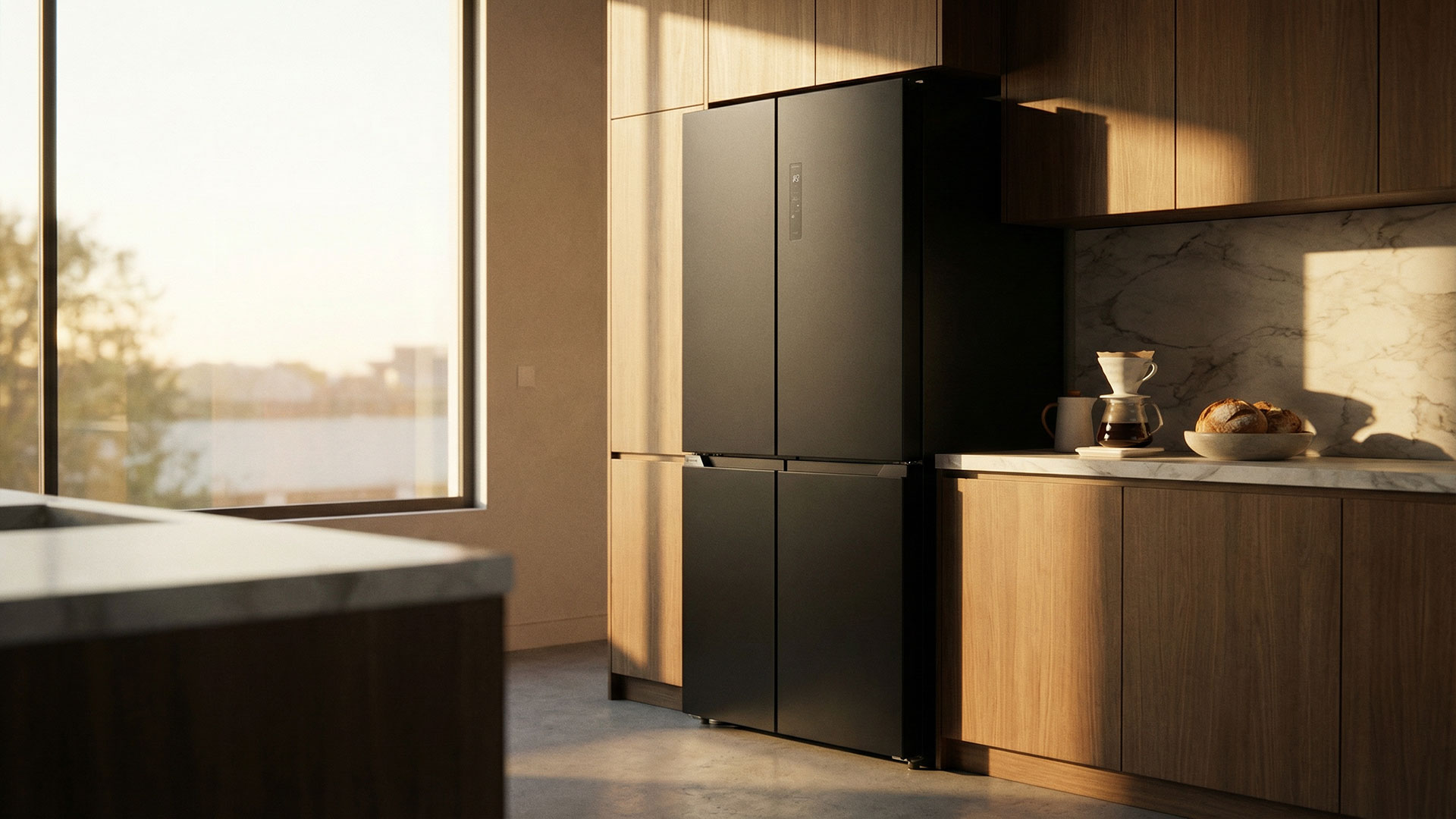
MultiClimate is therefore more than an additional product feature. It represents a different way of thinking about refrigerator architecture. Instead of asking only how much food the appliance can contain, it asks: What does each food need in order to remain at its best?
What architecture could “just-in-time” consumption require?
If grocery shopping becomes more fragmented and food enters the home in shorter, more frequent cycles, the next generation of refrigerators could increasingly be organised around missions rather than conventional shelves.
Consumers purchasing food for the same day need a clearly visible and accessible area for products that should be consumed first. This could accommodate prepared dishes, fresh ingredients, opened packaging and short-life products. Its value would not come from additional capacity, but from helping the user recognise priority.
Smaller baskets do not necessarily mean less variety. Consumers may buy fewer units while combining fresh food, snacks, meal solutions, beverages and special dietary products. Adjustable dividers, movable containers and convertible compartments could allow the internal layout to evolve more naturally with each shopping mission.
Frequent shopping does not eliminate the need for preservation. In some cases, it makes precision even more important. Consumers purchasing higher-quality fresh ingredients in smaller quantities will expect those ingredients to retain texture, flavour and nutritional quality. MultiClimate zones can provide differentiated conditions rather than forcing every product into a uniform environment.
Food waste is not caused only by insufficient preservation. It is also caused by insufficient awareness. An appliance designed for continuous rotation should help consumers see what they have, what has already been opened and what should be consumed next. Transparent drawers, shallow storage areas, intelligent lighting and carefully considered shelf depth can therefore become food-preservation technologies in their own right.
Shopping behaviour can change from one week to another. A compartment may be needed for fresh food today and for frozen storage tomorrow. The possibility of switching selected areas between refrigeration and freezing can make the refrigerator respond to real household behaviour instead of imposing a fixed configuration.
The same refrigerator may now receive products from supermarkets, convenience stores, local markets, food delivery services and restaurant takeaways. The internal architecture must accommodate different formats, temperatures, packaging types and expected consumption times.
The challenge is no longer only storage. It is orchestration.
Smaller baskets do not automatically mean smaller refrigerators
It would be too simplistic to conclude that more frequent shopping will inevitably reduce demand for refrigerator capacity. Several opposite forces are operating at the same time.
Consumers may shop more frequently but maintain more food categories at home. Online shopping can produce occasional larger deliveries. Frozen food, batch cooking and family requirements continue to demand space. European consumers are also increasingly polarised: some remain highly price-sensitive, while others are trading up towards convenience, premium quality and healthier products.
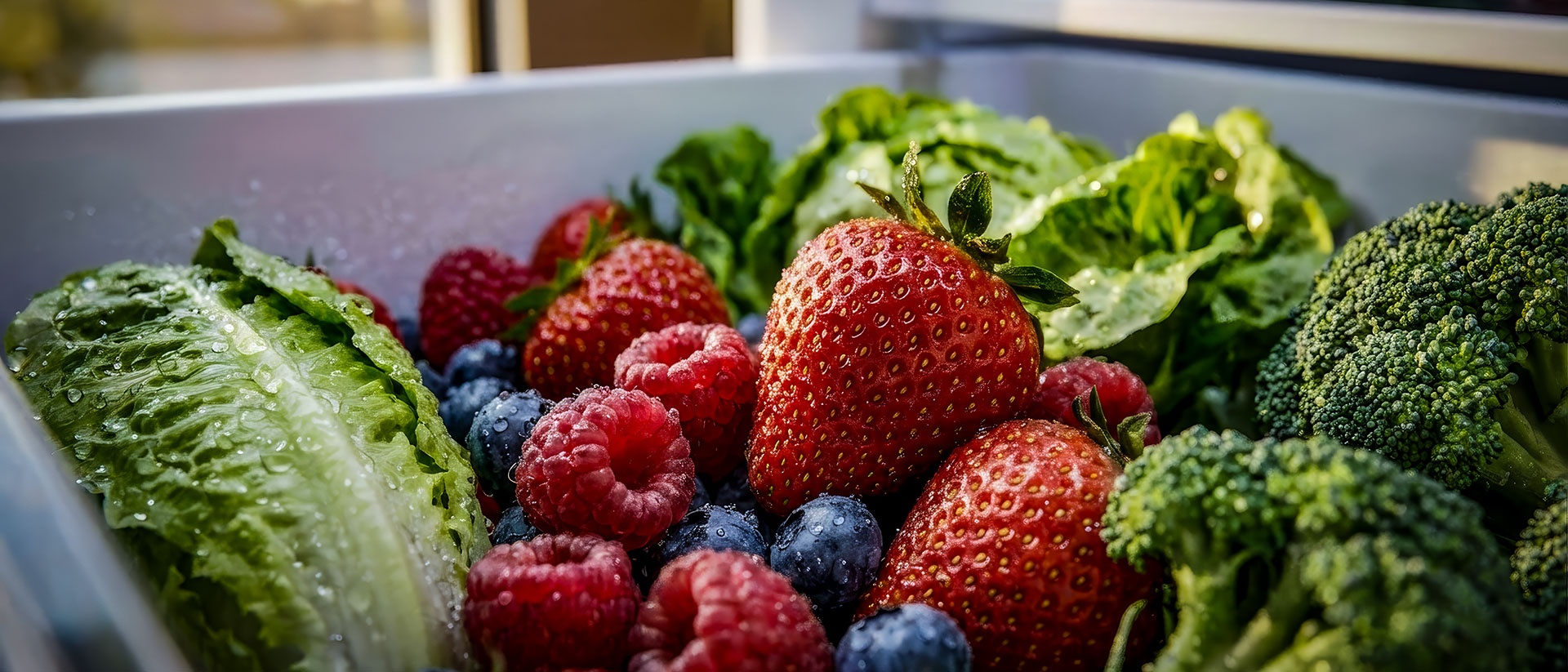
The strategic conclusion is therefore not “build smaller refrigerators”. It is: build refrigerators whose capacity can be used in more intelligent, flexible and food-specific ways.
The winning architecture may combine generous volume with differentiated micro-environments. It may offer the freedom of a large refrigerator without the limitations of a single, homogeneous space.
Reading society before designing products
Consumer data should not be used simply to predict the next appliance format. Its greater value is to reveal how everyday life is evolving.
More frequent grocery trips may reflect budget control, urban proximity, smaller households, digital delivery, a preference for fresher ingredients or the desire to decide meals later. Each motivation may lead to a different product implication.
This is why appliance innovation cannot begin only with a technical specification. It must begin with observation.
How are people buying food? How long do they expect to keep it? How much time do they spend preparing it? Which products are intended for tonight, and which for next week? How much food is wasted because it deteriorates—and how much because it is simply forgotten?
At Homa, these questions support a broader transition from cooling to food preservation. A refrigerator should not merely create cold. It should interpret the life taking place around it.
And as grocery habits become more frequent, fragmented and immediate, the most relevant refrigerators may not be those that simply hold more. They may be those that understand more.
Copyright HOMA 2026- Issued By Homa Europe Communication Team - on July 2026
For further Information and Press Contacts: info@homaeurope.eu