What the evolution of food preservation can teach us about innovation.
By Federico Rebaudo, Head of Homa Europe.
Refrigeration may appear to be one of the most familiar and mature product categories in our homes. Yet, when we look beyond the appliance itself, it tells a much larger story: the evolution of human needs, domestic life, kitchen architecture and design, technology and expectations.
This is why I find the connection between food preservation and Abraham Maslow’s hierarchy of needs particularly stimulating. Maslow’s theory moves from essential physiological and safety needs towards belonging, esteem and self-actualisation. Food preservation has followed a surprisingly similar journey, from protecting survival to supporting the quality of the way we live. The comparison is not a scientific equivalence, but a useful framework for looking at refrigeration from a broader human perspective.Background reading: A. H. Maslow, A Theory of Human Motivation (1943)
At the base of food preservation is the most fundamental responsibility: making food available beyond the immediate moment in which it is produced or prepared. Drying, fermenting, curing, salting and canning were not originally lifestyle choices. They were practical responses to scarcity, seasonality, distance and uncertainty. The first purpose of food preservation was therefore not convenience, design or even taste. It was continuity. Long before refrigeration became part of domestic life, preservation was already an essential form of human protection.
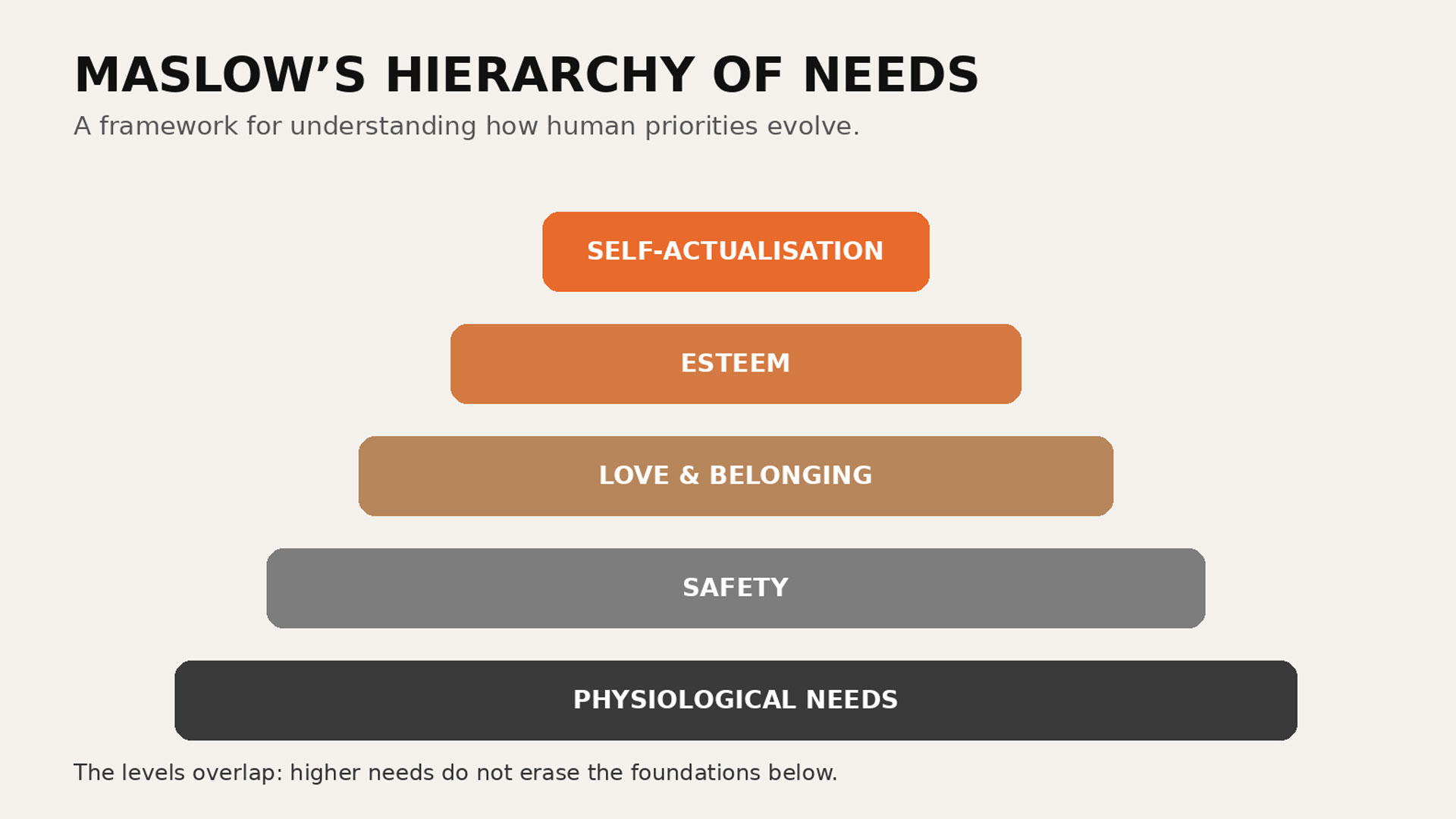
As preservation technologies evolved, the objective expanded from keeping food available to keeping it safe. Temperature control, hygiene and protection from contamination created a new level of trust between people and their food. This remains the essential foundation of refrigeration today. Before discussing artificial intelligence, connectivity, interfaces or design, a refrigerator must reliably protect safety, freshness and performance over time. Innovation cannot compensate for weak fundamentals. It earns the right to move higher only by delivering every level below.
The spread of domestic refrigeration introduced another important layer: convenience. Greater storage capacity and longer preservation changed shopping behaviour, meal planning and the organisation of family life. People could buy differently, cook differently and manage their time differently. The refrigerator was no longer protecting only food availability; it was beginning to improve everyday life. This is an important lesson for a mature appliance industry. Product innovation becomes relevant not when it adds technology, but when it changes behaviour, removes friction or creates a more meaningful benefit.
Today, keeping food cold is no longer enough. People increasingly expect refrigeration to protect freshness, texture, taste and nutritional quality, while helping to reduce energy consumption and food waste. This is where temperature stability, controlled humidity, airflow management and differentiated storage environments become meaningful. Their value does not come from technical complexity alone, but from their ability to translate engineering into better food preservation. A good technology does not ask people to admire the technology. It allows them to experience the result: food that remains fresher, ingredients that retain their qualities and less food that is unnecessarily discarded.
Food preservation is not a feature. It is a human benefit.
This idea is part of a longer strategic journey. Its early roots can already be traced in Homa’s previous reflections on Food Preservation, design and responsible industry, later revisited in From China to Europe: the early roots of Homa’s vision.
Further context: UNEP Food Waste Index Report 2024 and FAO and UNEP on sustainable food cold chains
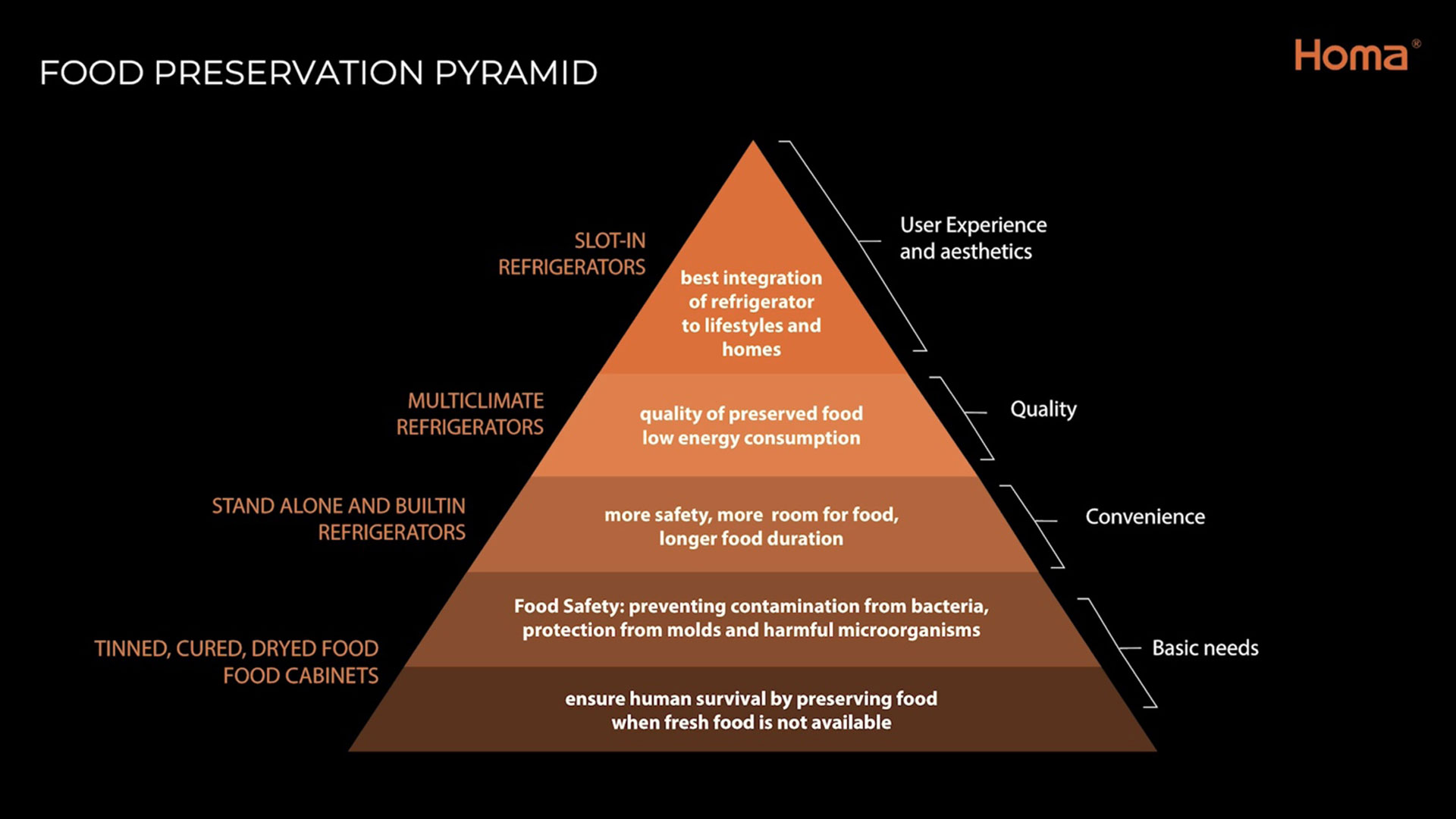
At the top of the Food Preservation Pyramid, refrigeration begins to interact with design, user experience, domestic architecture and lifestyle. This does not mean that aesthetics replace performance. It means that performance becomes part of a broader human experience. The appliance must still preserve food safely, efficiently and reliably, while responding to changing homes, family structures, food habits and expectations. This is where design reaches its broader meaning. Design is not aesthetics. It is the process through which technology becomes performance, performance becomes relevance, and relevance becomes meaning for people. Food preservation therefore connects engineering with culture: the refrigerator with the kitchen, the kitchen with family life, and technology with the way people shop, cook, eat and live.
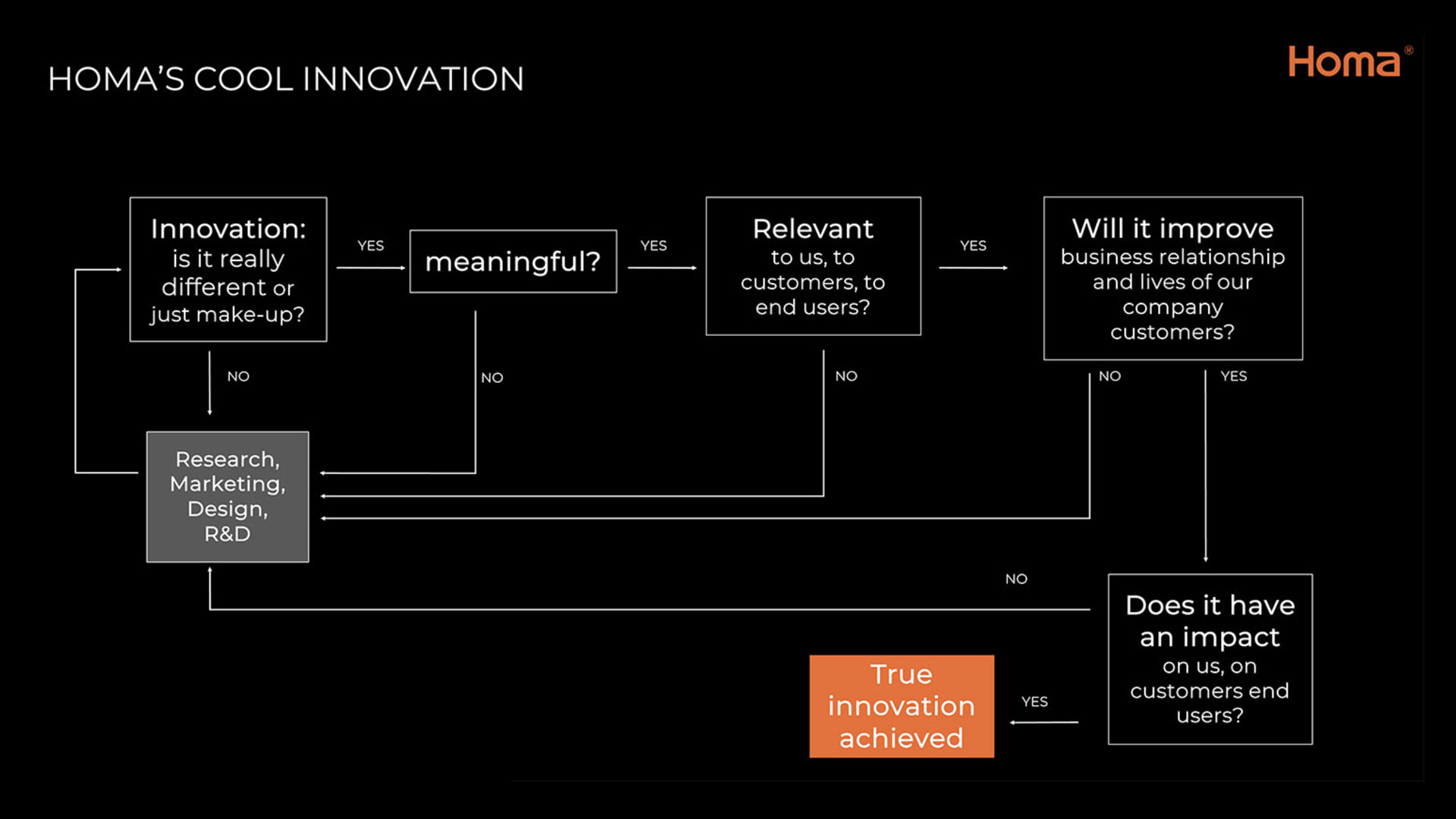
Maslow’s hierarchy should not be read as a rigid staircase, and neither should the Food Preservation Pyramid. Human needs overlap, just as the responsibilities of refrigeration overlap. An advanced appliance must deliver safety, convenience, food quality, efficiency and experience at the same time. The real test of innovation is therefore not how many features can be added at the top, but whether a new idea is genuinely different, meaningful and relevant; whether it improves food preservation, reduces waste, improves quality of life or strengthens the relationship between people and their homes; and whether that value can be recognised and measured. A mature industry does not need innovation for the sake of novelty. It needs innovation capable of connecting industrial capability with evolving human needs.
Refrigeration began by protecting survival. Today, its responsibility is broader: it must protect food safety, food quality, natural resources and the quality of the way we live.
Federico Rebaudo, General Manager at Homa Europe
This article is part of Strategic Perspectives, an editorial series by Federico Rebaudo, General Manager at Homa Europe.
The series explores how OEM manufacturing is evolving beyond industrial execution, connecting food preservation, design thinking, consumer understanding, technology, marketing culture and strategic
partnership.
Continue exploring the series:
. The Invisible Revolution: Food Preservation Beyond Cooling
. From OEM to Technology Enabler
. When Design Becomes Language
Copyright HOMA 2026 Issued By Homa Marketing dept. on June 2026
For further Information and Press Contacts: info@homaeurope.eu