When Manufacturing Excellence Becomes the Starting Point
By Federico Rebaudo, General Manager, Homa Europe
As technology, artificial intelligence and advanced manufacturing become accessible to more companies, the real competitive question is changing: not simply what can we produce, but what will make a product, a brand and a relationship meaningfully distinctive?
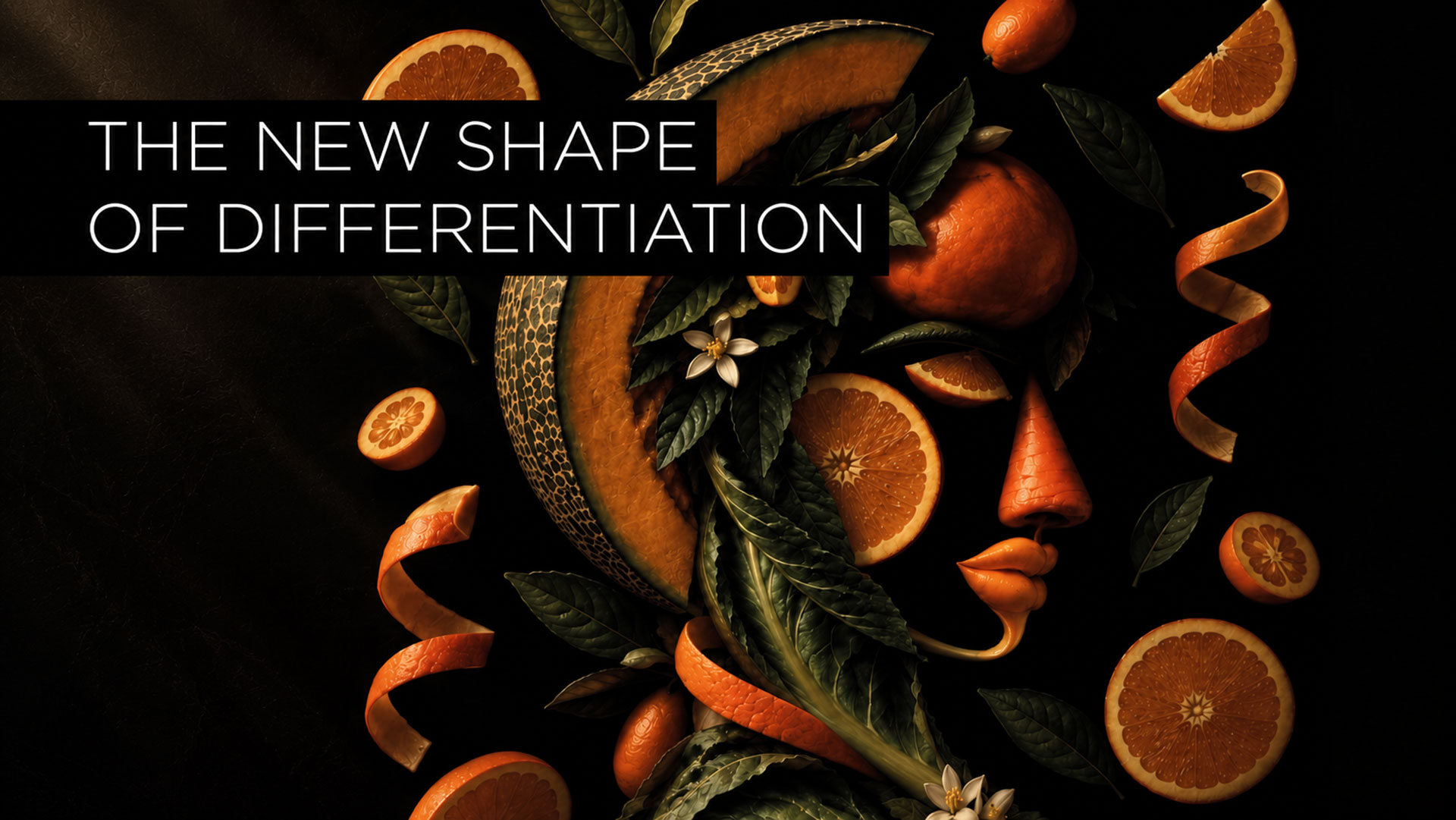
On 15 October 2026, the opening day of the Canton Fair, Homa will release “The New Shape of Differentiation”, a new white paper exploring what makes products and brands meaningfully distinctive when technology and advanced manufacturing capabilities are becoming more widely accessible.
This article offers an early view of the industrial question behind the publication — and of the particular perspective Homa brings to it as a pure OEM and ODM manufacturer working across different brands, markets and cultures.
For many years, manufacturing excellence was itself a powerful source of differentiation.
The ability to produce reliably, control quality, industrialise complex technologies and operate at scale separated a relatively small group of manufacturers from everyone else. These capabilities still matter profoundly. No brand can build trust on weak execution, and no industrial partnership can survive without quality, competitiveness and consistency.
But the context is changing.
Technology travels faster. Components become available to more companies. Automation, digitalisation and artificial intelligence are progressively raising the capabilities of the entire industrial system. As explored across Homa’s reflections on AI, robotics and the evolution of manufacturing competitiveness, advanced manufacturing is becoming more powerful — but also more widely accessible.
This creates a paradox.
It has never been easier to create a technically credible product. Yet it has rarely been more difficult to create one that people will recognise, remember and choose.
That paradox is the starting point of Homa’s new white paper, The New Shape of Differentiation.
Walking through the halls of IFA recently, I was struck by how much technology was visible — and how actively it appeared to be searching for meaning. As I wrote in From Berlin Technology Is Searching for Meaning, the most relevant innovations were not necessarily the most spectacular. They were those capable of translating technology into benefits people could immediately understand: more usable space, better food preservation, lower consumption, greater flexibility and less effort in everyday life.
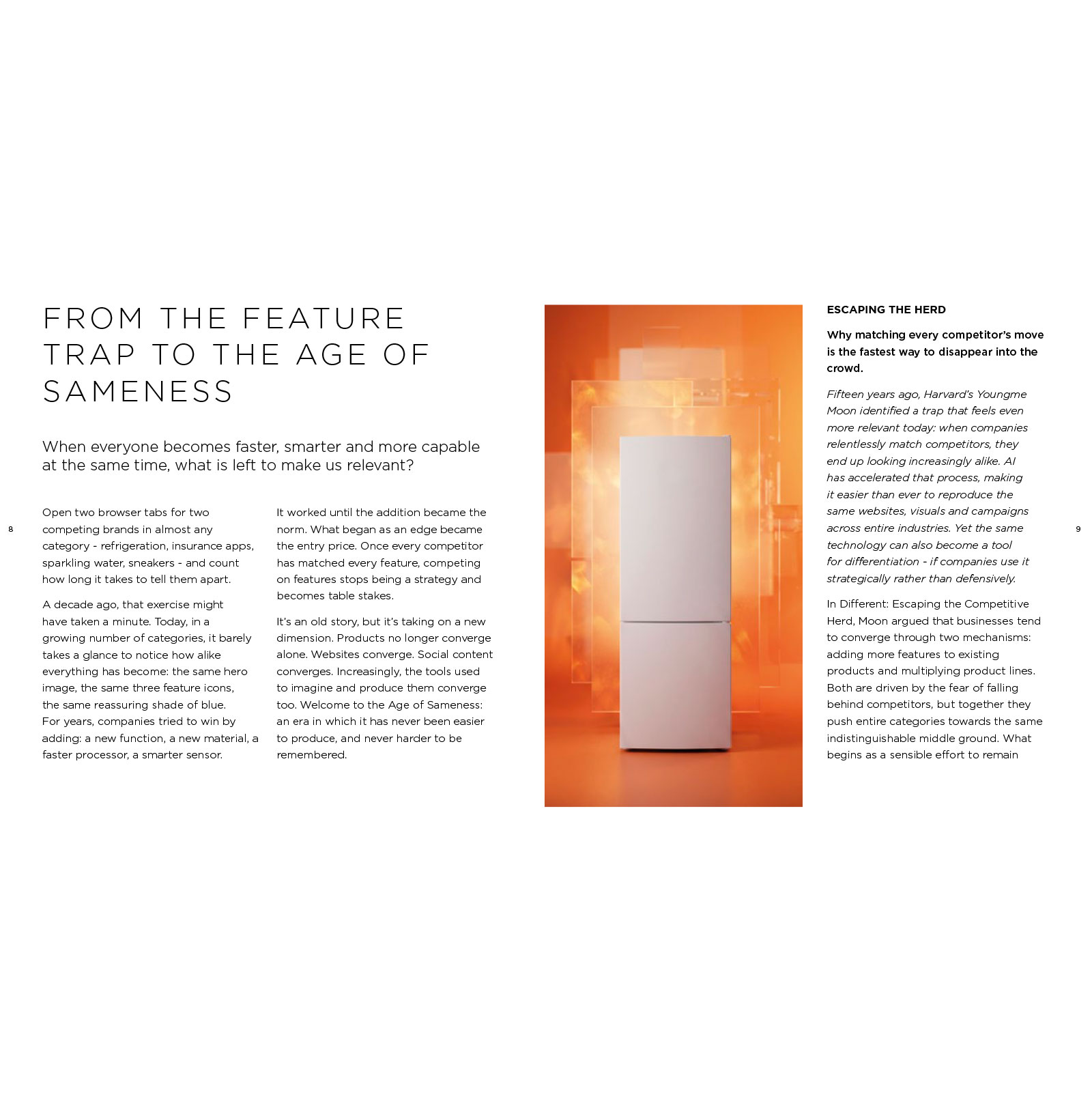
This distinction matters because industries naturally tend to converge. Companies observe the same competitors, follow the same trends, access the same suppliers and respond to the same technological signals. The rational reaction is to add: another feature, another function, another material, another claim.
Eventually, what began as a competitive advantage becomes the entry price for remaining in the category.
Strategic literature has long described this process: relentless comparison with competitors can gradually make companies more alike. Michael Porter’s work at Harvard Business School makes the point clearly: competing to be the best can lead companies into a destructive race towards convergence, while sound strategy begins with competing to be unique.
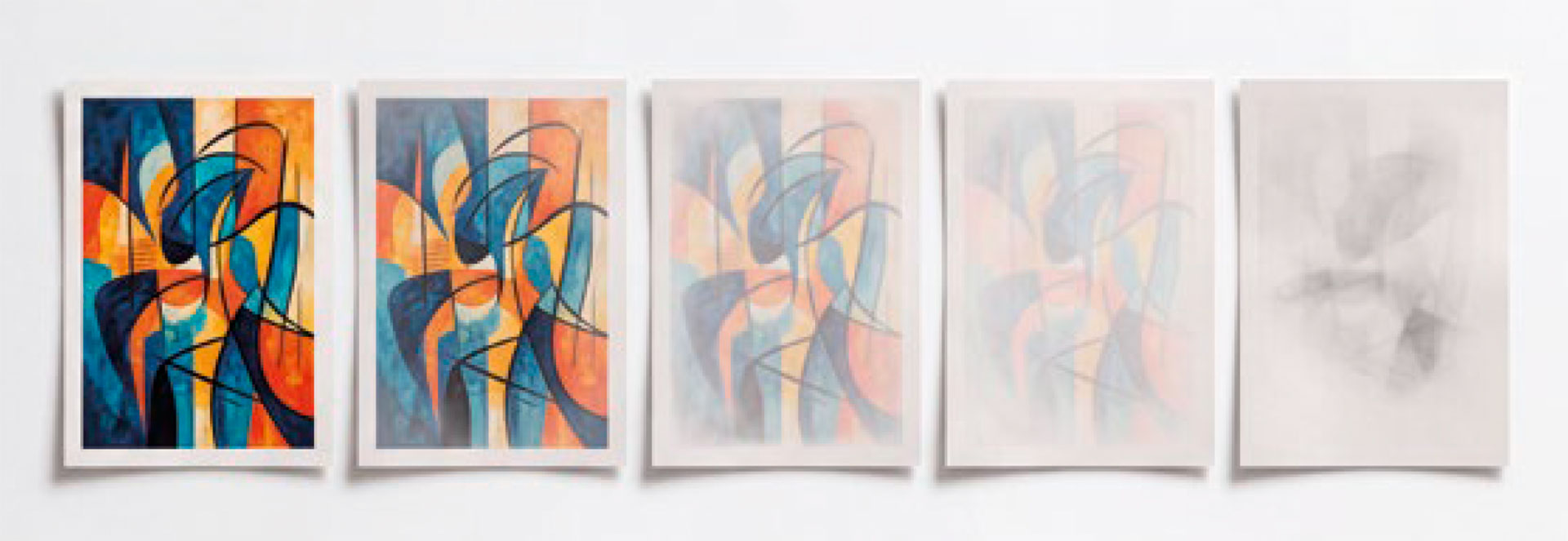
Today, artificial intelligence accelerates this mechanism by allowing similar content, concepts, interfaces and visual languages to be created almost instantly.
The result is what our white paper calls the Age of Sameness: an environment in which everyone becomes faster, smarter and more capable at approximately the same time.
This does not mean that technology has lost its value. It means that possessing technology is no longer the same as having a distinctive direction.
Technology enables innovation. Culture determines its adoption. Human understanding determines its relevance.
A product can be different without becoming distinctive.
Adding a new function creates a factual difference. Changing a material, capacity or interface creates another. These differences may be technically valuable, but they do not automatically give customers a reason to notice, remember or prefer the product.
Distinctiveness emerges when individual choices form a coherent meaning.
This is supported by substantial market evidence. Kantar’s Blueprint for Brand Growth, based on 6.5 billion consumer data points collected over a decade, connects meaningful difference with stronger penetration and pricing power. Meanwhile, Bain and Company’s research into insurgent brands shows how relatively small brands can capture a disproportionate share of category growth by occupying sharper and more culturally relevant positions.
The lesson is not that every brand must become provocative or unconventional. It is that relevance requires a point of view.
A brand becomes distinctive when product, design, service, communication and behaviour consistently reinforce the same idea. Difference may begin with a feature. Distinctiveness is built through a system.
For Homa, this question has a particular significance.
We do not place our own consumer brand on the refrigerators we manufacture. We produce for many different brands, retailers and market positions. Our task is therefore not to impose one identity across millions of products. It is to create the industrial conditions through which different identities can emerge.
This gives us an unusual perspective on differentiation. We see how different brands interpret the same category. We observe how consumer expectations change across countries, channels and cultures. Every product brief, quotation request and customer conversation contains information about where the market is moving.
When these signals are considered together, orders become information. Information becomes knowledge. Knowledge can then become industrial decisions.
As I discussed in Like an Olive Tree Connecting European Markets with Chinese Industry, the value of an international OEM does not come from manufacturing capability alone. It comes from connecting industrial capability with market intelligence, cultural understanding and design.
Translation transfers words. Cultural mediation transfers meaning.
This is also why I believe the modern OEM must evolve from manufacturer to technology enabler. To enable does not mean replacing the brand or competing for its visibility. It means building the product architectures, technologies and industrial flexibility that allow each partner to express its own proposition more clearly.
A good OEM remains discreet. But discreet does not mean passive.
The best OEM design does not make the manufacturer more recognisable. It makes the customer’s brand more recognisable.
Industrial platforms are essential to contemporary manufacturing. They improve quality, accelerate development, support scale and make advanced technologies accessible to a broader market.

But a platform should not become a sentence that can only be written in one way.
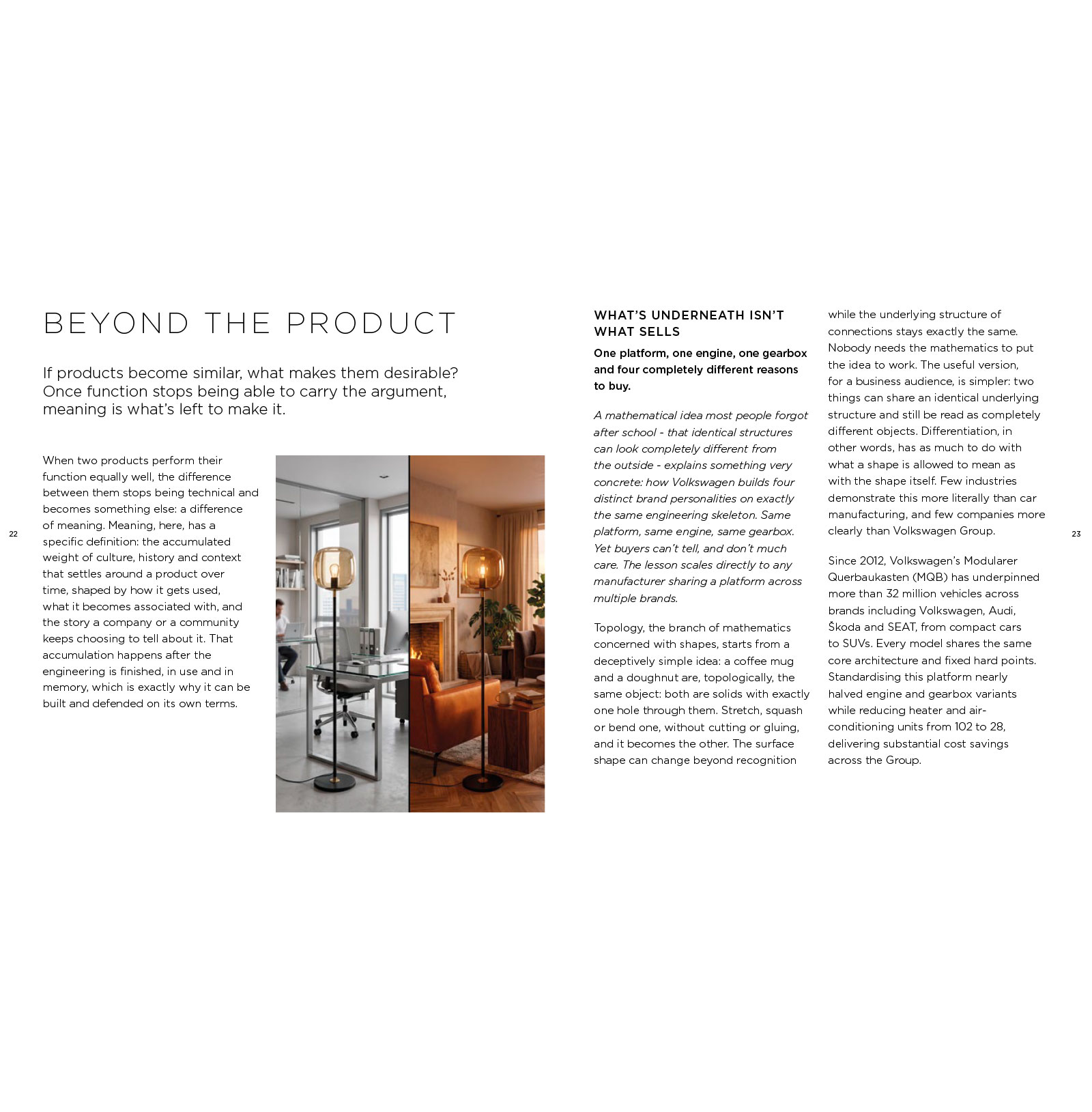
The strategic value of modularity lies precisely in its capacity to support different products, experiences and brand expressions. This is why we increasingly think about platforms that can flex fit and win: robust enough to deliver industrial efficiency, but open enough to accommodate different technologies, interfaces, interiors, aesthetics and market propositions.
The platform is shared. The meaning, quite deliberately, is not.
This balance between scale and specificity is becoming one of the central responsibilities of an advanced OEM and ODM manufacturer. Standardisation should reduce unnecessary complexity behind the product without creating perceptual uniformity around it.
Manufacturing can create the common grammar. It should still allow every brand to speak in its own voice.
The white paper also asks a more difficult question: what happens when the product itself becomes less visible?
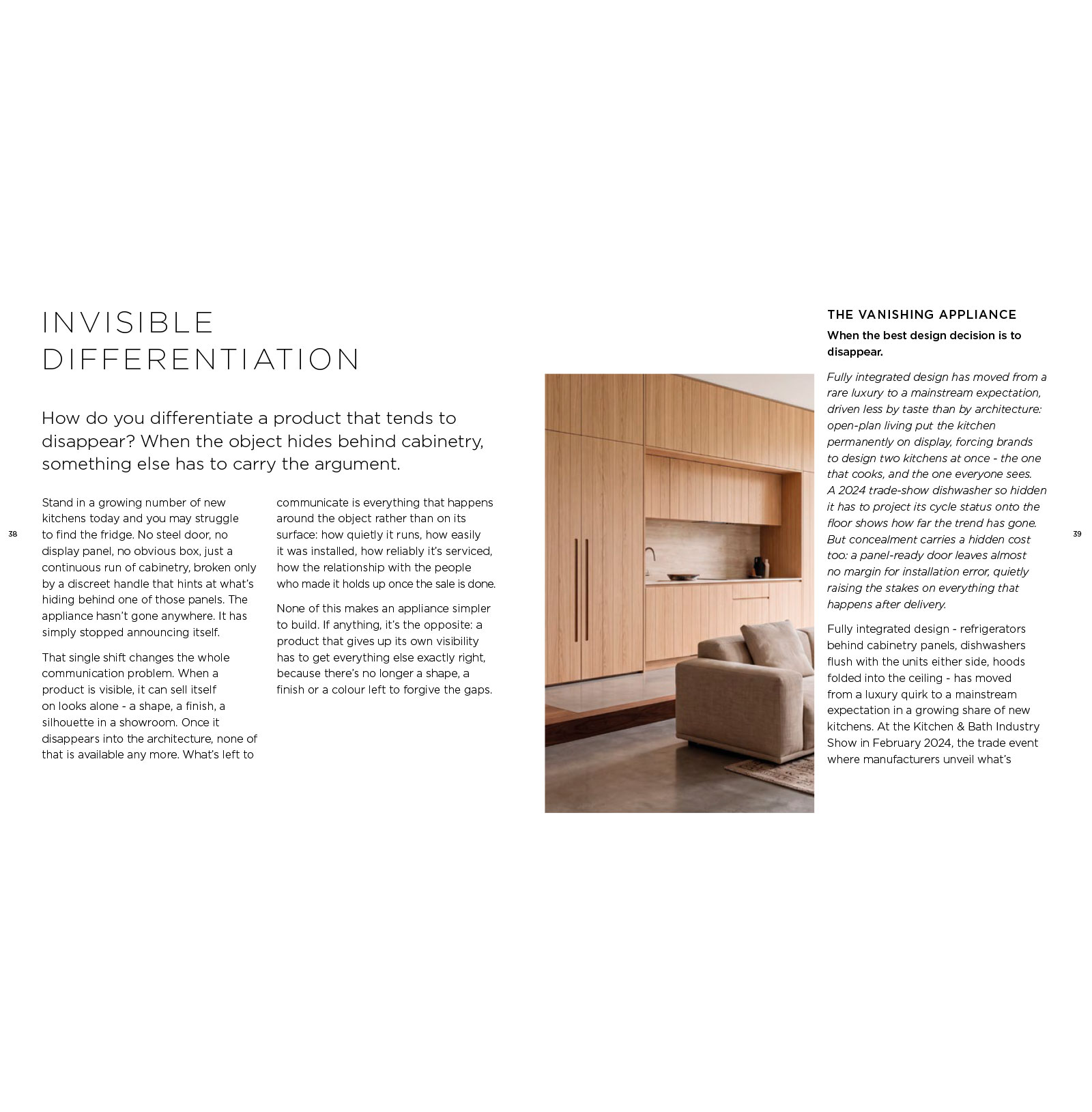
In contemporary kitchens, refrigerators and other appliances increasingly disappear behind cabinetry. Once the physical object is concealed, the traditional signals of differentiation — shape, colour, finish and visible branding — can no longer carry the entire argument.
Something else must do the work.
Installation quality, silence, usability, technical support, spare parts, repairability and the continuity of the relationship become part of the perceived product. Packaging becomes a brand environment before the appliance enters the home. Services shape the experience long after the transaction has been completed.
This is especially important for an OEM. A product failure and a service failure may appear separately inside an organisation, but they are experienced together by the customer.
Industrial capability creates products. Care creates trust.
Trust is not built only during exceptional moments. It accumulates through hundreds of ordinary interactions: a clear technical document, an installation that works the first time, an answer that arrives when needed, or a problem resolved without unnecessary complexity. These apparently invisible details are often where loyalty is decided.
Artificial intelligence runs throughout The New Shape of Differentiation because it is changing research, design, engineering, manufacturing and communication simultaneously.
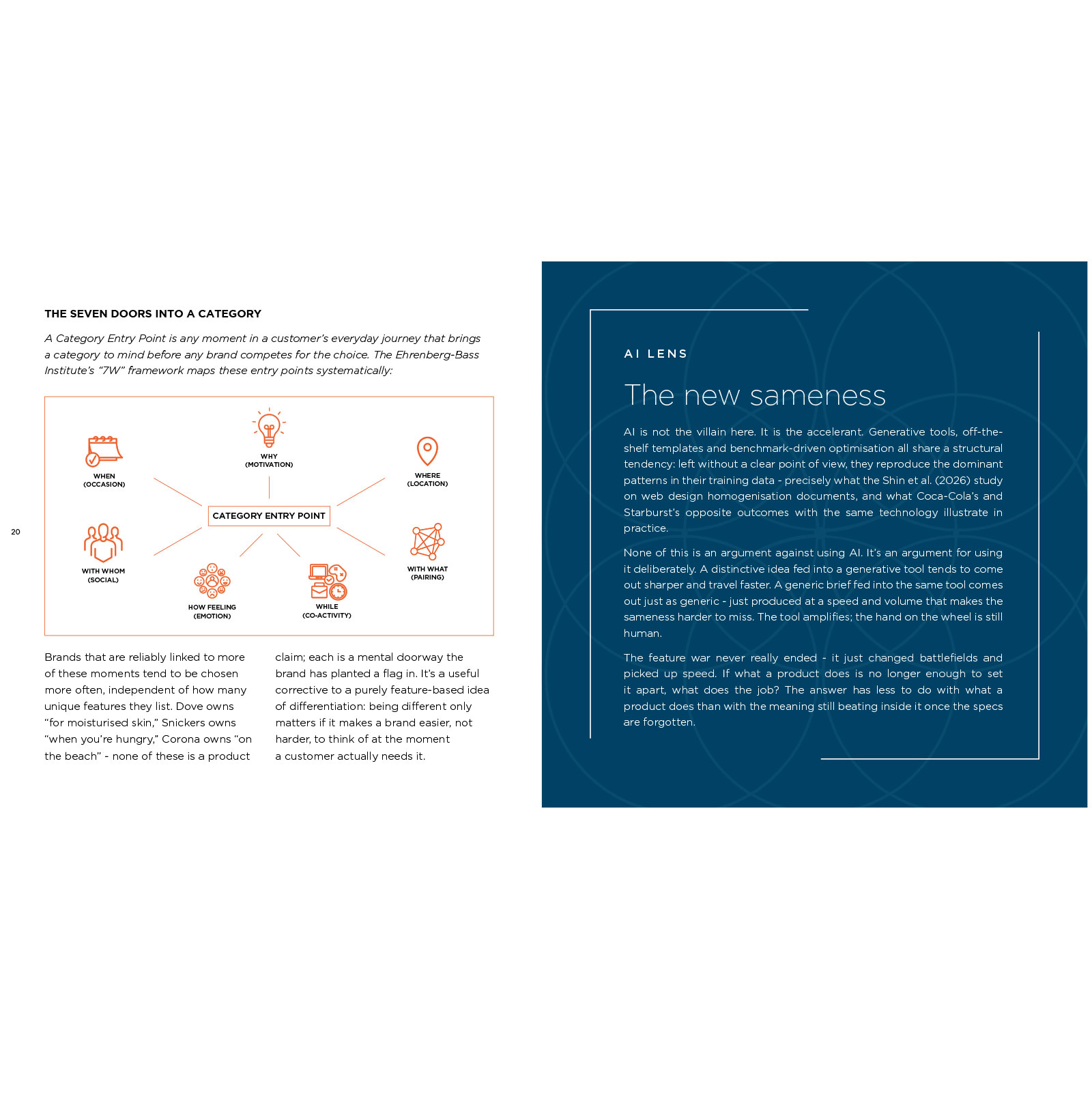
But AI is neither the villain nor the answer. It is an amplifier.
Given an average brief, AI can produce average ideas at extraordinary speed. Used only to reproduce familiar patterns, it may make entire categories more visually and conceptually homogeneous. Used with a clear strategic question, however, it can help organisations explore alternatives, identify unmet needs and recognise weak signals more effectively.
This is why design must remain human. Technology can expand what industry is capable of creating, but it cannot independently decide what deserves to be created, why it should matter or which human tension is worth resolving.
Innovation begins with understanding rather than technology.
The more powerful the tool becomes, the more important the quality of the intention behind it becomes. In this sense, AI does not reduce the importance of strategy, design or culture. It exposes their absence more quickly.
Homa has always believed that industrial culture should be shared, discussed and continuously challenged.
Our investment in editorial content — including the work recognised through the iF Design Award for Homa Design Magazine — reflects a broader conviction: a manufacturer should not only produce objects. It should also contribute ideas to the industry in which those objects exist.
The New Shape of Differentiation continues that journey.
The paper brings together business research, brand cases, industrial examples and different perspectives on product-service systems. It includes a conversation with Stefano Maffei, whose contribution expands the discussion from individual products towards services, ecosystems, repairability and the wider systems of value surrounding physical objects.
It explores differentiation across multiple layers: product features, brand meaning, invisible appliances, service, communities, packaging, perception and artificial intelligence.
It does not propose one formula. Instead, it asks a question that is becoming increasingly important for manufacturers, retailers and brands alike:
In a world where both technology and advanced manufacturing capabilities are becoming more accessible — making high-quality products easier to create than ever before — what will continue to make customers recognise a brand, choose it and remain connected to it?
My answer begins with a distinction.
Manufacturing capability creates possibility. Innovation expands that possibility. Design connects it with human behaviour. Marketing makes its relevance understandable. Service allows its value to continue over time.
Differentiation emerges when these dimensions move in the same direction.
For a pure OEM and ODM manufacturer, this requires both capability and restraint: the strength to contribute technology, insight and original thinking, together with the intelligence not to impose a single identity on different partners.

Our responsibility is not to make every product look like Homa. It is to help every partner create products that feel unmistakably their own.
As manufacturing excellence becomes more accessible, this ability will become more — not less — important. Sustainable advantage will not belong exclusively to those who can produce more technology, more rapidly and at greater scale.
It will belong to those who understand people, markets and meaning before their competitors do.
The New Shape of Differentiation is Homa’s contribution to this conversation and an invitation to our partners to continue shaping the answer with us.
The conversation will officially begin on 15 October 2026, at the Canton Fair.

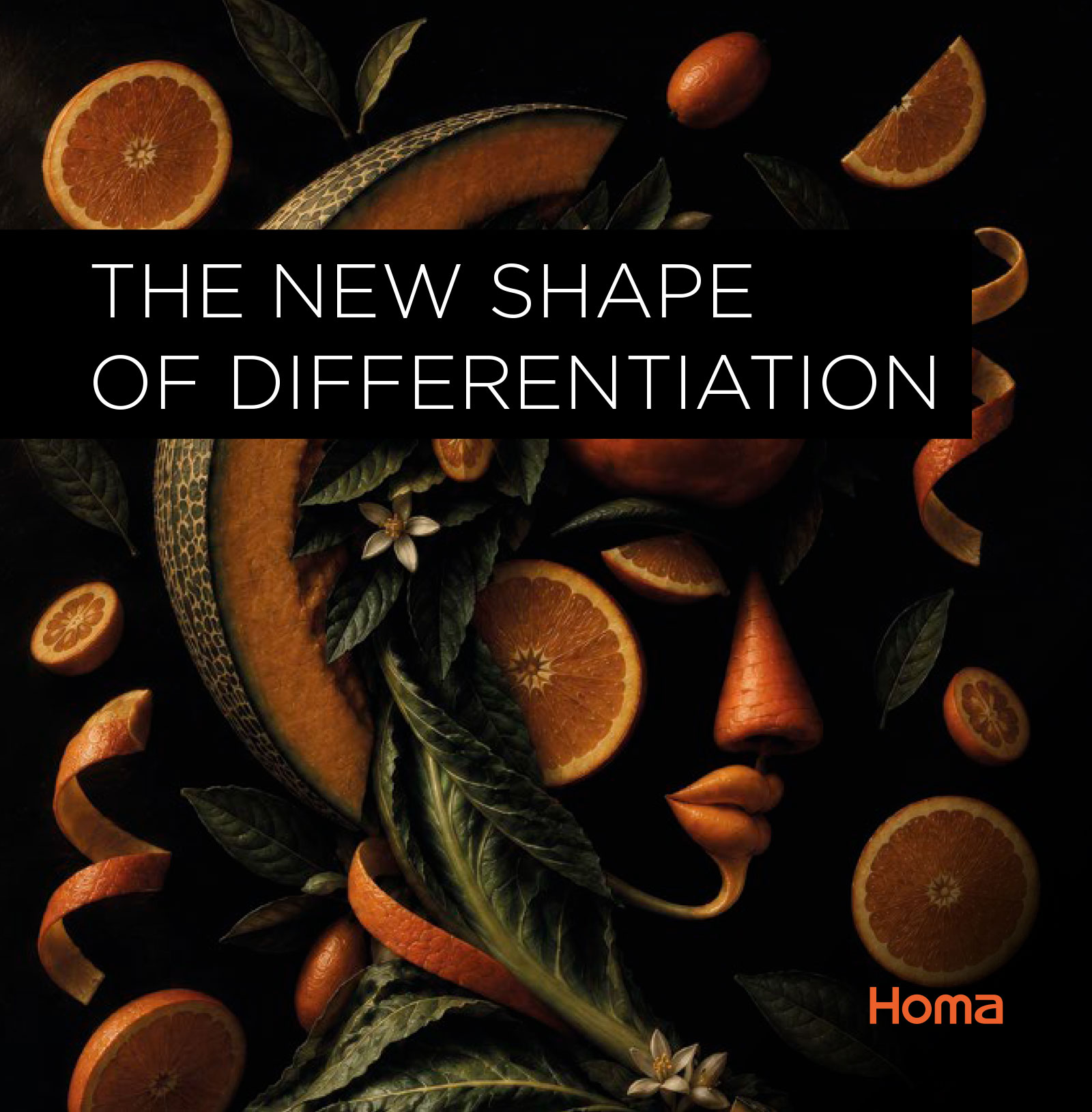
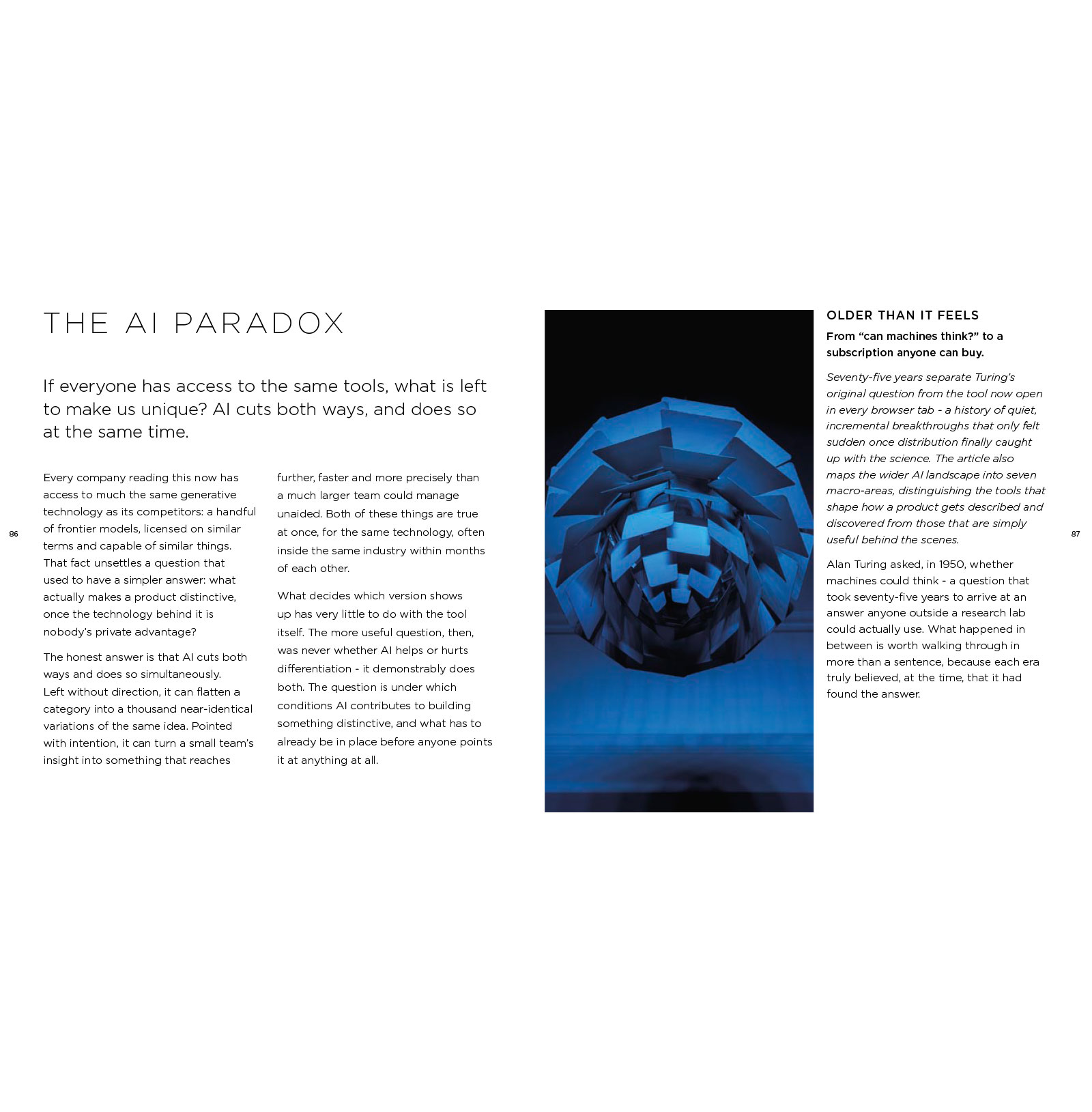
Homa’s new white paper launches on 15 October 2026, opening day of the Canton Fair.
Be among the first to receive a printed copy. Ask your Homa sales contact to reserve one for you in advance, or visit us at the Canton Fair to collect your copy and continue the conversation with our team.
REQUEST YOUR COPY →Copyright HOMA 2026- Issued By Homa Marketing dept. on September 2026
For further Information and Press Contacts: info@homaeurope.eu