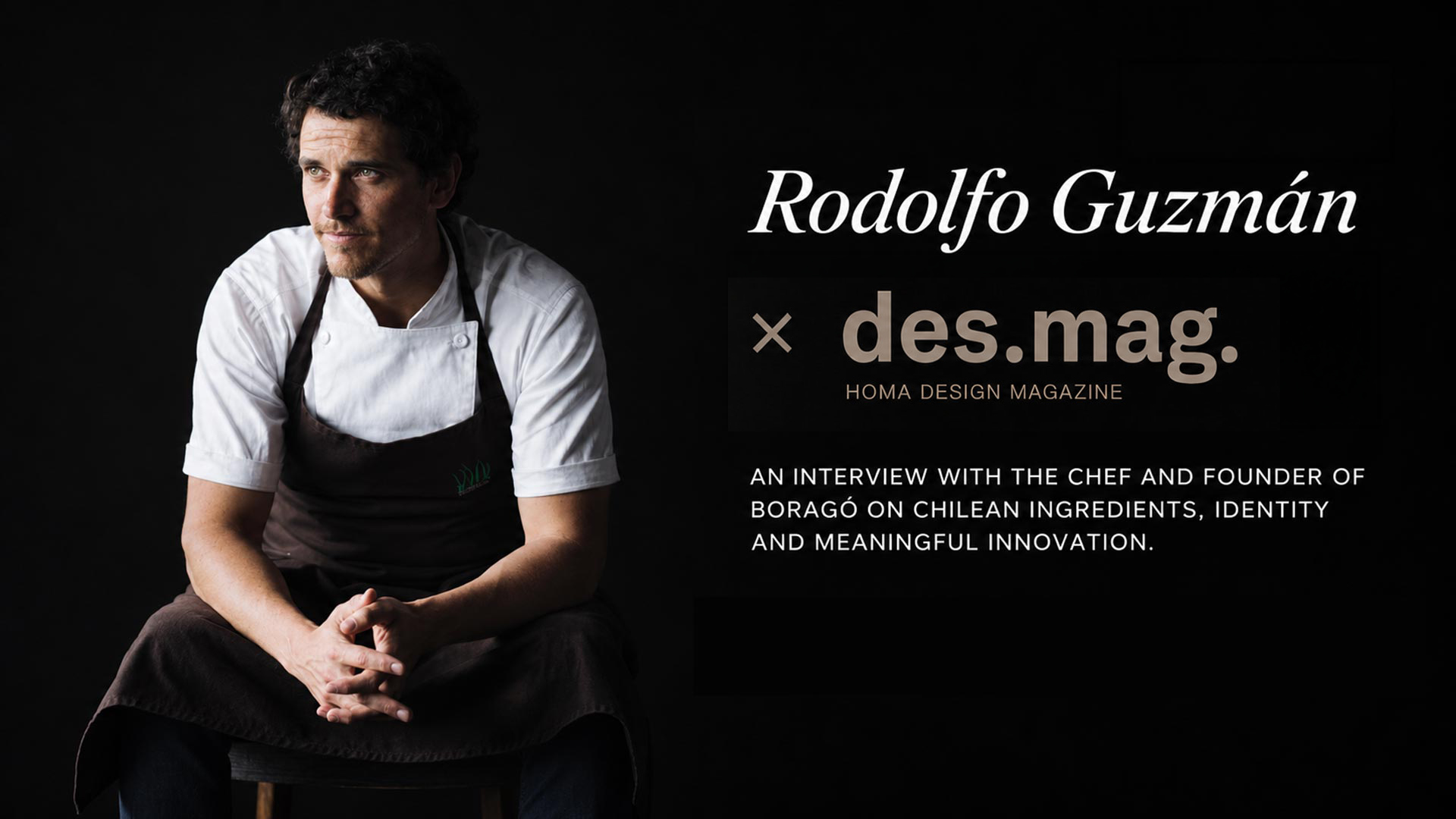
Why meaningful innovation is not always about creating something new, but about discovering new possibilities within existing resources.
By Homa Europe Editorial Team
Innovation is often associated with the introduction of something new: a technology, a material, a function or an entirely new product.
Yet some of the most meaningful transformations begin with a different ability: seeing possibilities where others see ordinary resources, established practices or familiar limitations.
As you will discover in the exclusive interview Chilean chef Rodolfo Guzmán gave to Homa Design Magazine, The Accidental Vanguard, his journey offers a fascinating perspective on this idea.
Although his story belongs to the world of gastronomy, its implications extend far beyond it, touching on design, industrial innovation, brand identity and the very nature of competitive differentiation.
When Guzmán began developing Boragó, his restaurant in Santiago de Chile, the prevailing perception of culinary excellence was strongly associated with imported ingredients and European gastronomic models.
Rather than following that direction, he began exploring the extraordinary potential of his own territory, its endemic ingredients and its ancestral knowledge.
What others perceived as ordinary, he progressively transformed into a source of originality and identity.
As Guzmán explains:
“We looked back in time in order to move forward.”
His journey reminds us that innovation does not necessarily require abandoning what already exists. Sometimes, it requires questioning how deeply we understand it.
The limitation was not necessarily in the resources themselves, but in the way they were perceived, interpreted and used.
One of the most revealing aspects of Guzmán’s experience is the evolution of his understanding of ingredients.
Through years of research, experimentation and collaboration, an ingredient that initially offered a single culinary application became the starting point for hundreds of possibilities.
This distinction is particularly relevant to industrial organisations.
Possessing resources, technologies and manufacturing capabilities does not automatically translate into competitive advantage.
The ability to interpret, combine and apply those capabilities in new and relevant ways is what transforms industrial potential into meaningful value.
The same resource can generate very different outcomes, depending on the knowledge, imagination and intelligence applied to it.
At that time, one ingredient meant one possibility. Now, one ingredient means at least 300 possibilities.
Rodolfo Guzmán · Boragó
This perspective resonates with a strategic reflection developed within Homa Europe on the evolving role of design and innovation in manufacturing.
As Federico Rebaudo, General Manager of Homa Europe, observed in his article From Berlin: Technology Is Searching for Meaning:
“Different does not automatically mean differentiated.”
The distinction is fundamental.
Creating something different may require creativity, technology or investment. Creating meaningful differentiation requires an additional layer of understanding: understanding people, markets, cultures, expectations and the identity of the brand we are designing for.
In an industrial environment where technologies and manufacturing capabilities are becoming increasingly accessible, this ability becomes even more strategic.
The competitive question is no longer simply what a manufacturer can produce, but what it can enable its partners to become.
For an OEM and ODM refrigeration manufacturer such as Homa, this reflection has very concrete implications.
A common industrial platform does not necessarily have to generate a common product identity.
Through thoughtful design, intelligent configuration, material choices, user interfaces and a deeper understanding of consumer behaviour, the same manufacturing capabilities can support distinctive product experiences and different brand positioning strategies.
The objective is not to multiply differences for their own sake.
It is to create differences that matter.
This is where Meaningful Design becomes a strategic capability: connecting industrial efficiency with the individual identity of brands, retailers and their private-label product ranges.
Industrial scale and brand individuality should not be opposing forces. Design can make them complementary.
Meaningful Design
Technology provides possibilities. Knowledge helps us understand them. Design gives them direction.
In refrigeration, advanced cooling technologies, airflow management, humidity control and intelligent storage solutions represent important industrial capabilities.
Their true value, however, emerges when they are translated into outcomes that people can recognise and appreciate: better food preservation, less waste, greater convenience and a more intuitive everyday experience.
The sophistication of a technology is not, in itself, a measure of its relevance.
Meaningful Innovation begins when a capability becomes a tangible benefit.
It is a principle explored further in Homa Europe’s editorial reflection From Survival to Meaning, which examines the evolution of refrigeration from a fundamental necessity to a broader contributor to contemporary living.
Another important dimension of Guzmán’s journey is the ecosystem of knowledge that gradually developed around Boragó.
His exploration involved local communities, producers, scientists and specialists from different disciplines.
Individual creativity evolved into a collective capability.
This offers an important lesson for industrial organisations.
Meaningful innovation rarely belongs to a single department or discipline. It emerges from the interaction between research, engineering, design, manufacturing, market intelligence and customer understanding.
The challenge is not simply to bring these capabilities together, but to create the conditions in which they can continuously enrich one another.
From this perspective, creativity becomes more than an individual talent.
It becomes an organisational capability.
These considerations are particularly relevant to Homa’s role as a specialist refrigeration manufacturing partner.
Working across different countries, distribution models, brands and consumer cultures requires more than manufacturing excellence.
It requires the ability to understand how shared industrial capabilities can generate distinctive value for different partners.
This is also one of the central themes of Homa’s white paper, The New Shape of Differentiation.
Our ambition is not simply to manufacture refrigerators for different brands. It is to help our partners build stronger brands through relevant products, distinctive identities and meaningful consumer experiences.
Perhaps the most valuable lesson from Boragó is that innovation does not always begin with the search for something new.
Sometimes, it begins with a better question about what we already have.
And with the ability to see in it what others have not yet recognised.
This article is inspired by Homa Design Magazine’s conversation with Rodolfo Guzmán, The Accidental Vanguard, and forms part of Homa Europe’s ongoing exploration of design, innovation and meaningful differentiation.
Homa Europe — Helping our partners build stronger brands.
Read the full interview below.
Homa Europe · Our ambition
Our ambition is not simply to manufacture refrigerators for different brands. It is to help our partners build stronger brands through relevant products, distinctive identities and meaningful consumer experiences.
Homa Europe
HOMA DESIGN MAGAZINE / ISSUE 07
The Accidental Vanguard
Rodolfo Guzmán on Chile’s culinary revolution, from foraged roots to global recognition. How Boragó’s pursuit of endemic excellence redefined Chilean gastronomy
Chef Rodolfo Guzmán, at the helm of Boragó in Santiago, has captivated the culinary world with an approach to food that is as deeply rooted in Chile’s ancient landscape as it is forward-thinking. His method, which can be described as anthropological, focuses intently on endemic ingredients and traditional cuisine. In this interview, Guzmán shares the remarkable journey of Boragó, from its challenging beginnings to its current status as one of Latin America’s most acclaimed restaurants. He tells DM about how the unique geographical and cultural tapestry of Chile, the profound influence of its native foraging communities, and the relentless pursuit of culinary surprise, rather than a focus on technique, unexpectedly led to global recognition and a revolution in Chilean gastronomy.
What was the context in Chile when you started?
We started almost 19 years ago. At that time, Chile was very different. To be honest, gastronomy was never a thing to us Chileans. Chile used to be the poorest country in Latin America, 50 years ago. Then, it suddenly exploded economically, becoming the healthiest economy in Latin America.
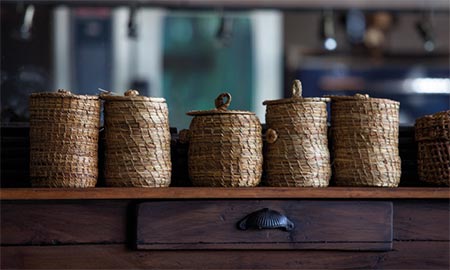
Chile is a very long and narrow country, it works like an island without being an island. We do not share a single ingredient with our neighbouring countries, which for me, as a cook, was a pain in the beginning, because I really wanted tropical ingredients. Also, the climate here is quite different. Our ocean is very, very cold, and you have lots of snow in the mountains. Down South, it is like being in Sweden, with snow in the ocean. This year, for the rst time ever, the ocean got frozen in the South, you could see the waves frozen.
During the Ice Age, some areas in Chile were not frozen. These were our ancient forests, our ecosystems. Also, what you find in our waters, you won’t see anywhere else in the world. That’s why it feels like an island, because the Andes are so high, reaching almost 7,000 metres. Talking about Argentina and Chile is like talking about black and white. Not better or worse, just completely different. The Atlantic Ocean is one thing; the Pacific Ocean is something else entirely.
What role did native cultures play in your approach?
Chilean natives, who have been around for the last 12,000 years, never mixed with the rest of the Latin American Inca population. They never got mixed. They were foragers; they didn’t know agriculture and they were nomads. They were sharing everything, the mountains, the coasts, the forests, the land itself. They were gathering and sharing. That is our culture, nomadism. Also, they were warriors. That was mainly why, when the Spanish came to conquer, they could never conquer the Mapuche people.
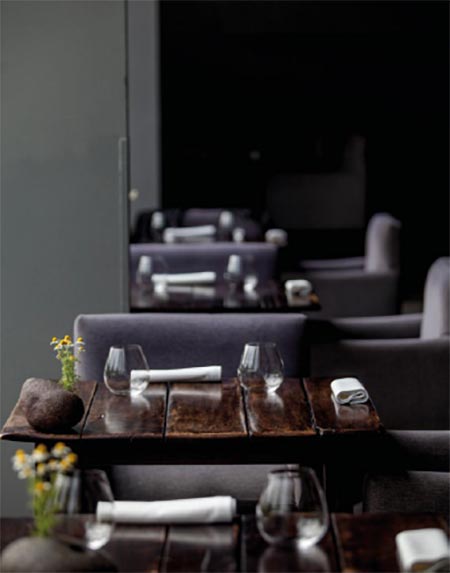
Everything at Boragó is organic. These ingredients have been around for such a long time, amazing ingredients you have never seen before, from the ocean and from the mountains.
How did Boragó begin to work with these ingredients?
The trouble was convincing people to send these ingredients from Patagonia, from the coast, from around our country. But they’ve been very nice. I ended up learning and meeting lots of people: not only producers or foragers or other Mapuche people, but also agronomists, biologists, anthropologists, botanists. People would tell me, “Hey, Rodolfo, do you know this guy that is grabbing these ingredients from the mountain?” And I’d go for it. I felt so blessed and lucky to be able to work with these ingredients.
At that time, in every good restaurant, the best things were coming from outside the country. A famous restaurant would be importing fish from Japan, prosciutto from Italy, mozzarella from Naples, just to be considered a good restaurant.
Lots of French cuisine. The best chefs were European chefs at hotels. But at a Chilean restaurant, Chilean ingredients, nobody cared. “These are too ordinary, they do not even have a price in the market,” they would say.
What made Boragó different?
I said to my Chef de Cuisine, who is one of my best friends and still works with me, “Hernán, Boragó has not to be about technique, our culture does not belong to technique.” Yet we both trained in Europe, in the best restaurants, and we loved European cuisine. What was happening in Spain at the time, that was massively amazing. But this did not belong to what we believe in, the ingredients from deep into the forest, from high up on the mountain. We looked back in time in order to move forward. That was all very simple.
Was it Chilean cuisine you were creating?
We did not want to create anything, we wanted to learn about how to use Chilean endemic ingredients. Not endemic cuisine, just Chilean cuisine, with lots of imagination and originality.
We started using many endemic ingredients. I would say 85% of the ingredients we use, come from the wild. Initially, people would send us these ingredients as a favour because it was not a business, there was no market for them. We used to be four people in the kitchen. That is how Boragó started.
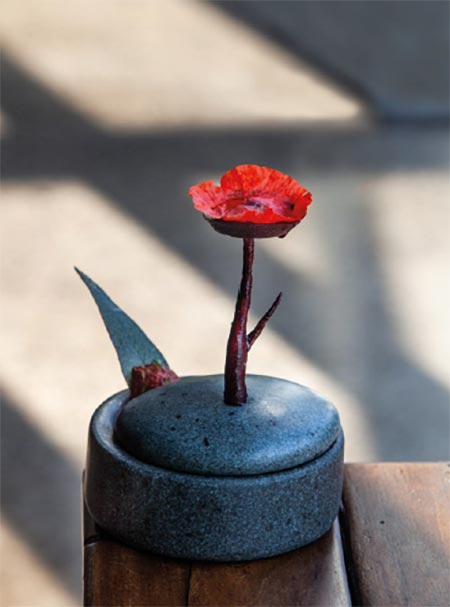
At that time, one ingredient meant one possibility. Now, one ingredient means at least 300 possibilities. And in my mind, this was Boragò’s true revolution.
So you mainly use seasonal produce?
Yes, though our seasons are very short. They are like small windows of opportunity to make the most of a fascinating array of produce. We have more than 300 different kinds of berries and wild plants, even growing under the snow in the South. But they last for two or three months, maybe even less for some of them, yet we wanted to have them all. We started making notes, not to forget for the next season, so we could move forward.
We ended up classifying and categorising the entire land according to the different types of food. I know this is very trendy in a way, documenting and exploring. But we didn’t mean it to be cool. We knew nothing. We needed… we wanted to learn. In Boragó, we now have a Dictionary of the entire land. We are going to have to publish it at some point so kids can learn it at school.
How do you define innovation?
Innovation might be something that people used to do 5,000 years ago. It could be the most innovative thing that you ever tasted or seen in your life. I like to think that humans move back and forth in time, and that is phenomenal to me.
Is there a single flavour that defines this journey?
It is the flavour of umami in general. It does not matter if it comes from the ocean, if it comes from a wild fruit, or from a tree. It does not matter if it comes from our mothers when they fed us as children. It does not matter if it comes from a cut of meat. Umami, in a way, has always guided us throughout human history, pointing at what was needed in order to survive. And then, over time, we began to find pleasure in it, too.
That journey with umami has guided us at Boragó over the years, because nothing truly great happens overnight. Like any meaningful pursuit in life, it takes time.
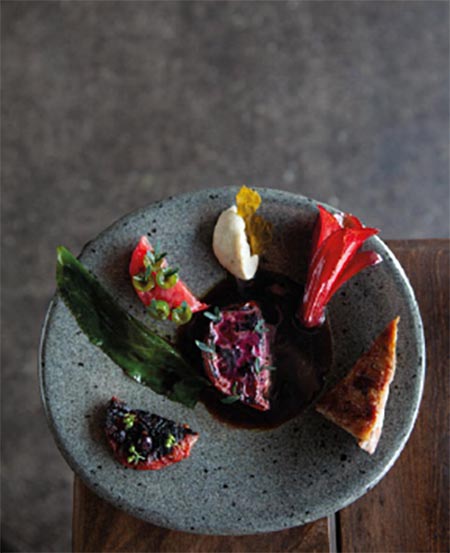
How do guests chose what to eat and drink at Boragò, since it’s all virtually unknown to most?
At the beginning, and until 2013, we had à la carte, of course. Then everyone wanted to try the tasting menu. We had two tasting menus, one shorter and one longer, and suddenly ninety five percent of guests chose the long menu. So we removed the other one.
Also, we didn’t have a wine list. We started searching for the most interesting Chilean projects around the country, not the most expensive wines but those that had value for us. We slowly started discovering some extraordinary producers, meeting people we never thought we’d meet. And now we have those bottles nobody else has in Chile. We created something that made sense with our food, even with the non-alcoholic pairings. We also use rainwater from Patagonia.
What is Boragó like today?
Now it’s totally different. We’re in a neighbourhood close to the mountains, near the Andes, next to Cerro Manquehue. The restaurant has a first floor, a second floor, researchers, and a food research centre. I still have no idea what we’re going to do with all this information, because Chile had never really considered these ingredients. We have more than 200 people behind the restaurant, our extended family, sending us these ingredients. They’re very well known nowadays, because every Chilean restaurant now wants to use at least some of this produce.
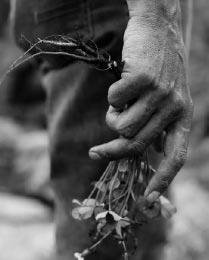
Bio
Chef · Boragó
Rodolfo Guzmán was born in Santiago, Chile, in 1978. After an early interest in other careers, he decided to pursue cooking and studied at a culinary institute in Santiago. He later trained in Spain at Mugaritz under Andoni Luis Aduriz, where he developed a creative and technical approach to gastronomy. In 2006, he returned to Chile to open Boragó and began cataloguing the country’s endemic pantry. His cuisine, entirely based on native ingredients and ancestral techniques, initially struggled with local audiences but gradually gained global acclaim.
Boragó has since earned international recognition, including top positions in Latin America’s 50 Best Restaurants and the Sustainable Restaurant Award in 2018 and 2021. Today, located at the foot of Manquehue Hill, Boragó is supported by a network of over 200 people and houses a Chilean food research centre dedicated to preserving and celebrating the country’s unique biodiversity.
borago.clOriginally published in Homa Design Magazine, Issue No. 7, October 2025 – March 2026, pp. 74–77. Editor in chief: Federico Rebaudo. © Homa 2025.
Related reading on Homa Europe
The New Shape of Differentiation
From Berlin: Technology Is Searching for Meaning
Homa Design Magazine
Editorial note · Credits
Homa Design Magazine is a vibrant editorial venture on a mission to ignite the flame of design thinking across the entire Homa community—encompassing Homa people, our partners, and beyond! Yet, its influence extends beyond these boundaries; it serves as a beacon of design culture poised to illuminate our entire industry.
Today, it stands as a remarkable testament to the potency of tangential marketing, presenting a novel approach to captivating audiences. The magazine is the result of a collaborative effort, with the original idea stemming from Homa Europe.
Editor in Chief Federico Rebaudo
Project Coordination Federico Gallina
Contributing writers Elena Scandroglio, Pierre Ley, Patrizio Cionfoli
Coordination, Design & Layout Studio Volpi
Copyright HOMA 2026- Issued By Homa Marketing dept. on November 2026
For further Information and Press Contacts: info@homaeurope.eu