By Federico Rebaudo, Head of Homa Europe.
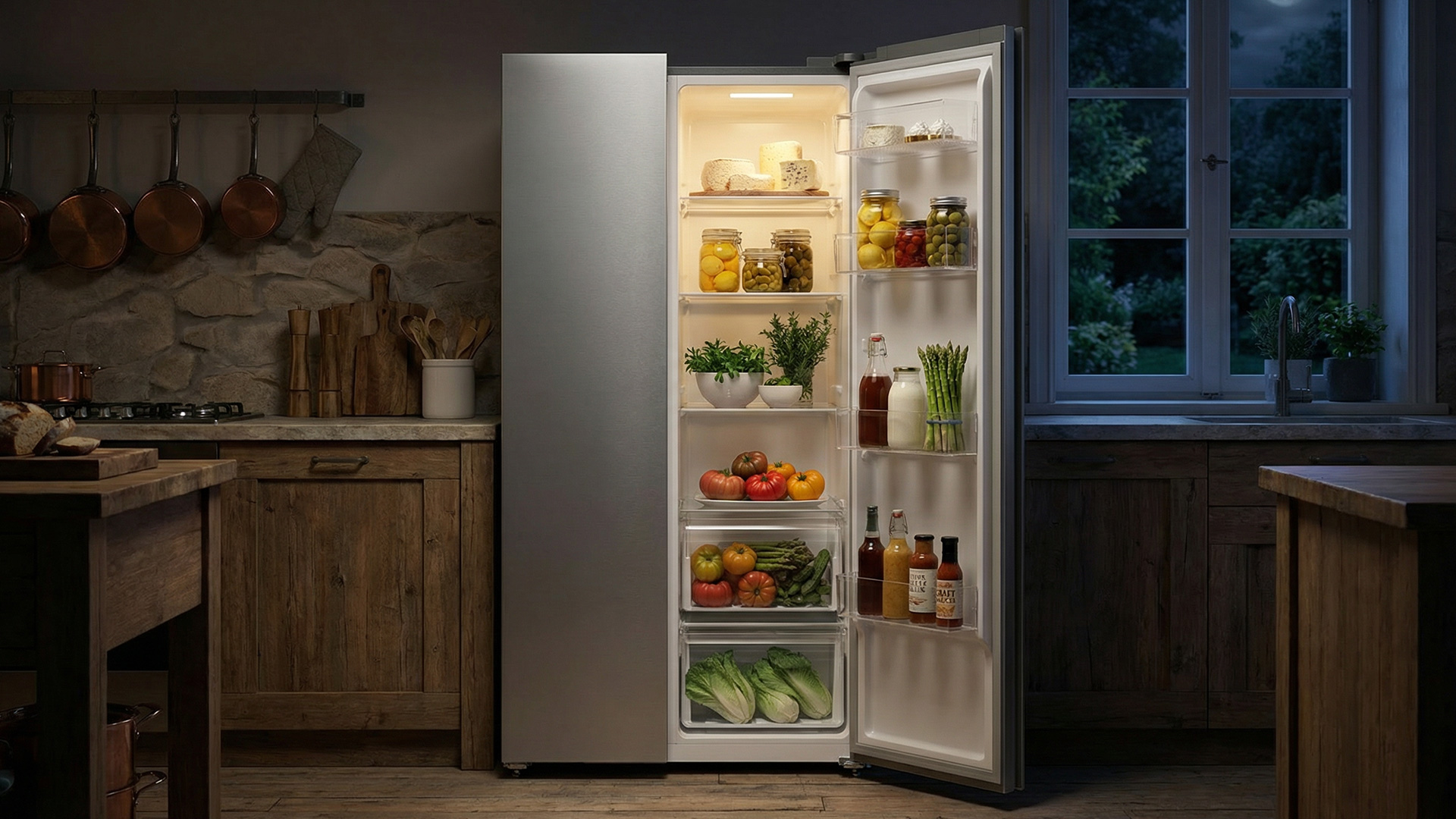
The refrigerator has always collected information, even before we called it data.
It responded to temperature. It compensated for openings. It worked harder in a warm kitchen and differently in a quieter household. For decades, much of this intelligence was mechanical, limited and largely invisible. Today, however, the nature of that intelligence is changing.
Modern refrigerators are increasingly able to read conditions, recognise patterns and adapt their behaviour. Sensors, electronic controls, memory, software and connectivity are turning the appliance into a more responsive preservation system. This is one of the most important developments in the future of food preservation.
But it must be understood carefully.
The data-driven refrigerator should not be reduced to the idea of a screen on the door or a spectacular digital interface. That is only one possible expression, and often not the most meaningful one. The deeper transformation is happening inside the product: in the way it manages cooling cycles, humidity, airflow, energy use and storage conditions according to real behaviour.
A refrigerator that understands how it is being used can preserve better.
This may begin with simple information: ambient temperature, door openings, frequency of use, compartment activity and periods of reduced interaction. These signals may appear basic, but together they create a picture of household rhythm. A family that opens the refrigerator repeatedly during the evening has different preservation needs from a household away for several days. A product placed in a hot environment has different requirements from one operating in stable conditions. A freezer frequently accessed by children behaves differently from one opened only occasionally.
The value of data is not in collecting it for its own sake. The value is in making the appliance more adaptive.
This is why I prefer to speak about behaviour-responsive refrigeration rather than simply smart refrigeration.
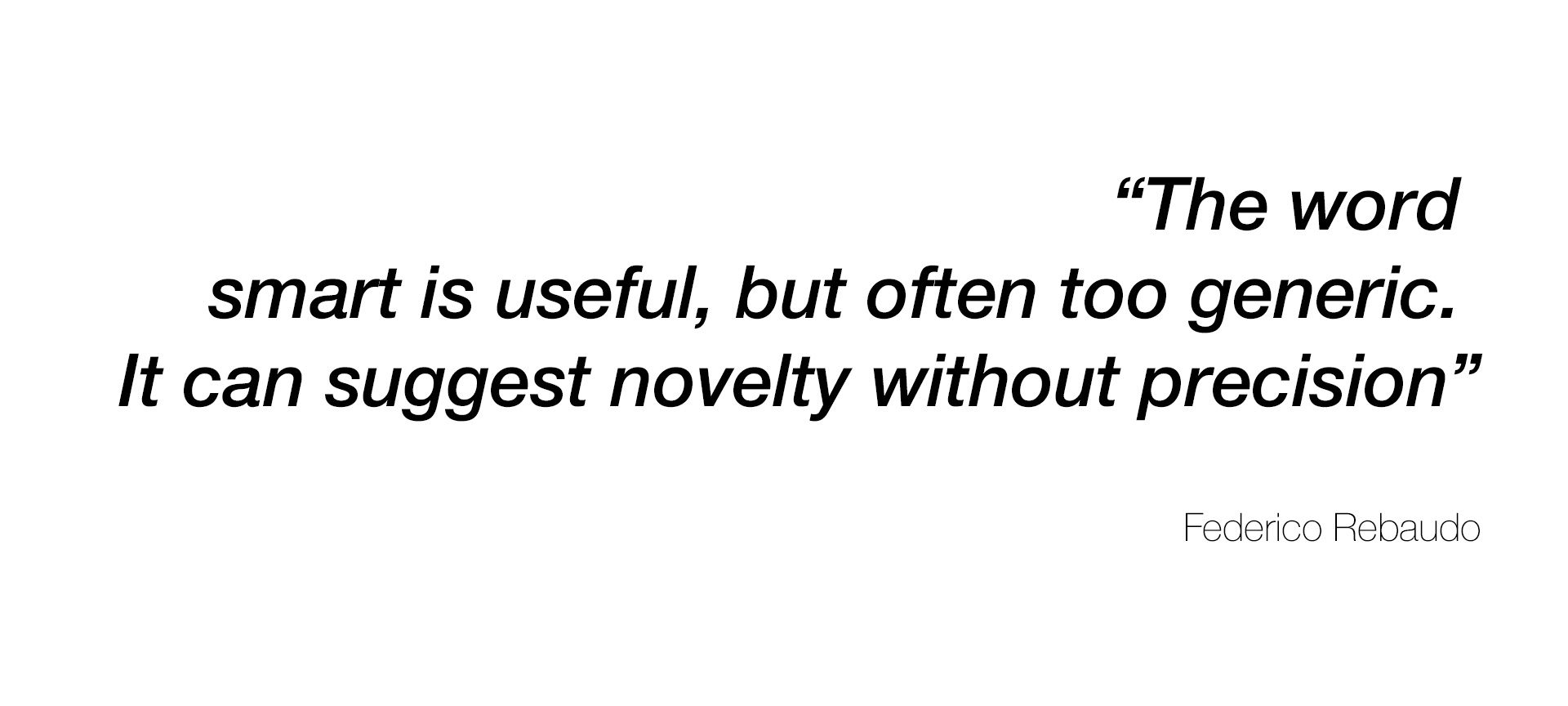
Behaviour-responsive systems are more concrete. They observe conditions, interpret patterns and adjust performance in ways that improve preservation, efficiency and usability.
A simple example is the holiday function. When the refrigerator understands that it will not be opened frequently, it can adapt its cooling cycles. This can reduce unnecessary energy consumption, limit temperature stress and optimise performance during periods of low use. In a more active household, the opposite is true: the product must respond to frequent openings, rapid temperature changes and humidity variations.
This is not technology for theatre. It is technology for care.
The same principle applies to food quality. Fresh products are sensitive to fluctuations. Fruit, vegetables, dairy products, meat, fish and prepared dishes do not all require the same conditions. A more intelligent refrigerator can help create more stable micro-environments, reduce unnecessary stress and support better organisation. As food habits change, this becomes increasingly relevant.
Consumers are buying differently. Grocery delivery, ready-prepared ingredients, fresh produce, opened packages, smaller households, flexible meals and social entertaining are all changing the internal life of the refrigerator. The traditional architecture of shelves and drawers is being challenged by new behaviours. Data can help the industry understand these behaviours more accurately and design products that respond to them.
This creates a strategic opportunity for brands and retailers.
A connected or data-enabled appliance can generate insight into how products are actually used. Not in a vague, theoretical way, but through patterns of interaction. Which compartments are most accessed? How often are doors opened? Which programmes are ignored? Which conditions create performance stress? Which features deliver real value?
For an industry that has often relied on assumptions about domestic behaviour, this is a significant step forward.
However, with this opportunity comes responsibility.

The refrigerator is located in one of the most intimate spaces of the home. It is connected to food, health, family rhythm and personal habits. Data in this context must be approached with restraint and maturity. The objective should not be intrusive observation. The objective should be better product performance, better preservation and better consumer value.
For Homa, this distinction is essential. As an industrial partner, our role is to enable data-ready and intelligence-ready platforms that brands can develop according to their own consumer relationship and market strategy. Homa does not need to own the final relationship with the consumer in order to support responsible innovation. But we can help create the technical conditions for products that are adaptive, reliable and designed with privacy-conscious principles in mind.
Anonymised clusters, aggregated patterns and transparent usage logic can provide meaningful insight without turning the appliance into an intrusive device. The future of appliance intelligence must be based on trust. Without trust, even the most advanced technology becomes fragile.
This is especially important as artificial intelligence enters the conversation. AI has become one of the most repeated words in the market, but not every use of the word is meaningful. In refrigeration, the real question is not whether a product can be labelled AI-enabled. The real question is whether intelligence improves preservation, reduces waste, saves energy, simplifies use or helps the brand create a better experience.
If it does not, it is only noise.
The most valuable intelligence in refrigeration will often be quiet. It will adjust a cycle without asking for attention. It will protect freshness without needing to announce itself. It will support the consumer without making the appliance feel complicated. It will help brands understand usage without breaking trust.
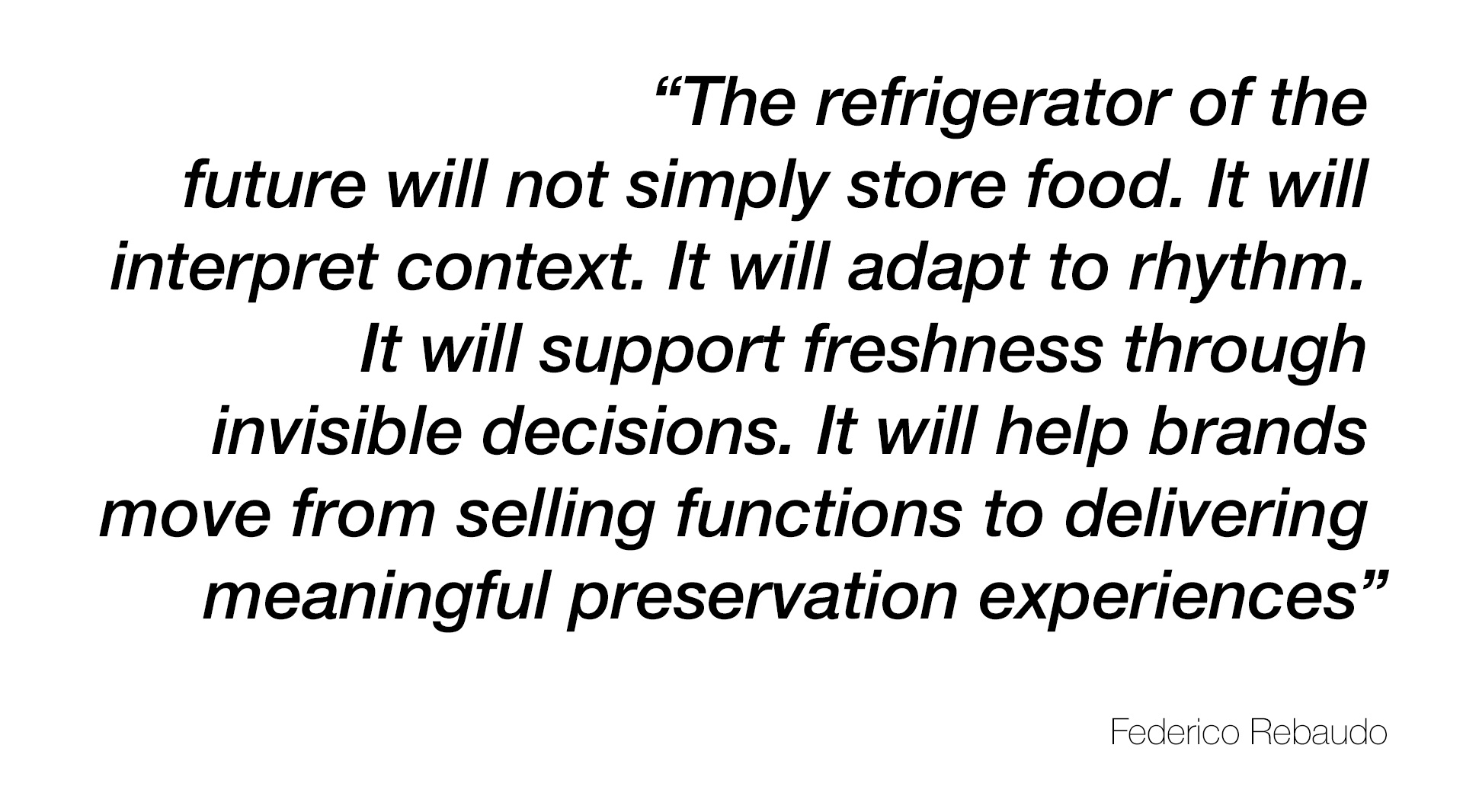
This is the balance our industry must seek: more intelligence, less friction.
For Homa, the data-driven refrigerator is not just a technological topic. It is a strategic one. It changes how we think about platforms, partnerships, design, product development and after-sales value. It allows the appliance to become more responsive to life as it is actually lived.
But the success of this future will depend on a very human principle.
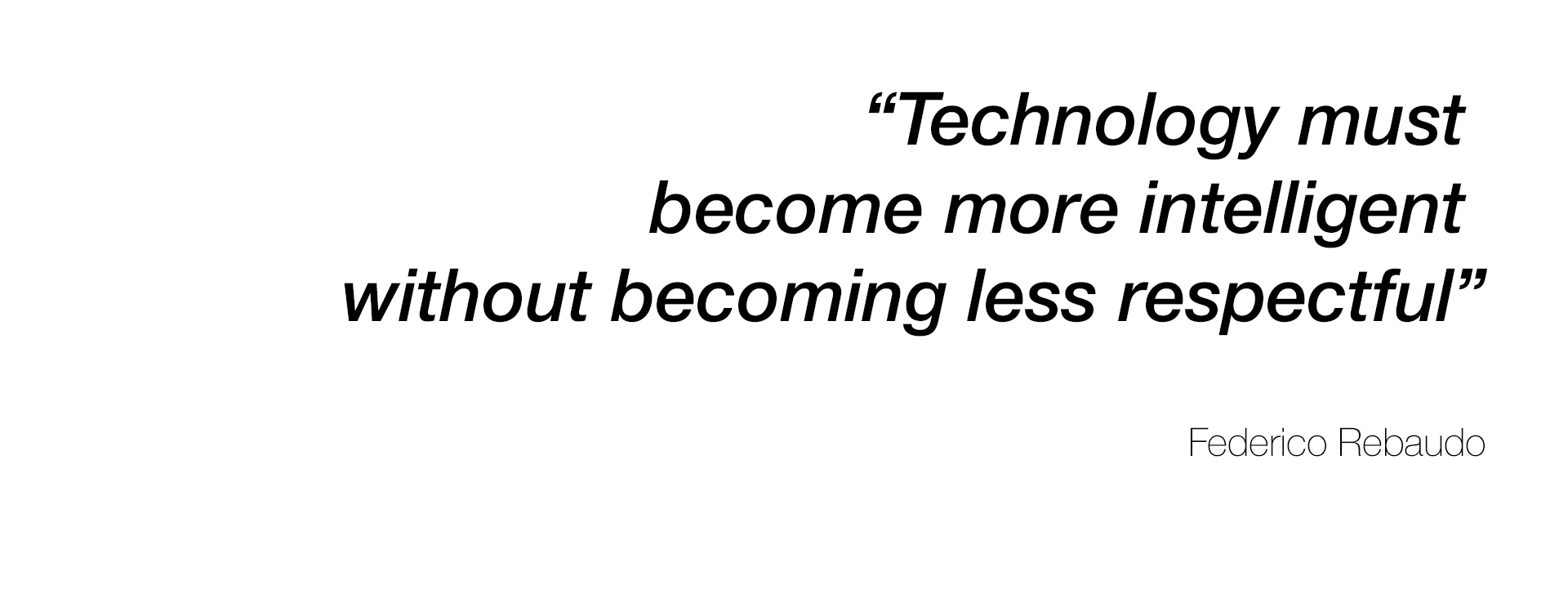
That is the true challenge of the data-driven refrigerator.

Federico Rebaudo, General Manager at Homa Europe
This article is part of Strategic Perspectives, an editorial series by Federico Rebaudo, General Manager at Homa Europe.
The series explores how OEM manufacturing is evolving beyond industrial execution, connecting food preservation, design thinking, consumer understanding, technology, marketing culture and strategic
partnership.
Continue exploring the series:
. The Invisible Revolution: Food Preservation Beyond Cooling
. From OEM to Technology Enabler
. When Design Becomes Language
Copyright HOMA 2026 Issued By Homa Marketing dept. on April 2026
For further Information and Press Contacts: info@homaeurope.eu