Why would a manufacturer invest in a box that will never carry its own name?
A conversation with Federico Rebaudo, General Manager of Homa Europe, on the strategic thinking behind Homa's packaging initiative, the value of customer enablement and the expanding boundaries of industrial partnership.
EDITORIAL INTRODUCTION
A refrigerator carton is hardly the first place one would expect to find a new perspective on the future of manufacturing.
For decades, packaging in the home-appliance industry has been treated primarily as a functional necessity: something that protects the product, carries essential information and survives the journey from factory to home.
But what happens when an OEM begins to question not only what it manufactures, but also what else it could enable its customers to achieve?
For Federico Rebaudo, General Manager of Homa Europe, that question has become an important part of a broader strategic reflection on the evolving role of manufacturers working behind other companies' brands.
The idea is to explore how industrial capabilities, market understanding, design and additional services can help customers build more distinctive propositions, without compromising the independence of their brands.
The packaging initiative developed in 2026 with Studio Volpi offers a concrete expression of this thinking. Explored in Homa's latest white paper, The New Shape of Differentiation, the project now opens a broader conversation about the evolving role of OEM manufacturers.
We spoke with Rebaudo about the strategic idea behind the project, why he chose to explore an apparently ordinary cardboard box, and what this initiative may reveal about the future of OEM partnerships.
You have often argued that the role of an OEM should extend beyond manufacturing. Where did this conviction originate?
I think it comes from having experienced the relationship between brands and manufacturers from both sides.
Before joining Homa, I spent many years working for established European appliance brands, first in product management and later in marketing leadership roles involving product strategy and make-or-buy decisions.
That experience taught me something important.
When you are responsible for a brand, you do not simply need a supplier capable of manufacturing what you ask for. You need partners who understand why you are asking for it, what you are trying to achieve and where you need to create competitive advantage.
Sometimes the greatest contribution a manufacturer can make is not to respond perfectly to a brief, but to help its customer ask a better question.
This perspective strongly influenced the way I approached my role at Homa.
I saw an opportunity to connect Chinese industrial capability with European market understanding, design culture and a more complete interpretation of customer needs.
Over time, I became increasingly interested in exploring what an OEM could offer beyond the physical product.
In fact, this is not a recent idea. In a 2022 interview with Michael Yao and Studio Volpi, I was already discussing the need to extend the scope of an OEM's offer into services, while remaining firmly committed to our identity as a pure manufacturer.
The underlying conviction has not changed.
Industrial excellence is the foundation of the relationship. It gives customers confidence in quality, technology, reliability and competitiveness.
But a strong industrial relationship can create value in many other ways.
It can help customers understand markets, communicate product benefits, make better use of design, organise knowledge and build more coherent propositions.
For me, the opportunity is not to move away from manufacturing.
It is to expand the value that manufacturing makes possible.
How did this thinking lead you to something as apparently ordinary as a cardboard box?
I have always been fascinated by situations in which something is so familiar that we stop questioning its role.
In industry, we often invest considerable effort in developing something new: another technology, another material, another function.
Yet sometimes an opportunity is already there, in an object or process we have learned to consider purely functional.
Packaging is a good example.
Think about a refrigerator carton. It is a large physical surface, often taller than the person standing beside it. It travels through warehouses, logistics networks, retail environments and eventually reaches the customer's home.
It has a job to do, and that job is essential.
But for most of its journey, we tend to think about it almost exclusively in terms of protection, handling and cost.
I began wondering whether we were overlooking something.
What if the same surface could also help a brand express its identity, communicate what makes a product relevant or create a more coherent experience before the appliance is even unpacked?
The interesting aspect was that we did not necessarily need to create another physical object or add another technical feature.
We could explore how to make an existing industrial element work harder for our customers.
That was the opportunity I wanted to investigate.
And it fitted naturally into a wider reflection that eventually became part of The New Shape of Differentiation, our white paper presented at the Canton Fair in October 2026.
Not every meaningful difference has to exist inside the product.
Some differences emerge from the way its value is understood, communicated and experienced.
What was the strategic brief you brought to Studio Volpi?
I did not want to start by asking for a more attractive box.
That would have made the discussion primarily an aesthetic one.
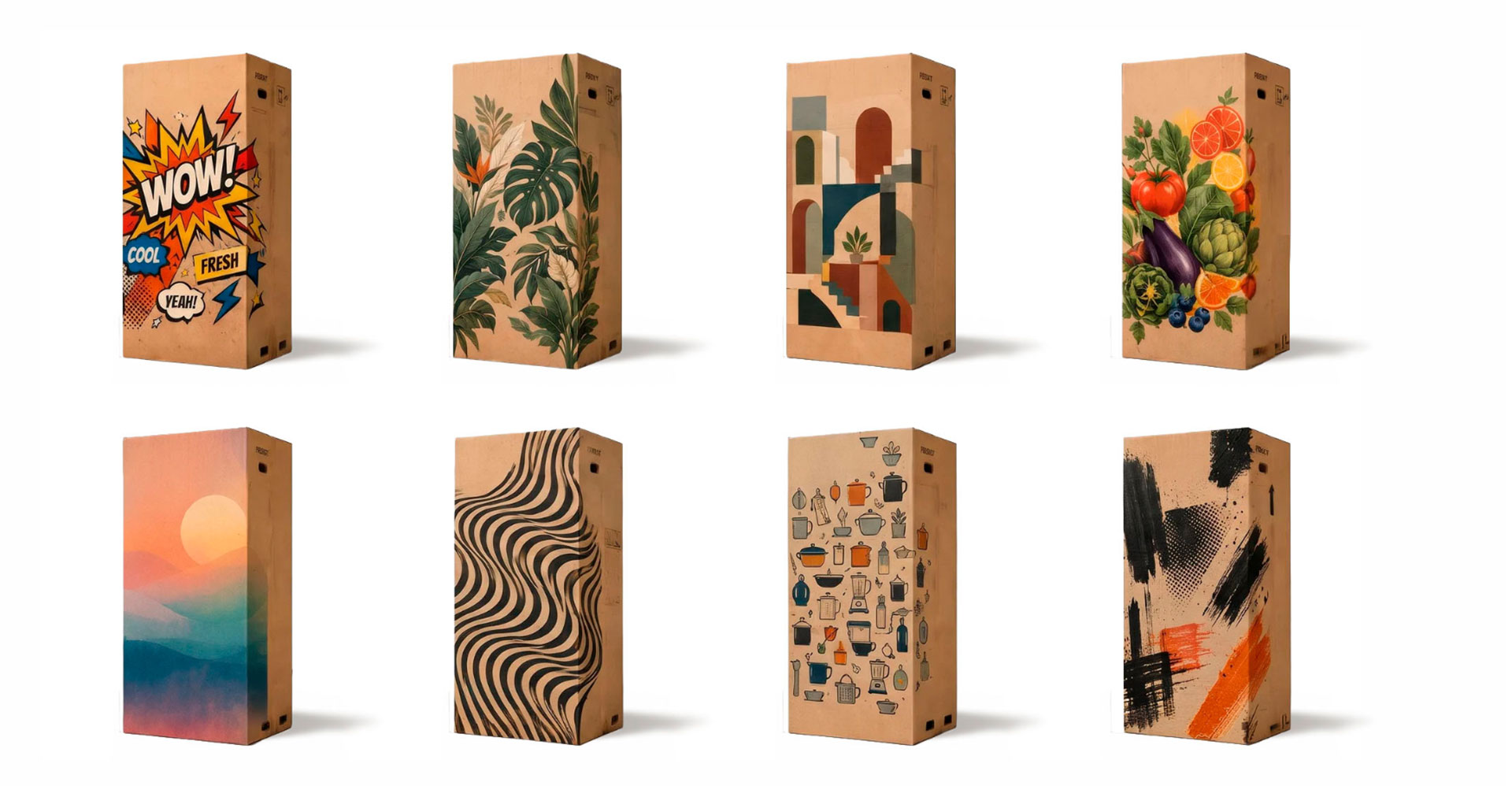
I wanted to explore a different question: could packaging become a flexible instrument of brand differentiation for an OEM manufacturer serving many different customer identities?
This distinction was fundamental.
Homa does not manufacture refrigerators under its own consumer brand. Our customers include established international brands, retailers, private labels and importers, each with different positioning, expectations and commercial priorities.
A packaging solution that imposed a recognisable Homa identity would have missed the point entirely.
The objective was almost the opposite.
Could we develop a design approach that would help different brands express their own personalities while making intelligent use of the same industrial starting point?
I have always believed that, to achieve an outstanding creative result, you need to give creative people the freedom to do what they do best.
My role was not to tell Studio Volpi how the packaging should look, or to prescribe a particular visual solution. That would have limited the very creativity we wanted to unlock.
Instead, I concentrated on explaining the strategic objectives behind the initiative, both direct and indirect.
The immediate objective was to explore how packaging could become an additional source of differentiation for our customers, helping their brands express value, personality and relevance more effectively.
But there was a broader ambition.
I wanted to demonstrate how an OEM could expand the value of its partnership beyond manufacturing, developing new capabilities and services that help customers become more competitive.
And competitiveness should never be reduced to price alone.
Of course, cost efficiency remains fundamental to our industry. But if the only advantage we help our customers build is a lower purchasing price, we are limiting both their opportunities and our own contribution.
I believe a truly valuable industrial partner should also help its customers compete through differentiation, perceived value, market relevance and stronger brand propositions.
At the same time, we had to remain completely faithful to Homa's identity as a pure OEM. Our purpose was not to create a Homa-branded packaging system, nor to interfere with the identities of the brands we manufacture for.
It was to explore new ways of supporting those identities.
These were the ambitions and boundaries I wanted Studio Volpi to understand clearly.
From there, the creative exploration belonged to the agency.
Studio Volpi brought its expertise in branding and design, exploring how different visual languages, information hierarchies, verbal tones and design principles could give packaging a more meaningful role.
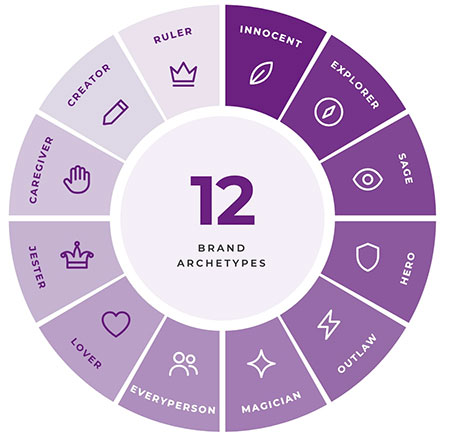
One particularly interesting part of the work was the exploration of brand archetypes, not as rigid templates but as a framework for developing different territories of expression.
A brand built around reassurance should not necessarily communicate like one built around performance. A technically authoritative brand may need a different language from one whose identity is more emotional or lifestyle-oriented.
The challenge was to demonstrate that an industrially familiar object could support these differences without becoming unnecessarily complex or losing its primary function.
Studio Volpi translated that ambition into a creative exploration, described in its article Branding Starts with the Box. Then Goes Further.
For me, the project illustrates something I consider particularly important in both innovation and leadership.
A strong strategic brief should not tell designers what to draw. It should help them understand what their creativity needs to achieve.
That is how I believe a successful collaboration between industry and design should work: a clear understanding of the problem and the value we want to create, combined with the creative freedom to explore solutions that might never have emerged from a prescriptive brief.
Some of Homa's customers are established international brands. Others are retailers developing their own private labels or importers building brands for their local markets, sometimes under licence. Each brings different strengths and market knowledge. How can the same initiative create value for all of them without crossing important boundaries?
This is probably the most important consideration, because an OEM must be extremely clear about its role.
I would never suggest that a manufacturer should replace the brand strategy, market intelligence or creative capabilities of its customers.
In fact, one of the most interesting aspects of our business is the diversity of knowledge our partners bring to the relationship.
Established international brands invest considerable resources in understanding consumers, researching markets and building distinctive identities. They have developed sophisticated capabilities in design, marketing and brand management.
Retailers bring something equally valuable, but from a different perspective: a direct relationship with consumers, through their stores and digital platforms. They observe purchasing behaviour, understand shopping preferences and receive continuous feedback from the people who actually choose and use the products.
Importers, meanwhile, often possess an exceptional understanding of their local markets. They know the distribution channels, commercial dynamics, competitive landscape and specific expectations of their territories.
Some retailers and importers also operate brands under licence, combining their market expertise with the responsibility of preserving an established brand identity.
These are not different levels of competence. They are different forms of expertise.
And I believe this diversity is precisely what makes the OEM model so interesting.
Our opportunity is to complement that knowledge with industrial capabilities, design flexibility, product expertise and additional services that can help each partner translate its market understanding into stronger competitive propositions.
For an established brand, this may mean exploring new possibilities within an already well-defined identity. For a retailer, it could mean transforming valuable consumer insights into more relevant product experiences and clearer brand differentiation. For an importer, it may involve supporting a proposition carefully adapted to the characteristics of a particular market.
The starting points are different. The ambition is the same: helping our customers create more value through their own brands.
But the principle must remain consistent.
We are not interested in imposing our identity on the brands we manufacture for.
We are interested in helping them express theirs more effectively.
In fact, I believe this is one of the most interesting characteristics of a pure OEM business model.
We do not need to compete for the consumer's attention. We can invest our energy in helping our customers earn it.
Of course, not every customer will want or need the same services. These opportunities must be developed collaboratively, respecting existing expertise, brand identities, licensing arrangements and commercial priorities.
The packaging project is therefore not an attempt to prescribe how our customers should present their products.
It is an exploration of what additional possibilities we could make available to them.
And I think that distinction is essential to maintaining trust.
Is the packaging project an isolated creative experiment, or part of a broader idea for how Homa could support its customers?
I see it as an example of a much broader direction.
Over the years, we have worked on different initiatives that, at first sight, might appear relatively independent.
We have explored new approaches to instruction manuals, product storytelling, digital knowledge sharing, customer experience and the ways industrial information can become more useful to commercial teams.
What connects these projects is not their format.
It is the intention behind them.
In each case, the underlying question is whether we can remove complexity, improve understanding or create additional value for the people and organisations we work with.
Take a user manual.
Its primary function is to explain how a product works. But a well-designed manual can also make an interaction easier, reduce frustration and communicate the care that a brand has invested in its product.
Or consider a digital knowledge platform.
It may begin as a practical tool for sharing catalogues and technical information. But it can become something more valuable if it helps partners access knowledge, build confidence and make better decisions.
A showroom, a training programme or an editorial initiative can follow the same logic.
These are different expressions of a common idea: industrial partnership should not be measured only by the moment in which a product is delivered.
The relationship begins earlier and continues afterwards.
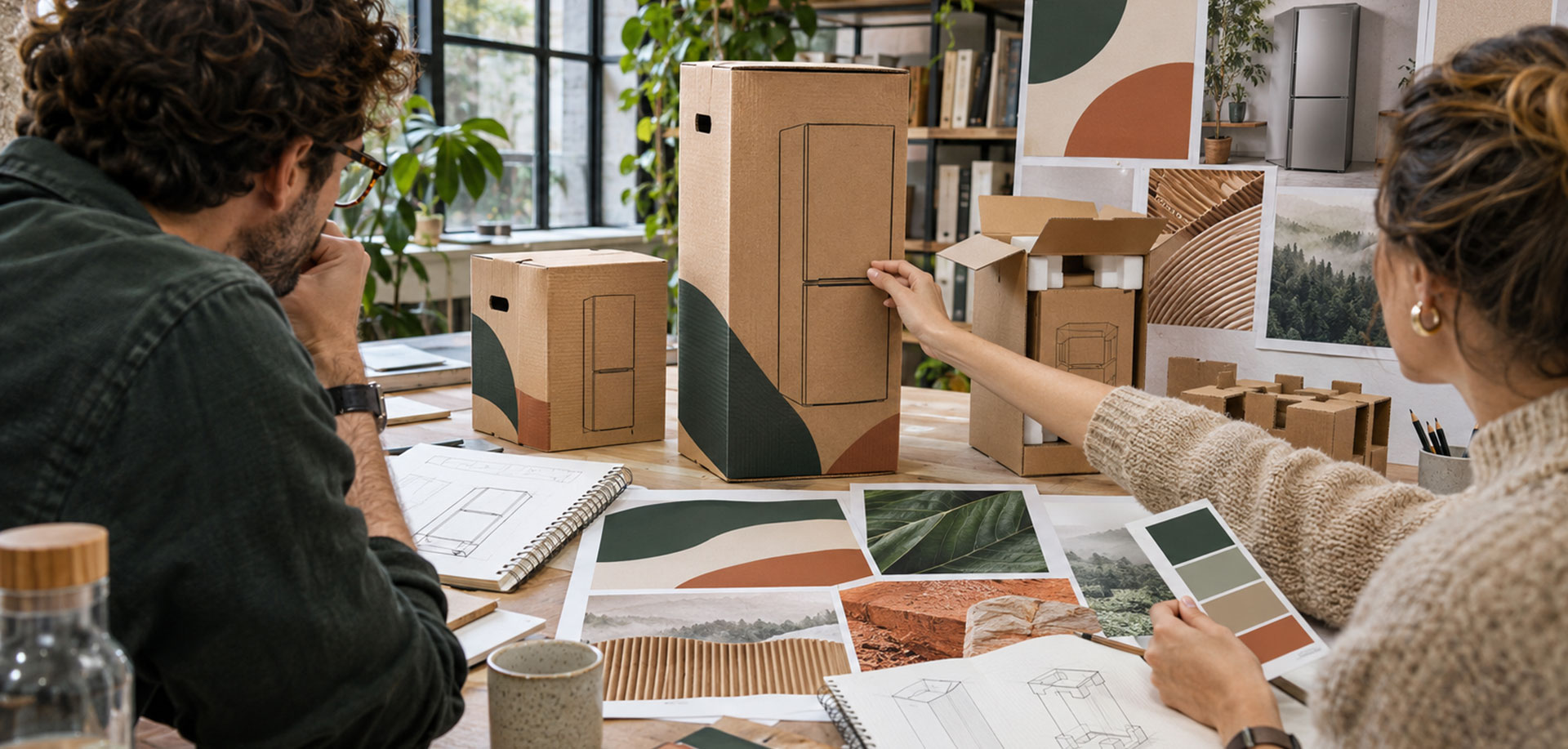
Packaging adds another perspective to that journey.
What makes this particularly interesting is the possibility of connecting these initiatives into a more coherent system of customer support, rather than treating them as unrelated communication or design projects.
I do not believe every manufacturer should suddenly attempt to become a consultancy, a design agency or a marketing company.
That would create confusion and, in many cases, take companies away from their real strengths.
But I do believe industrial organisations should continuously examine how their knowledge, capabilities and relationships could become more useful to their partners.
For Homa, the opportunity is to explore new services that complement our manufacturing expertise and strengthen the competitiveness of the brands we serve.
The packaging project is one tangible step in that exploration.
It is a concept demonstrating a possibility, not a claim that a complete new service model has already been implemented.
The ambition is broader than the project. The project helps make the ambition understandable.
What does this initiative tell us about leadership and the way new ideas develop inside an industrial organisation?
One of the most interesting aspects of my role is the opportunity to work at the intersection of different cultures, functions and ways of thinking.
Industrial organisations are naturally structured around disciplines. Engineering focuses on performance. Manufacturing focuses on efficiency. Commercial teams focus on markets and customers. Designers explore how products and experiences should take shape.
All of these perspectives are essential.
But some of the most interesting opportunities emerge between them, in territories that do not clearly belong to one function.
That is often where I try to concentrate my attention.
My role is not simply to bring information from Europe to China or from customers to factories.
It is to interpret signals, recognise possible connections and help transform them into questions that the organisation can explore.
Sometimes that means challenging an assumption that has become so familiar nobody thinks about it any more.
Why should a manual be treated only as an instruction document? Why should a factory visit be treated only as a technical tour? Why should an OEM's contribution stop at the product?
And, in this particular case, why should a box remain only a box?
Of course, an idea alone has very little value.
It needs an organisation willing to consider it, colleagues prepared to contribute and partners capable of translating it into something tangible.
This is one of the qualities I value most in Homa: the willingness to engage with different perspectives and explore opportunities that may not initially fit conventional industrial categories.
The packaging project also demonstrates why collaboration with creative partners matters.
Studio Volpi brings expertise that complements our industrial knowledge. The value emerges when different disciplines work on a shared question rather than protecting their own boundaries.
To me, leadership increasingly means creating the conditions for these connections to happen.
Not every exploration will become a commercial success. Not every idea should become a product or service.
But an organisation that never questions the established boundaries of its own business may overlook important opportunities to evolve.
And that is a risk I find much more interesting than the risk of asking an unconventional question.
Looking ahead, what would you like this project to represent for Homa and for the wider OEM industry?
I would be delighted if people looked at this project and saw more than an exercise in packaging design.
Because the box itself is not really the central issue.
The important question is whether we are prepared to reconsider what value an industrial partner can contribute to the success of another company's brand.
There is a growing tendency to interpret industrial competitiveness through increasingly sophisticated technologies, automation and efficiency.
These developments are essential. They will continue to transform our industry.
But as capabilities become more widely accessible, I believe the next challenge will increasingly concern the intelligence with which those capabilities are used.
Understanding markets. Interpreting cultural differences. Connecting product engineering with consumer needs. Recognising opportunities that do not necessarily require another technological feature.
And, above all, understanding that the success of an OEM is closely linked to the success of the brands it serves.
This is why I see the packaging initiative as a small but meaningful expression of a larger evolution.
The manufacturer does not need to become the protagonist of the consumer experience.
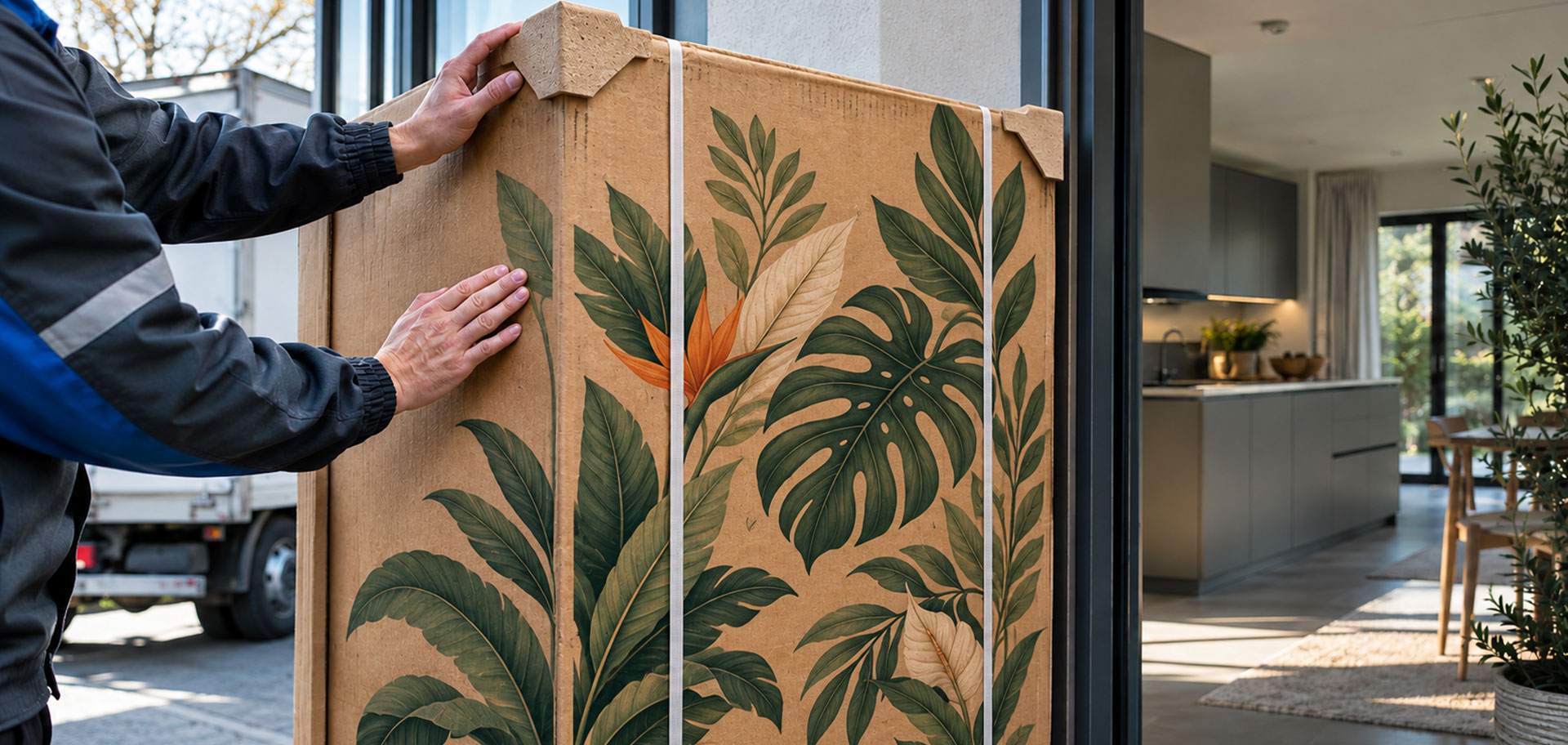
It can become a more valuable contributor to that experience.
For a company committed to remaining a pure OEM, that is both an opportunity and a responsibility.
We are not trying to make Homa more visible on our customers' products. We are trying to make Homa more valuable to the brands behind those products.
Perhaps the most distinctive contribution an OEM can make is not to put its own name on something new.
It is to help another brand give people a better reason to remember theirs.
Further reading: Homa's The New Shape of Differentiation explores how product, service, brand meaning and industrial culture contribute to differentiation. Studio Volpi's Branding Starts with the Box. Then Goes Further presents the creative development of the packaging concept.
Copyright HOMA 2026- Issued By Homa Marketing dept. on November 2026
For further Information and Press Contacts: info@homaeurope.eu