By Federico Rebaudo, Head of Homa Europe.
The more intelligent an appliance becomes, the more human its design must be.
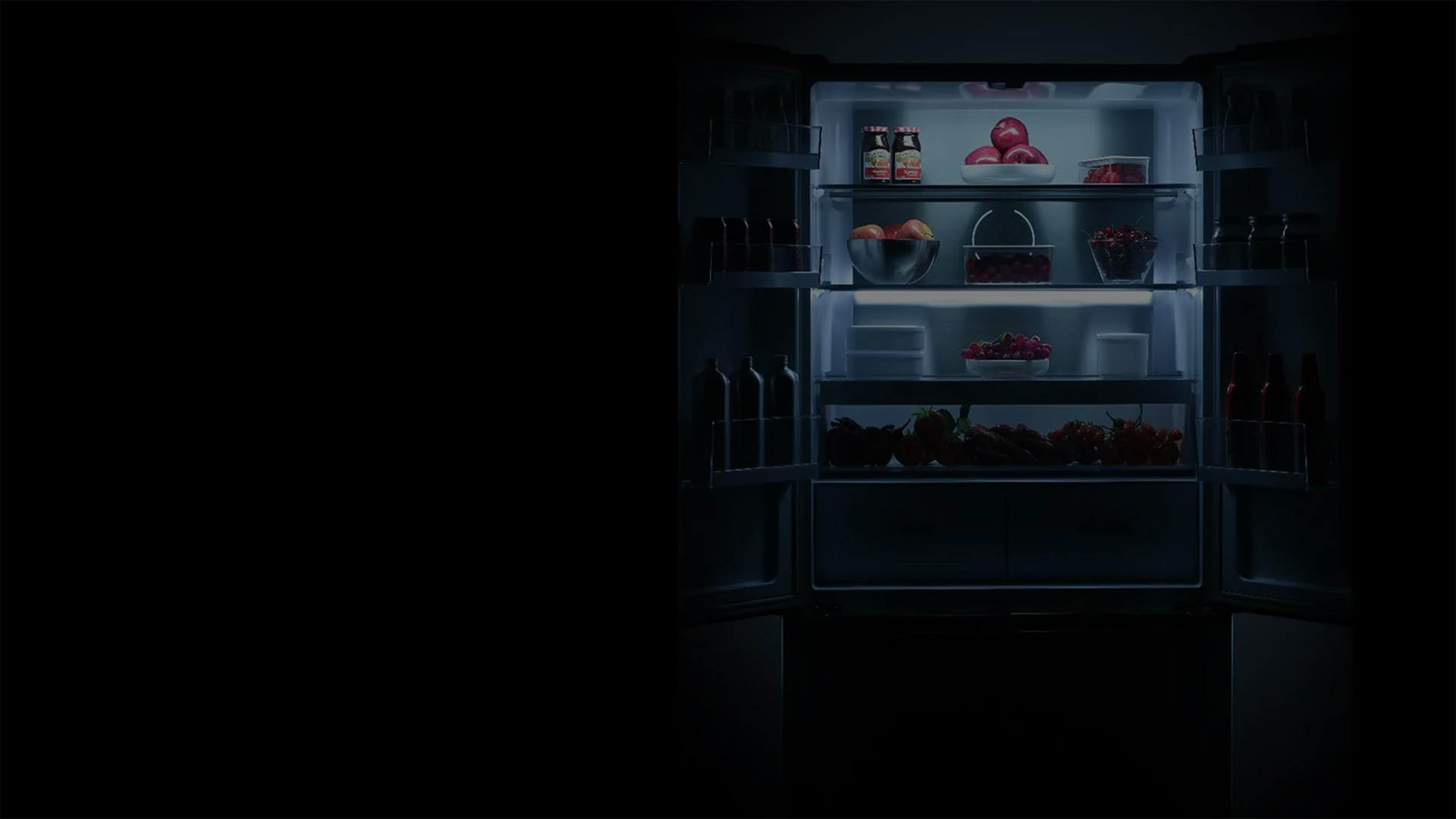
This may sound simple, but it is one of the most important challenges facing our industry. Refrigerators are becoming more capable. They can manage temperature with greater precision, control humidity more effectively, respond to patterns of use, support different food categories and integrate increasingly sophisticated preservation technologies.
A function is valuable only when it is understood. A technology is meaningful only when it can be trusted. A product becomes intelligent not when it contains more complexity, but when it reduces complexity for the people who live with it.
This is why design matters so deeply in food preservation.
Design is often misunderstood as aesthetics. Of course, beauty has value. A refrigerator is part of the kitchen, and the kitchen has become one of the most expressive spaces in the contemporary home. Finishes, proportions, materials and visual presence all matter. But design in refrigeration must go further. It must organise behaviour. It must guide gestures. It must translate invisible technology into visible confidence.
In this sense, design is language.
A refrigerator speaks through its doors, handles, compartments, shelves, lighting, icons, drawers, displays and sounds. It tells the user where to place food, how to separate categories, how to activate a function, what matters and what can be ignored. When this language is clear, the product feels natural. When it is confused, even good technology becomes distant.
This is particularly important because the refrigerator is not used by one type of person. It is used by the whole household. Children open it for snacks. Adults use it while cooking. Guests may use it during social occasions. Elderly relatives may rely on it every day. It is accessed quickly, repeatedly and often without much conscious attention.

For this reason, the refrigerator cannot behave like a complicated device asking for constant interpretation. It must remain intuitive.
At Homa, this idea has led us to pay close attention to the semiotics of the appliance: the way meaning is created through signs, visual hierarchies and repeated patterns of use. A smart refrigerator does not become better simply by adding programmes. It becomes better when every programme is easy to recognise, easy to understand and easy to trust.
This is the thinking behind the Icon System project we developed in collaboration with Design Group Italia one of the world's most renowned design houses. The objective was not to create decoration. It was to create an intuitive visual language for refrigerator functions and controls.
The starting point was a very practical question: how can we make food preservation easier to understand?
Modern refrigeration includes many functions that are technically valuable but not always immediately clear to the user. Fast cooling, holiday mode, humidity control, flexible compartments, energy-saving functions and dedicated food zones all need to be communicated. If the graphic language is weak, the consumer may ignore the function completely. If the language is too technical, the function may feel intimidating. If the interface is inconsistent, trust is lost.
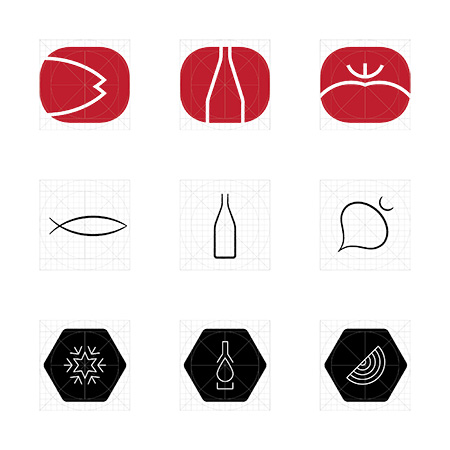
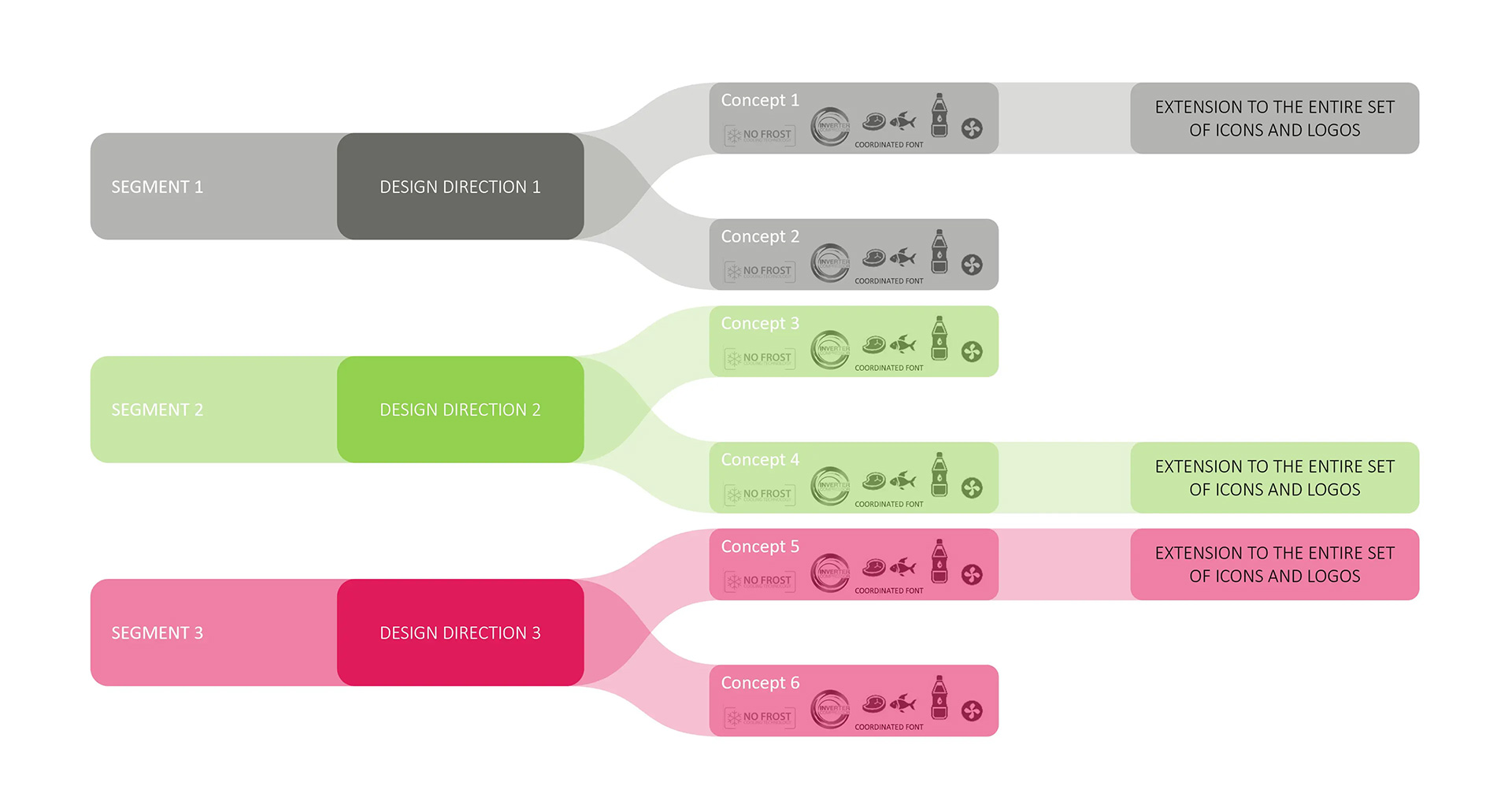
The Icon System addressed this by creating different visual languages capable of expressing the same functional logic in distinct ways. This matters because brands are not identical. A premium European brand, a mass-market retailer and a design-led appliance label may all need to communicate the same function, but not with the same emotional tone.
One language may be more minimal. Another may be warmer. Another may be more technical. Another may be more expressive. The purpose is not to standardise identity, but to make usability compatible with brand character.
This is a crucial point for modern OEM partnership. Industrial platforms must not flatten the market. They must enable differentiation. Design language is one of the most subtle and powerful ways to do this.
In food preservation, the interface is not a secondary detail. It shapes the relationship between the consumer and the product. A well-designed icon can make a function accessible. A clear compartment logic can encourage better food organisation. A carefully lit interior can make freshness more visible. A coherent control panel can make advanced technology feel calm rather than intrusive.
The best design does not shout. It reassures.
This is particularly relevant as refrigerators become more data-enabled and adaptive. The more the appliance does in the background, the more the user needs to feel that the product remains understandable. Invisible intelligence must be accompanied by visible clarity.
There is a lesson here that goes beyond refrigeration. In many industries, innovation is still too often measured by addition. More features. More options. More settings. More claims. But domestic appliances live inside daily routines. They must respect the rhythm of the home. They must work for people when they are busy, distracted, tired, cooking, hosting, caring for children or simply moving through ordinary life.
This requires a certain humility in design.
A refrigerator should not ask people to admire its intelligence every day. It should make life feel slightly easier, more organised and more reliable. It should support care without becoming theatrical. It should express technology through simplicity.
That is why I believe meaningful innovation often begins with a design question, not a technical one. What should the user understand immediately?
What should remain in the background?
Which gesture feels natural?
Which visual sign creates confidence?
Which feature truly deserves attention
These questions are strategic. They influence product development, brand perception and the quality of the consumer experience.
For Homa, design is therefore not an external layer added at the end of the process. It is part of how we interpret the appliance, the market and the relationship between our partners and their consumers. It helps us move from manufacturing execution to strategic product culture.
The refrigerator of the future will contain more intelligence than the refrigerator of the past. But its success will depend on whether that intelligence can be translated into a language people understand.
Because a product is not truly intuitive when it explains everything.
It is intuitive when it already speaks your language.
Federico Rebaudo, General Manager at Homa Europe
This article is part of Strategic Perspectives, an editorial series by Federico Rebaudo, General Manager at Homa Europe.
The series explores how OEM manufacturing is evolving beyond industrial execution, connecting food preservation, design thinking, consumer understanding, technology, marketing culture and strategic
partnership.
Continue exploring the series:
. The Invisible Revolution: Food Preservation Beyond Cooling
. From OEM to Technology Enabler
. The Data-Driven Refrigerator
Copyright HOMA 2026 Issued By Homa Marketing dept. on March 2026
For further Information and Press Contacts: info@homaeurope.eu